
Quantum Neurosymbolic AI: Verifiable Machine Reasoning Meets Quantum Computing
By our Editor
A neural network recognizes a pattern. A symbolic system follows a rule. Neurosymbolic AI joins the two: perception and learning on one side, logic, proofs, and explanations on the other. Quantum computing could, in time, change the machinery beneath either half. Their intersection, quantum neurosymbolic AI, is today an emerging research direction. It is also the kind of hybrid whose governance stakes we flagged early in the Fortune essay on preventing quantum-AI hybrids from taking over the world.
This analysis takes the convergence seriously and states its limits plainly. It explains why the neurosymbolic wave is cresting now, why world models belong in the same discussion, what quantum technology could concretely contribute to each leg, and why the combination maps closely onto what the law already demands of high-stakes artificial intelligence.
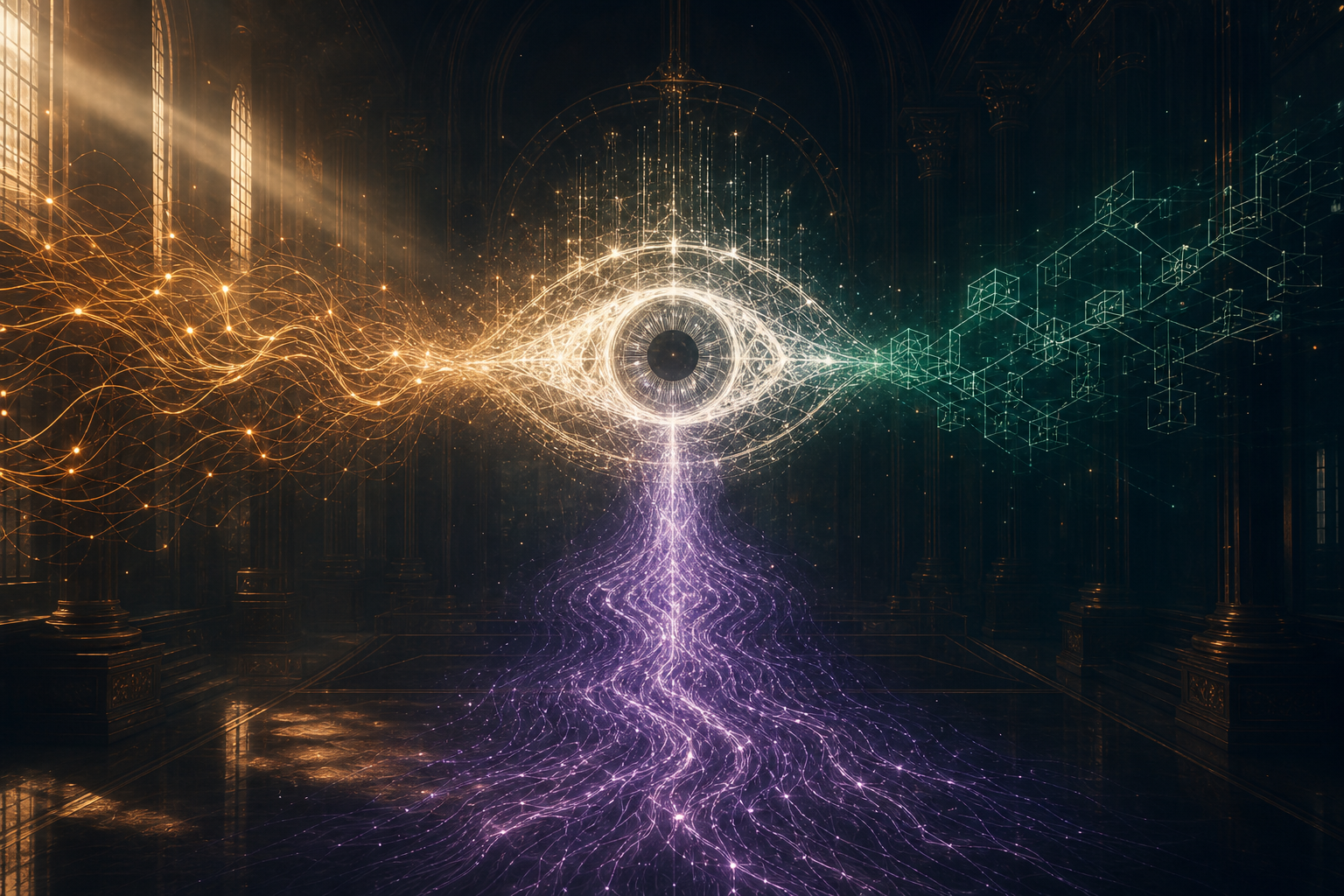
Quantum neurosymbolic AI joins neural perception, symbolic proof, and a possible quantum substrate into verifiable machine reasoning.
Why neurosymbolic AI is gaining ground in 2026
The current wave answers a specific failure mode. Large language models generate fluent text by sampling from learned distributions. Because they optimize next-token prediction rather than truth, they can hallucinate plausible falsehoods, and the reasoning traces they generate do not necessarily reveal how the answer was actually produced. For creative drafting that is tolerable. For medical triage, credit decisions, or legal analysis it is disqualifying.
Neurosymbolic architectures address the problem at the level of structure. A neural component perceives and generalizes. A symbolic component reasons over explicit rules and knowledge and produces conclusions that can be inspected and replayed. IBM's neuro-symbolic AI research program states the design goal plainly: explainability by construction, with decisions whose reasons are open to inspection without after-the-fact forensics, together with better data efficiency.
The approach already has a working demonstration. Google DeepMind's AlphaGeometry (Nature, 2024) paired a neural language model with a symbolic deduction engine and solved 25 of 30 International Mathematical Olympiad geometry problems, close to the average gold medalist, with every proof machine-checkable. Its successor's preprint reports gold-medalist performance. The neural leg proposes creative constructions and the symbolic leg guarantees the logic. That division of labor is the neurosymbolic thesis in working code, and it delivers exactly the property that transparency and explainability requirements for AI algorithms have demanded from the start.
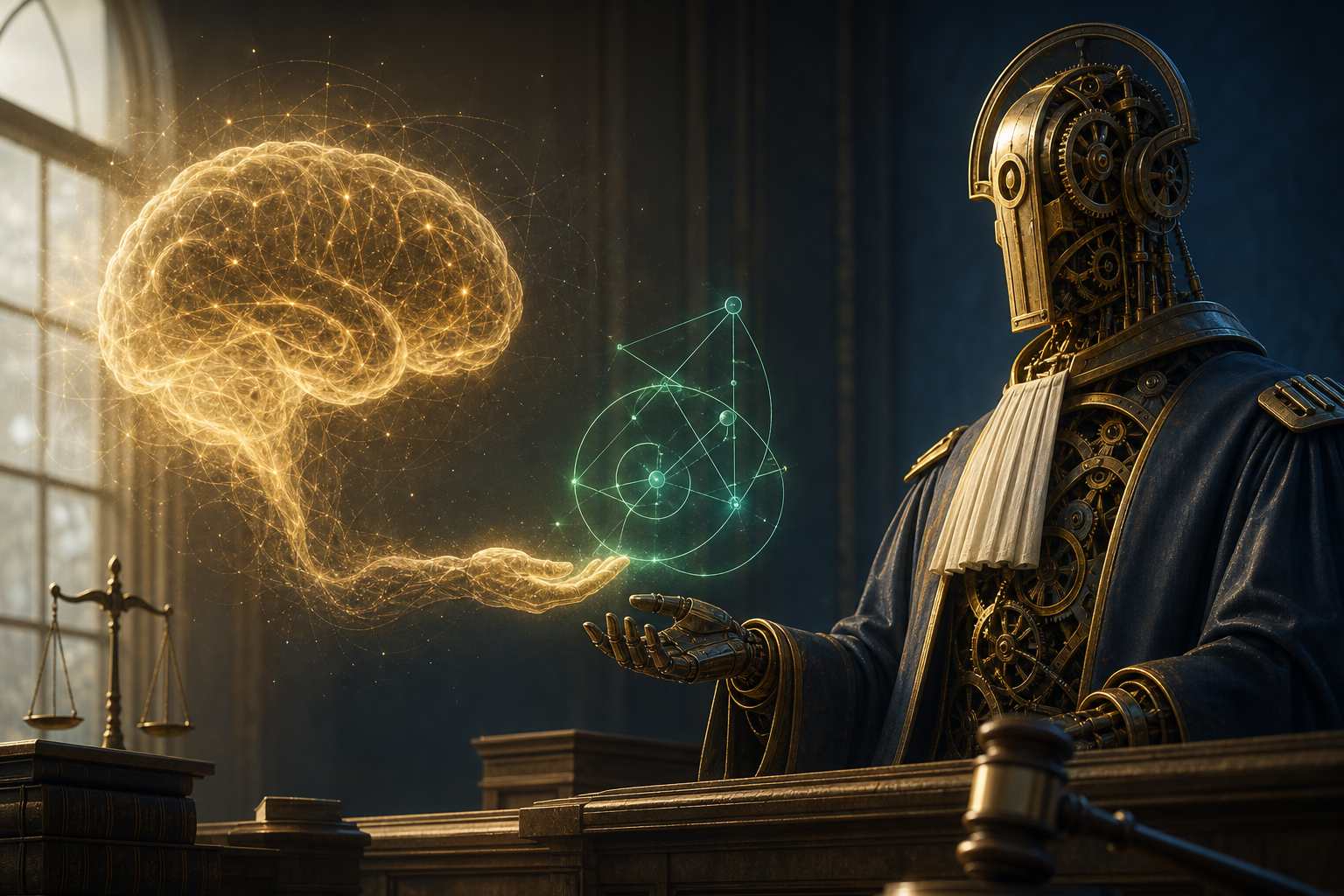
The neurosymbolic division of labor: a neural model proposes, a symbolic engine verifies, and the reasoning can be inspected and replayed.
How world models give the reasoner something to reason about
A third ingredient completes the architecture. A world model is an internal, predictive representation of the environment, a representation of what would happen if, against which an agent can plan instead of merely matching patterns. The research momentum is substantial, from joint-embedding predictive architectures to video-trained models that support physical reasoning and robot control. A comprehensive survey of world model architectures and reasoning paradigms posted in May 2026 maps how quickly the field is consolidating. In our framing, world models form the natural third leg: neural perception grounds the symbols, symbolic logic constrains the inferences, and the world model supplies the counterfactual structure of cause, consequence, and alternative that genuine reasoning requires.
Lawyers will recognize the shape immediately. Legal reasoning applies explicit rules to established facts and tests them with counterfactuals: but for the breach, would the damage have occurred? A system that perceives facts neurally, represents the situation in a world model, and applies rules symbolically describes what competent legal analysis already does. That is why neurosymbolic approaches fit legal rule-application more naturally than a purely statistical predictor can.
What quantum computing could add to each leg
Quantum machine learning has produced genuine, if narrow, theoretical results for the neural leg. Quantum kernel methods can provably separate data classes that no efficient classical learner can, under standard cryptographic hardness assumptions, and quantum processors sample from distributions believed to be classically intractable. These primitives could, in principle, power the pattern-recognition half of a neurosymbolic system on problem families with the right structure. Two standing caveats apply: trainability, where barren plateaus flatten the optimization landscape as circuits grow, and dequantization results that have reclaimed several claimed speedups for classical algorithms. Any near-term deployment would run as a hybrid quantum-classical workflow that calls the quantum processor as a narrow subroutine, a division of labor that mirrors the neurosymbolic split itself.
The symbolic leg is the better fit on paper. Symbolic reasoning is search through proof trees, constraint spaces, and rule combinations, and search is where quantum computing has its most general tool. Grover-style amplitude amplification offers a quadratic speedup over exhaustive classical search, and some proof-search and constraint problems may admit quantum search or optimization methods, although no practical advantage has been demonstrated. A quantum-assisted theorem prover or constraint solver coupled to a neural proposer is architecturally coherent today, even though it lives in preprints.
The maturity picture needs stating precisely. No demonstrated quantum advantage exists for any neurosymbolic workload. Quadratic speedups can be consumed by error-correction overheads, and current hardware cannot hold the problem sizes at which advantage would begin. Quantum neurosymbolic AI is therefore a prospective research direction, coherent and worth watching because both parent fields are moving fast. The indicator to watch is a benchmark: quantum hardware outperforming classical machines on a reasoning-relevant search or optimization task at useful scale.

Symbolic reasoning runs on search, and search is the task where quantum computing offers its most general speedup.
Why verifiable reasoning is compliance infrastructure under the EU AI Act
For policymakers the convergence carries three lessons. First, neurosymbolic design is compliance-friendly architecture. The EU Artificial Intelligence Act requires documentation, instructions for use, transparency appropriate to the system, record-keeping, and effective human oversight for high-risk systems. It does not demand disclosure of a system's complete reasoning process, yet each of these obligations is easier to meet when the reasoning can be inspected. Pure neural systems meet them awkwardly at best. Systems whose symbolic half emits a checkable derivation meet them by construction. Regulators should notice the rare alignment: here the more capable architecture is also the more auditable one.
Second, high-stakes domains should actively pull this technology. In medicine, finance, and the administration of justice, the operative question extends beyond "was the answer right?" to "can the reasoning be examined, contested, and appealed?" That is the standard we applied to clinical AI in Law, Ethics and Policy of Quantum and AI in Healthcare and Life Sciences. Verifiable machine reasoning supports examination, contestation, and appeal in legally consequential applications.
Third, the quantum leg imports its own audit burden. Quantum measurements are probabilistic, and many quantum algorithms estimate their outputs from repeated samples, so a quantum subroutine is nondeterministic in a way that sets verification and reproducibility requirements of its own. A quantum-accelerated reasoner would therefore combine the hardest verification problem in AI with the hardest verification problem in quantum computing, compounding the control challenge we examined in Quantum Event Horizon. The legal-ethical groundwork for that contingency exists. The framework in Establishing a Legal-Ethical Framework for Quantum Technology could be extended to this combination, treating quantum applications by risk category instead of by marketing label.
The policy implication is constructive: reward the architecture you want. Procurement rules, conformity assessment, and standards for high-stakes AI should explicitly credit systems that produce machine-checkable reasoning, whether neurosymbolic, world-model-grounded, or eventually quantum-assisted, because verifiability is the property that keeps advanced artificial intelligence inside the rule of law as capability grows. That window is open now, while quantum neurosymbolic AI is still on the drawing board, and it closes once the designs harden.
Last updated: September 3, 2026