
Northwestern University Debaters Took Up Mauritz Kop's Article on AI, Intellectual Property and the Public Domain (2020)
By our Editor
Few compliments reach a legal scholar quite like students choosing an article as the centerpiece of their debate. In 2020, the year the article appeared, the Northwestern University debate community took up Mauritz Kop's work on artificial intelligence and intellectual property, the line of scholarship anchored by AI & Intellectual Property: Towards an Articulated Public Domain, as material for structured argument on who, if anyone, should own machine-made creations.
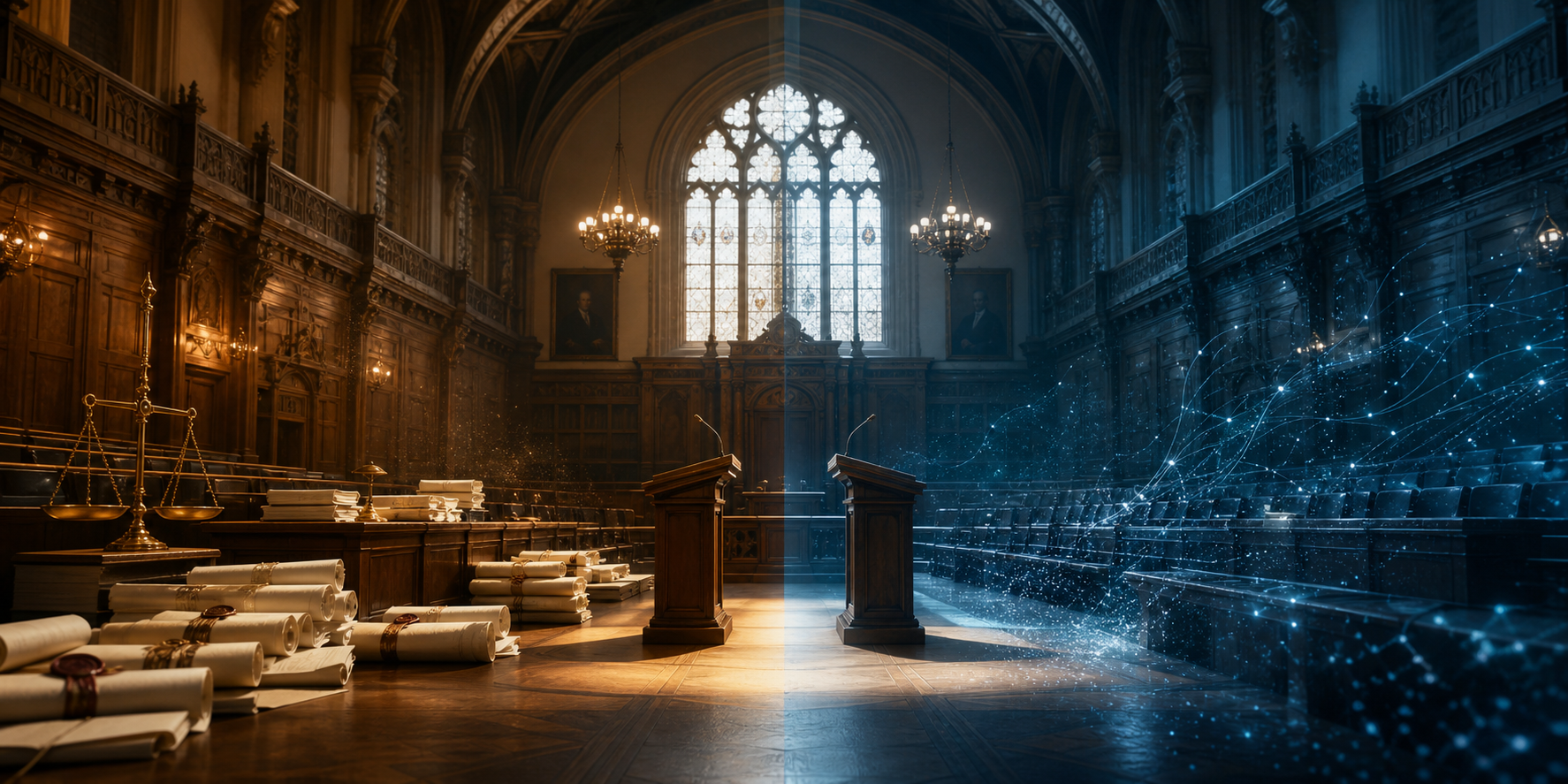
Ownership or commons: the articulated public domain as a debate motion.
What the 2020 article argues: an articulated public domain for machine-made works
Published in the Texas Intellectual Property Law Journal, volume 28 (2020), p. 297, the article's core claim is built for debate: works generated autonomously by AI without meaningful human creative input should fall into an articulated public domain, a commons designed on purpose, and the law should avoid assigning copyright to such output through expanded concepts of authorship. For those outputs, Kop proposed the doctrine of Res Publicae ex Machina, public property from the machine, while insisting that human authorship remains the anchor of copyright. The position forces both sides of a debate back to first principles: what authorship is for, who is actually incentivized by exclusive rights over machine output, and what the public loses when everything is owned. Along the way, the article works through the doctrinal terrain a serious debater needs: legal personhood for machines, patents on machine-assisted inventions, the clearance of training data, and the risk that overextending exclusive rights chills innovation and cultural diversity.
The full text is available via the Stanford Law School publication page and is permanently archived in the Stanford Digital Repository.
Why the AI and copyright debate has sharpened since 2020
Written before the generative-AI wave, the public-domain argument now reads as an early map of today's disputes, from training data litigation to the registrability of AI-assisted works, questions this blog explored in Computer generated works: wie of wat is eigenaar?. The positions a debater could take are now being argued in courtrooms and copyright offices on both sides of the Atlantic: protection for qualifying human contributions, investment incentives outside copyright, and public-domain treatment for output that lacks sufficient human authorship. Authorities in the European Union, the United States, and Japan are addressing related questions on text-and-data mining, training-data transparency, and the threshold of human input that copyright protection requires.
That university debaters reach for the piece is telling. An article about the commons has become discussion material for a new generation of law students, argued over from both sides, which is how scholarship on the commons is meant to be used.

Res Publicae ex Machina: machine-made works flowing into a commons by design.
What practitioners and policymakers can take from the debaters' method
Like the best debate material, the article offers a well-built position worth attacking, and its selection for structured debate shows that the thesis supports arguments on competing copyright-policy positions. For practitioners and policymakers now drafting the next generation of rules for AI and intellectual property, the debaters' method is the right one: argue the strongest version of both sides before legislating either. A rule for machine-made works that has survived that test will be easier to defend in court, easier to apply in a registry, and more likely to keep human creativity at the center of copyright.
Last updated: September 3, 2026