
Stanford Light Opera Company: Johann Strauss’ Die Fledermaus
By Editor
Stanford, CA, February 6, 2023—This February, Stanford law and policy scholar Mauritz Kop traded the seminar room for the orchestra pit. He joined the Stanford Light Opera Company (SLOCo) for its winter production of Johann Strauss II's comic operetta Die Fledermaus—not as a commentator on the law of performance, but as a working musician. In his own words on the production: "I'll play clarinet A and B-flat as part of the Fledermaus orchestra, substage in the orchestral pit." For a scholar whose research increasingly turns on the rights of performers and composers, the seat below the stage was an apt one.
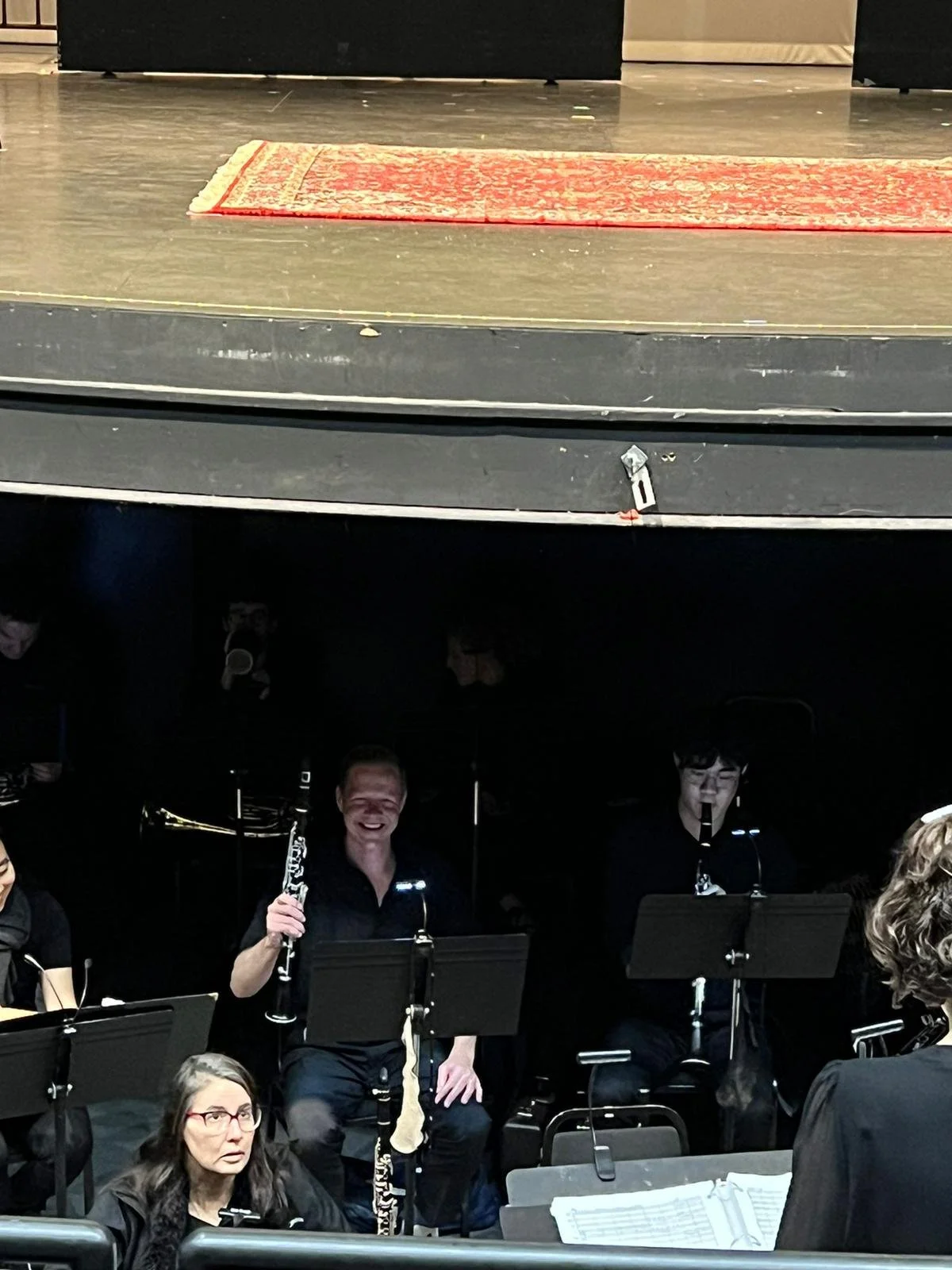
Die Fledermaus at Stanford: Mauritz Kop on clarinet in the orchestra pit of Dinkelspiel Auditorium (February 2023). Credit: Stanford Light Opera Company.
A feminist Fledermaus at Dinkelspiel
SLOCo staged Die Fledermaus across four performances at Stanford's Dinkelspiel Auditorium—three evening shows on February 8, 10, and 11 at 7:30 p.m., and a Sunday matinee on February 12 at 2:30 p.m. The student company performed an English-language version using Marcie Stapp's translation, directed by Nicolle Hendzel '23, who also appeared as Rosalinde. The production was a deliberately modern, feminist reading of a work better known for its champagne and farce. In The Stanford Daily, Hendzel framed the choice plainly: "Opera has traditionally been written by men, for men and about men, rarely taking female perspectives into account." Her staging answered that history by placing the prank's architects—and the characters who hold power—in the hands of the women on stage.
The evening was not confined to Strauss. As Kop noted, the program also featured Puccini's Nessun Dorma from Turandot and Bizet's Habanera from Carmen—a small anthology of the operatic canon framed by the operetta's ballroom comedy. The orchestra, Kop among the clarinets, played from beneath the stage.
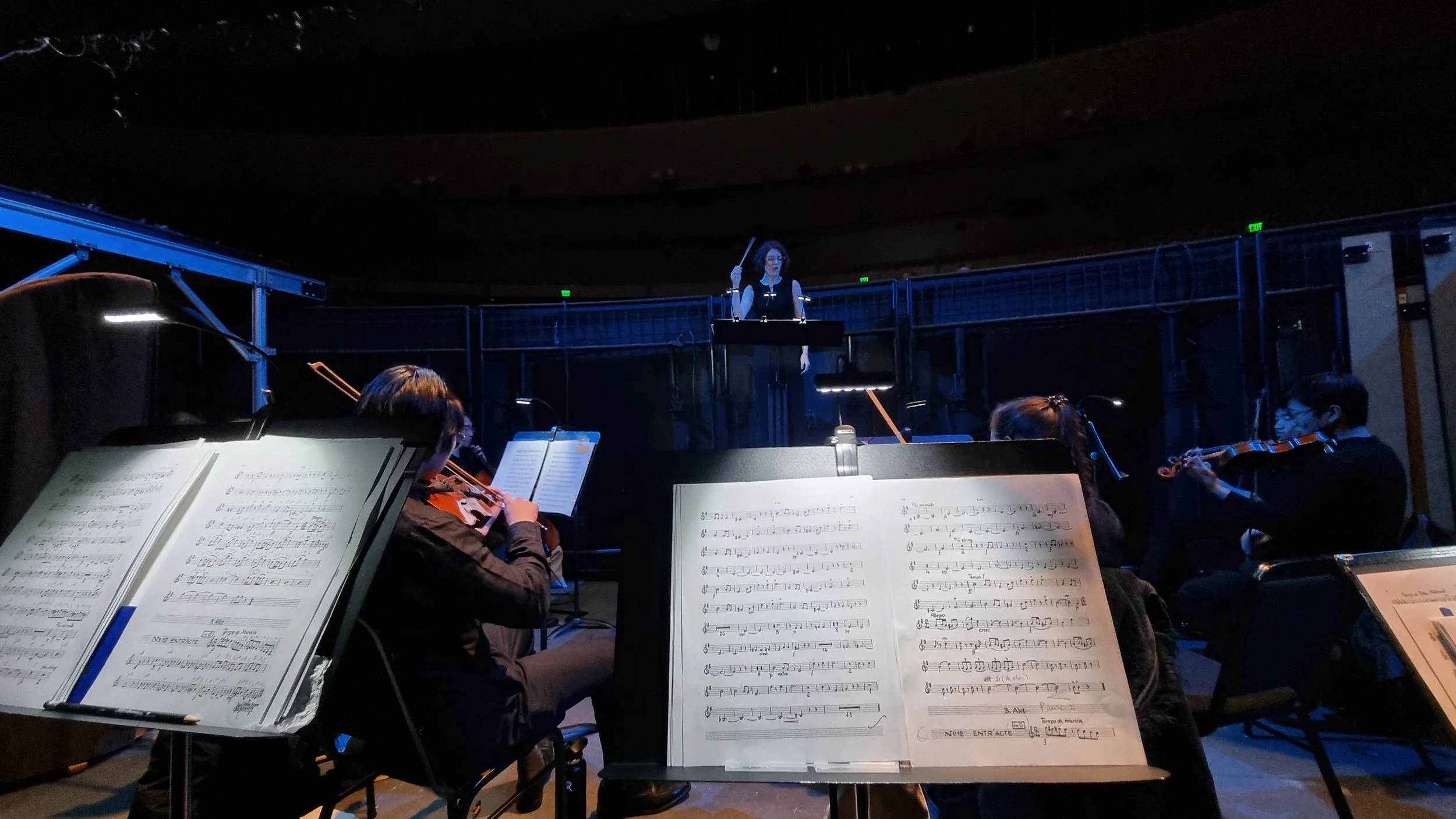
View from the clarinet desk: the conductor leading Die Fledermaus from the Dinkelspiel pit. Credit: Stanford Light Opera Company.
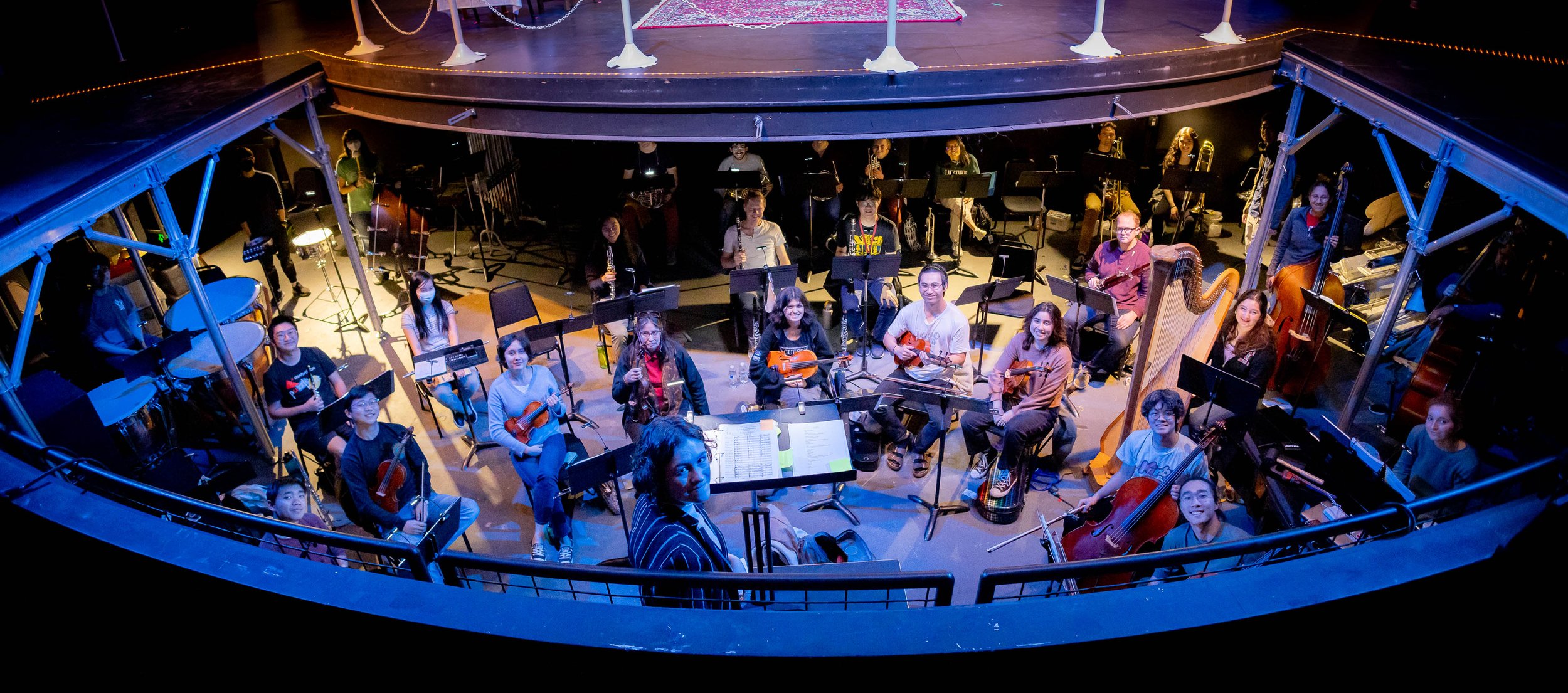
The Stanford Light Opera Company orchestra in the Dinkelspiel Auditorium pit. Credit: Stanford Light Opera Company.
The company and the work
The Stanford Light Opera Company is a student-run organization that mounts two productions a year, typically one opera and one work of musical theater. Its lineage runs back to the Stanford Savoyards, a Gilbert and Sullivan society founded in 1973; the group rebranded as SLOCo in 2016 and broadened its repertoire beyond the Savoy operas to a wider range of lyric theater. Die Fledermaus ("The Bat") sits squarely in that tradition: a comic operetta by Johann Strauss II that premiered on April 5, 1874, at the Theater an der Wien in Vienna, and has remained a staple of the light-opera repertoire ever since.
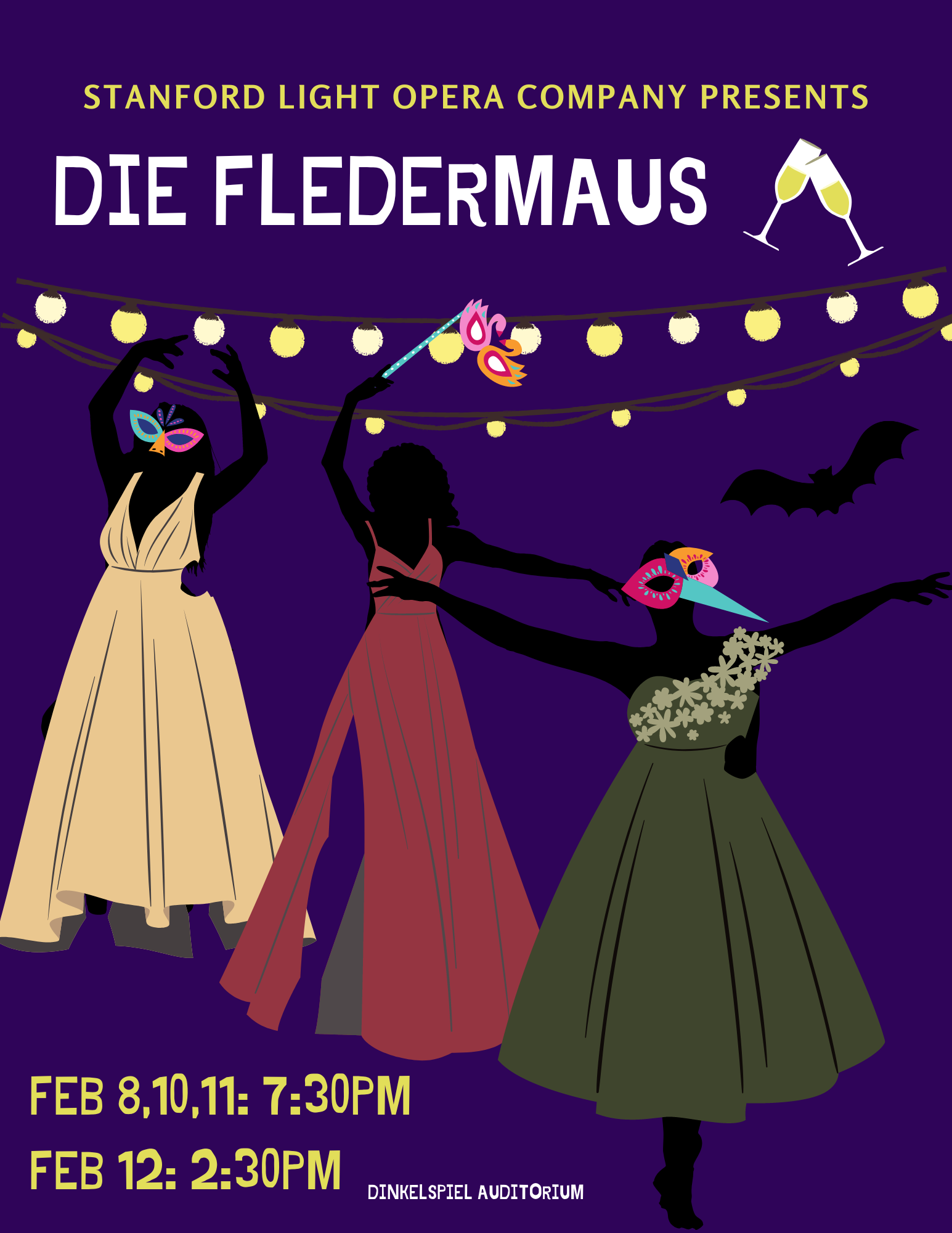
The production poster for Stanford Light Opera Company’s Die Fledermaus, Dinkelspiel Auditorium, February 2023. Credit: Stanford Light Opera Company.
The scholar-musician
Kop's presence in the pit is less a detour from his academic work than a continuation of it. He is a Stanford Law School fellow with the Transatlantic Technology Law Forum (TTLF) and a practicing classical musician on piano and clarinet; the two vocations have long informed each other. His scholarship on copyright, authorship, and the public domain reads differently when written by someone who has sat among the players whose performances the law is meant to protect. A creator's-eye view of rights and remuneration is not an abstraction for him—it is a Friday-night rehearsal.
That perspective surfaces directly in his later work on music rights and artificial intelligence (a 2025 AIRecht essay), where he examines what cloned voices and AI-generated compositions mean for performers, songwriters, and collective rights organizations. The questions raised there—who is the author, who gets paid, and what falls into the public domain—are old questions in copyright, but generative systems have made them urgent again. It is no coincidence that the same scholar who has taught music law at the Royal Conservatoire in The Hague would want to keep one foot in live performance: the doctrine is easier to get right when you remember what it is for. Between 2023 and 2025, Kop also served as house pianist at Stanford Law School, performing at law school festivities together with concert pianist (and Stanford RQT research assistant) Katie Liu.
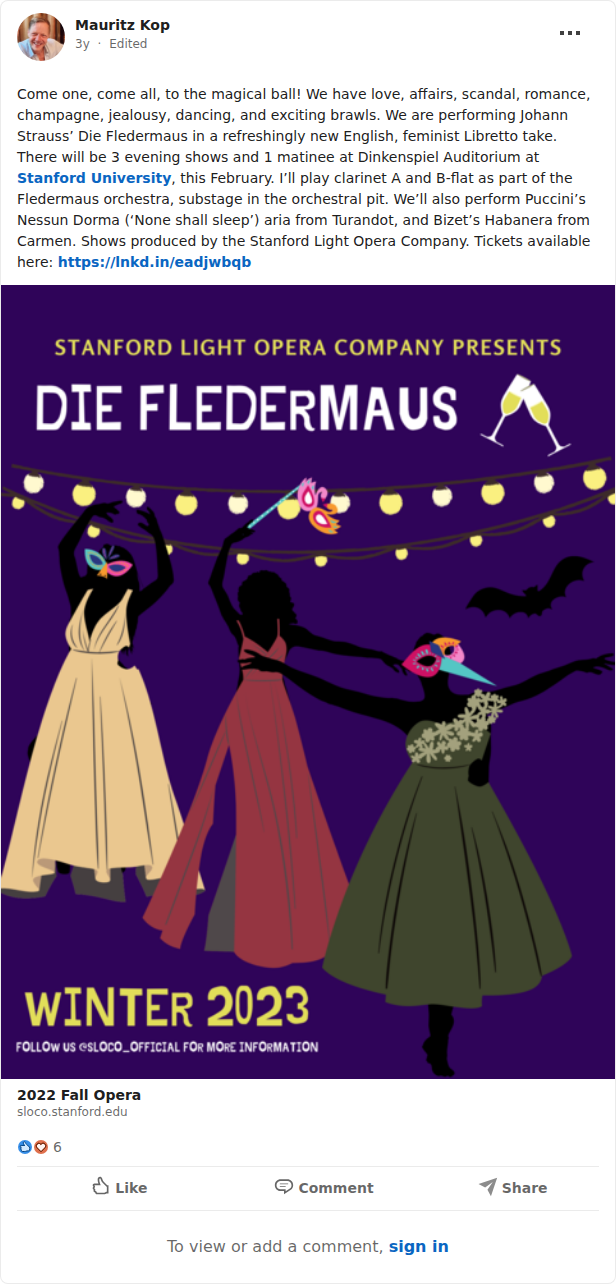
Mauritz Kop's LinkedIn post on playing clarinet in the Die Fledermaus orchestra, February 2023.
Why a night at the operetta belongs on a law-and-policy site
There is a habit, in technology law, of treating the arts as the object of regulation rather than as a source of insight. Spending an evening in a student orchestra inverts that habit. The performer's craft—the discipline of a part rehearsed and delivered in real time, the collective work of an ensemble, the fragile economics of a production mounted for love rather than profit—is exactly what the law of music is supposed to serve. As AI systems begin to imitate that craft at scale, the case for a humane, creator-aware approach to authorship and remuneration only grows stronger. Sometimes the most useful thing a scholar can do is pick up a clarinet and remember whom the rules are written for.
Last updated: June 6, 2026.