
Innovation, Quantum-AI Technology & Law

Blog over Kunstmatige Intelligentie, Quantum, Deep Learning, Blockchain en Big Data Law

Blog over juridische, sociale, ethische en policy aspecten van Kunstmatige Intelligentie, Quantum Computing, Sensing & Communication, Augmented Reality en Robotica, Big Data Wetgeving en Machine Learning Regelgeving. Kennisartikelen inzake de EU AI Act, de Data Governance Act, cloud computing, algoritmes, privacy, virtual reality, blockchain, robotlaw, smart contracts, informatierecht, ICT contracten, online platforms, apps en tools. Europese regels, auteursrecht, chipsrecht, databankrechten en juridische diensten AI recht.

Berichten met de tag Music
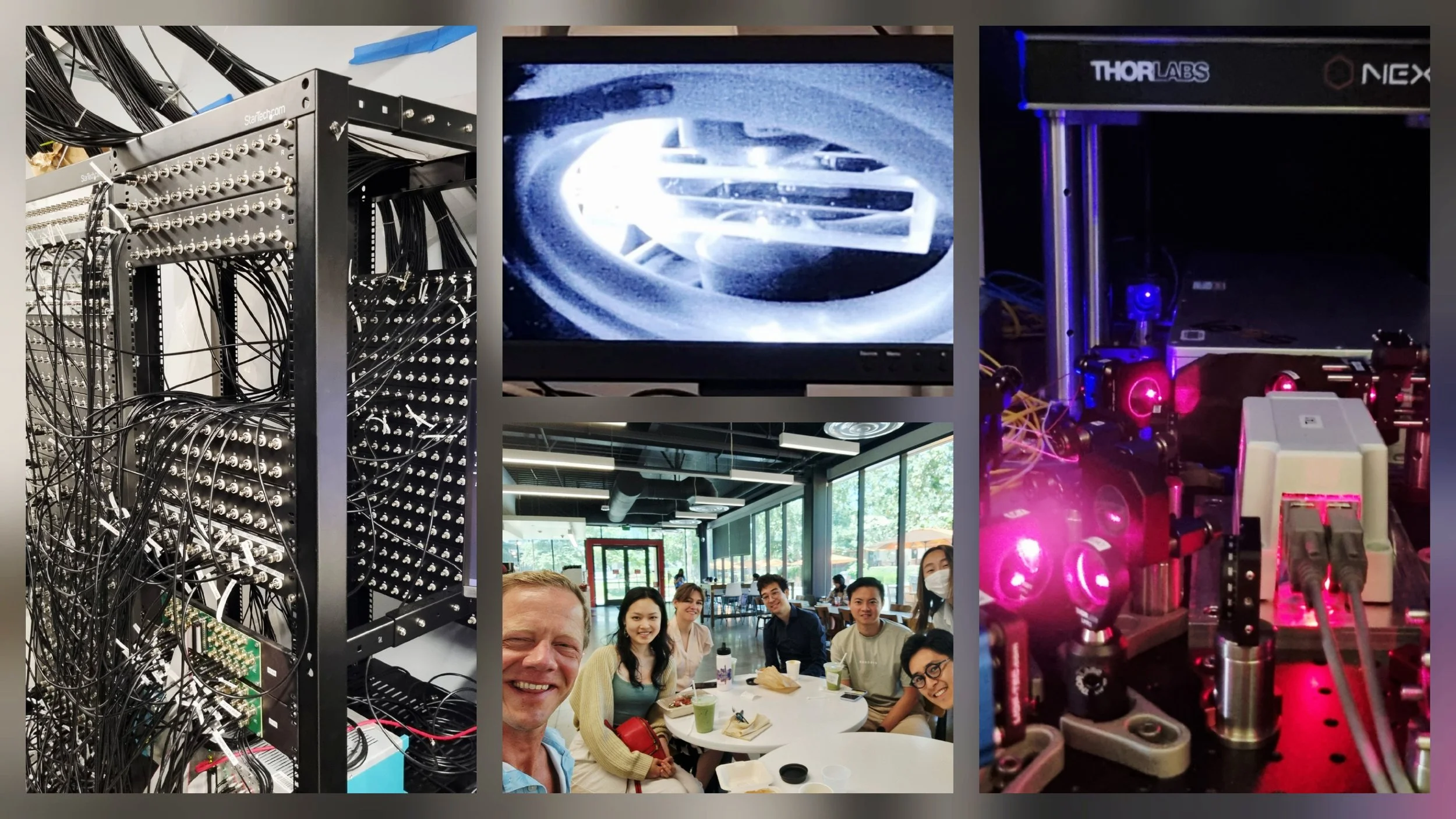
Stanford Law’s Jin-Hee Lee, Katie Liu and Mauritz Kop visit Caltech Quantum Research Center

Pasadena, CA – On July 6, 2024, a team from the Stanford Center for Responsible Quantum Technology (RQT) embarked on a research field trip to the California Institute of Technology (Caltech), one of the world's preeminent hubs for quantum science research. This visit, part of an ongoing collaboration between the two world-leading institutions, was a crucial exercise in bridging the gap between the deeply technical world of quantum research and the complex legal, ethical, and societal frameworks required to govern it. The delegation, consisting of RQT Founding Director Mauritz Kop, RQT Fellow Jin-Hee Lee, and Research Assistant to the Director Katie Liu, traveled from Stanford to the heart of Southern California to engage directly with the scientists and engineers who are building the future of quantum. The visit was hosted by RQT Fellow Franz Pfanner, a PhD candidate at Caltech, and focused on the groundbreaking work being done at Caltech's Institute for Quantum Information and Matter (IQIM).

The day was dedicated to exploring the groundbreaking work being done at Caltech's Institute for Quantum Information and Matter (IQIM), a flagship research center led by Professor Manuel Endres, within the university's prestigious Division of Physics, Mathematics and Astronomy. This visit underscores the RQT Center's commitment to fostering a deeply interdisciplinary dialogue, ensuring that the development of responsible quantum governance is informed by a hands-on understanding of the technology itself.

The Epicenter of Quantum Innovation: Caltech's IQIM

Caltech stands as a global powerhouse in quantum research, and at its core is the Institute for Quantum Information and Matter (IQIM). Under the leadership of Professor Manuel Endres, IQIM is dedicated to exploring the frontiers of quantum science, from the fundamental physics of quantum information to the development of novel quantum materials and devices. The institute's work is organized around several Major Activities (MAs), each tackling a different facet of the quantum puzzle.

Bridging Quantum Theory and Society: The Stanford RQT Projects

The visit to Caltech provided a rich technical context for the work being done by the Stanford RQT team, whose projects are focused on the human and societal dimensions of this emerging technological revolution.

Jin-Hee Lee, an RQT Fellow, is pioneering research in the nascent field of Quantum Human-Computer Interaction (Q-HCI). Her project addresses a critical, yet often overlooked, aspect of the quantum future: how will humans interact with these powerful and counterintuitive machines? As quantum computers move beyond the binary logic of classical computing and into the probabilistic realm of qubits and superposition, the interfaces through which we engage with them must be completely re-imagined. Jin-Hee's work, guided by the ELSPI (Ethical, Legal, Social, and Policy Implications) framework, aims to ensure that these interfaces are not only functional but also accessible, intuitive, and ethically designed, preventing the creation of a new digital divide and keeping humanity at the center of the quantum age.

Katie Liu, a Research Assistant at the RQT Center, is focusing on the intersection of quantum technology and neuroscience. Her project, "Responsible Quantum AI in Healthcare – Neurotechnology and Beyond," explores the transformative potential of quantum AI (QAI) to enhance diagnostics and treatments for complex neurological conditions like Alzheimer's and Parkinson's disease. Using the SEA (Safeguarding, Engaging, Advancing) principles as her guide, Katie is investigating how quantum algorithms can analyze the vast datasets generated by neuroimaging and real-time brain monitoring to create personalized treatment plans. Her research also addresses the profound ethical challenges of this work, from ensuring patient data privacy through quantum-resistant encryption to mitigating the dual-use risks of advanced neurotechnology.

A Cross-pollination of Disciplines and a Moment of Reflection

Following the intellectually stimulating day at Caltech, the Stanford delegation visited The Huntington Library, Art Museum, and Botanical Gardens, taking time to reflect in the serene beauty of the Chinese Garden. The garden, with its intricate design and harmonious balance of natural and man-made elements, served as a powerful metaphor for the work ahead: building a responsible quantum future requires a similar blend of technical ingenuity, ethical foresight, and a deep appreciation for the human values we seek to preserve and enhance.

The journey to a quantum-enabled world is just beginning. But as the collaboration between institutions like Stanford and Caltech demonstrates, by working together across disciplines, we can ensure that this powerful new chapter in human history is written not with reckless abandon, but with wisdom, responsibility, and a shared commitment to the common good.

Meer lezen
Stanford Light Opera Company: Johann Strauss’ Die Fledermaus

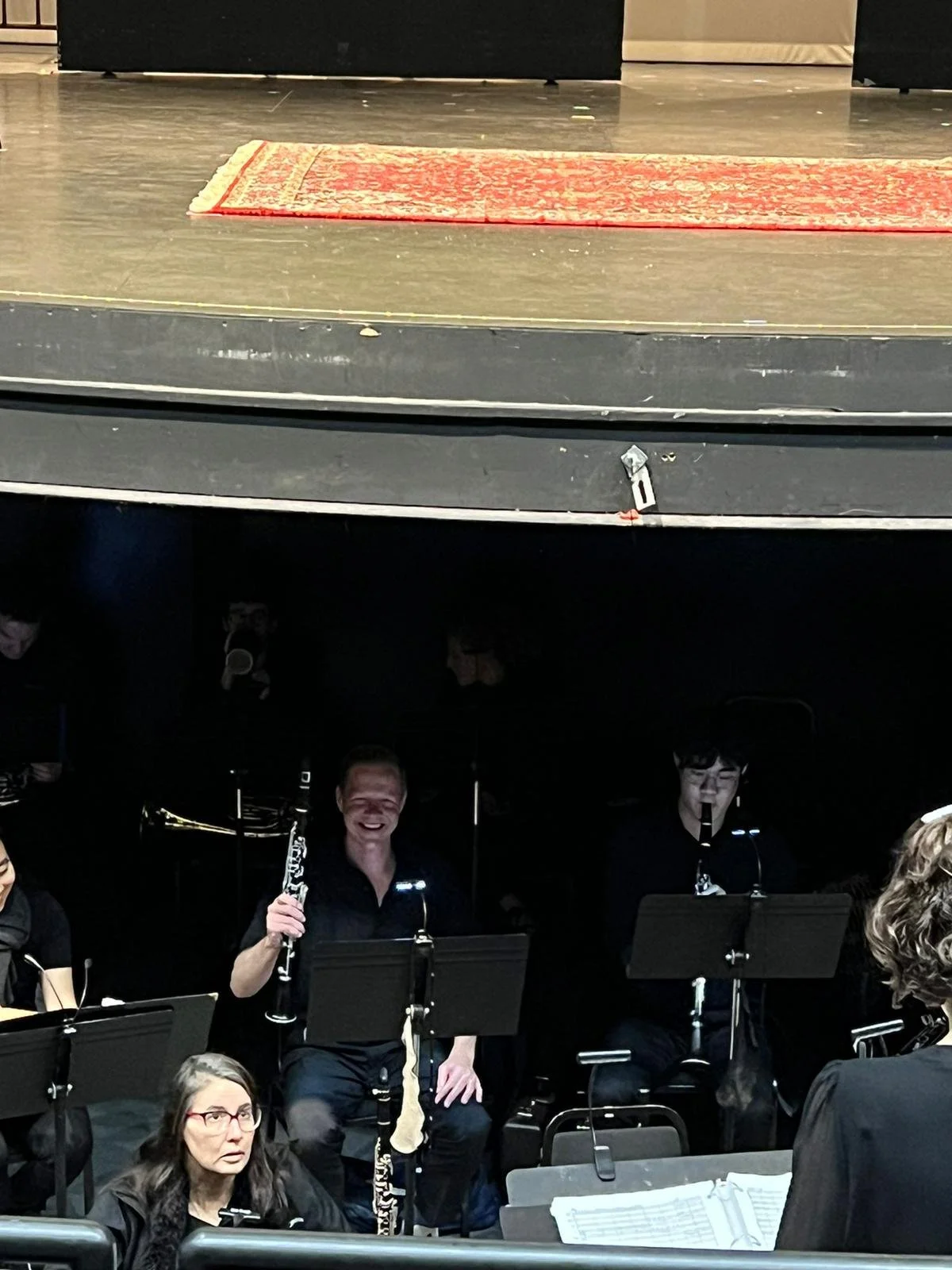
In February 2023, Stanford law scholar Mauritz Kop stepped off the page and into the orchestra pit, joining the Stanford Light Opera Company (SLOCo) for its winter production of Johann Strauss II's Die Fledermaus. He played clarinet—A and B-flat—substage with the company's orchestra across four performances at Dinkelspiel Auditorium. For a researcher whose work increasingly concerns the rights of performers and composers in the age of artificial intelligence, the view from below the stage was more than a hobby; it was a vantage point.

A student company's feminist Strauss

SLOCo's staging, directed by Nicolle Hendzel '23 in an English translation by Marcie Stapp, reimagined a ballroom farce as a deliberately feminist work, placing the characters who orchestrate the plot's great prank—and who hold power within it—in the hands of its women. The company is a student-run organization with roots in the Stanford Savoyards, a Gilbert and Sullivan society founded in 1973 and rebranded as SLOCo in 2016. The operetta itself dates to 1874, when it premiered at the Theater an der Wien in Vienna; nearly a century and a half later, a student orchestra gave it a contemporary edge.

Where music meets the law of AI

Kop is a Stanford Law School fellow and a practicing classical musician on piano and clarinet, and the two roles inform one another. His scholarship on copyright, authorship, and the public domain carries the weight of someone who has sat among the performers the law is meant to protect. That sensibility runs through his analysis of cloned voices and machine-generated compositions, where familiar copyright questions—who is the author, who is paid, and what enters the public domain—have been made newly pressing by generative systems. A scholar who has taught music law at the Royal Conservatoire in The Hague has good reason to keep one foot in live performance.

Why the arts belong in technology-law writing

Technology law has a tendency to treat the arts as something to be regulated rather than understood. An evening in a student orchestra reverses that order. The discipline of a rehearsed part delivered in real time, the collective labor of an ensemble, and the precarious economics of a production staged for love rather than profit are precisely what the law of music exists to serve. As AI begins to imitate the performer's craft at scale, the argument for a creator-aware approach to authorship and remuneration only sharpens—an argument that runs throughout Kop's scholarship on responsible technology across law, music, and policy. The clarinet, on this telling, is not a distraction from the research—it is a reminder of whom the research is for.

Meer lezen
Music Law at the Royal Conservatoire The Hague

Returning to my old flame for 1 day: looking forward to teaching music law at the Royal Conservatoire The Hague tomorrow! https://www.koncon.nl/en/

It's nice not having to speak or write about AI, data or quantum technology for a change... ;)

Teaching music law at the Royal Conservatoire The Hague

I am giving an in person guest lecture to a small group of students at the Amare - Den Haag, and it is live streamed to the rest of the department. The Amare is home to Nederlands Dans Theater (NDT) as well, one of the world’s leading contemporary dance & ballet companies, dedicated to creation, research, innovation and talent development. https://www.ndt.nl/en/

Using self-produced audio fragments and practical examples, we cover 18 music law topics ranging from registering intellectual property rights to strategic contract negotiations. The tracks I prepared are played from my Powerpoint into a phenomenal pair of Bowers & Wilkins monitors, the ultimate sound system. https://www.muziekenrecht.nl/blog/2017/6/music-licensing-in-the-netherlands-movies-games-legal-aspects

Looking back in nostalgia to the cross-disciplinary masterclasses I had the pleasure of teaching in recent years inter alia at Leiden University, Utrecht University and Conservatorium Maastricht. https://www.musicajuridica.nl/blog/2017/5/gastcollege-intellectueel-eigendom-conservatorium-maastricht

CPO Radboud University seminar at Het Concertgebouw Amsterdam

Absolute highlight was the postgraduate CPO Radboud University seminar at Het Concertgebouw Amsterdam on music & law, which included a public domain quiz musically framed by an ad hoc ensemble of Koninklijk Concertgebouworkest musicians featuring the Chief Justice of the Supreme Court Maarten Feteris on piano and me (Mauritz Kop) on clarinet es/bes, performing bespoke Mozart, Beethoven and Bach arrangements. https://www.muziekenrecht.nl/blog/2018/cpo-seminar-muziek-recht-concertgebouw-amsterdam

Kudos to the KonCon management for making sure their talented students have firsthand access to vital information about the inner workings of the music & entertainment industry!

Meer lezen