
Mauritz Kop Advises Stanford FSI Students on Quantum Policy and Cybersecurity Project
By Editor
Stanford, CA, October 27, 2025—Mauritz Kop, Founder of the Stanford Center for Responsible Quantum Technology (Stanford RQT), advised a team of Stanford students on their quantum policy and cybersecurity research project, developed within the university course Technology, Innovation, and Great Power Competition at the Gordian Knot Center for National Security Innovation, part of Stanford's Freeman Spogli Institute for International Studies (FSI). In a video session with the student team, Kop walked the group through the post-quantum cybersecurity landscape they had set out to map—from the threat model to the policy instruments to the investment ecosystem growing around both.
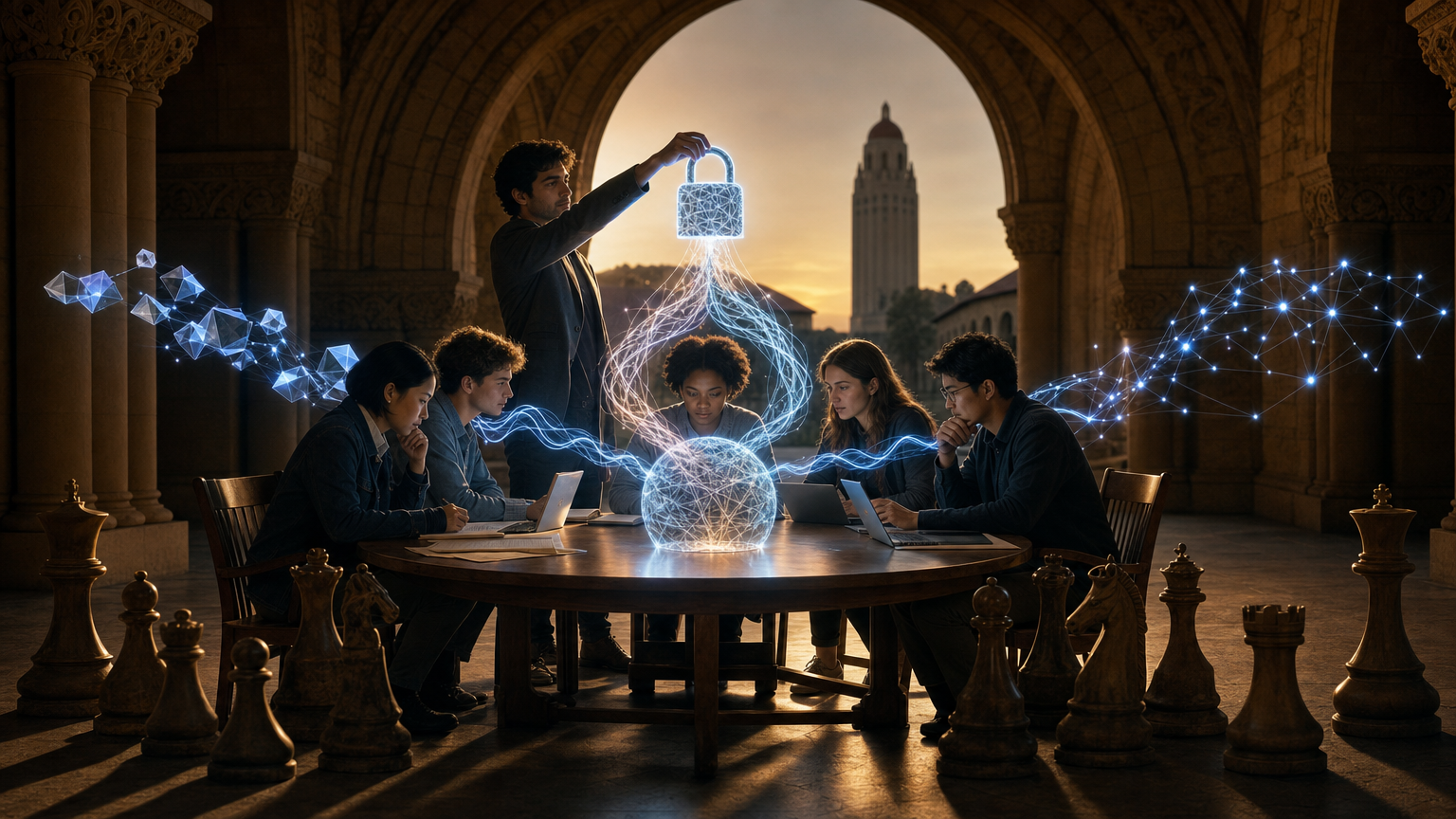
Policy entrepreneurship meets the quantum frontier: the next generation takes the table.
Policy entrepreneurship at the Gordian Knot Center
Technology, Innovation, and Great Power Competition is the experiential learning course created by Steve Blank—the pioneer of Customer Development whose work seeded the Lean Startup movement—together with Gordian Knot Center director Joseph Felter and associate director Eric Volmar. Student teams take on real-world challenges from U.S. and partner-nation policymakers, focused on the technologies reshaping global power—AI, semiconductors, space, cyber—and work them with startup methods: rapid discovery, agile iteration, acting as policy entrepreneurs who deliver actionable insights to real decision-makers. One of the fall 2025 teams chose the quantum frontier: quantum computing and post-quantum cybersecurity as a great-power-competition problem.
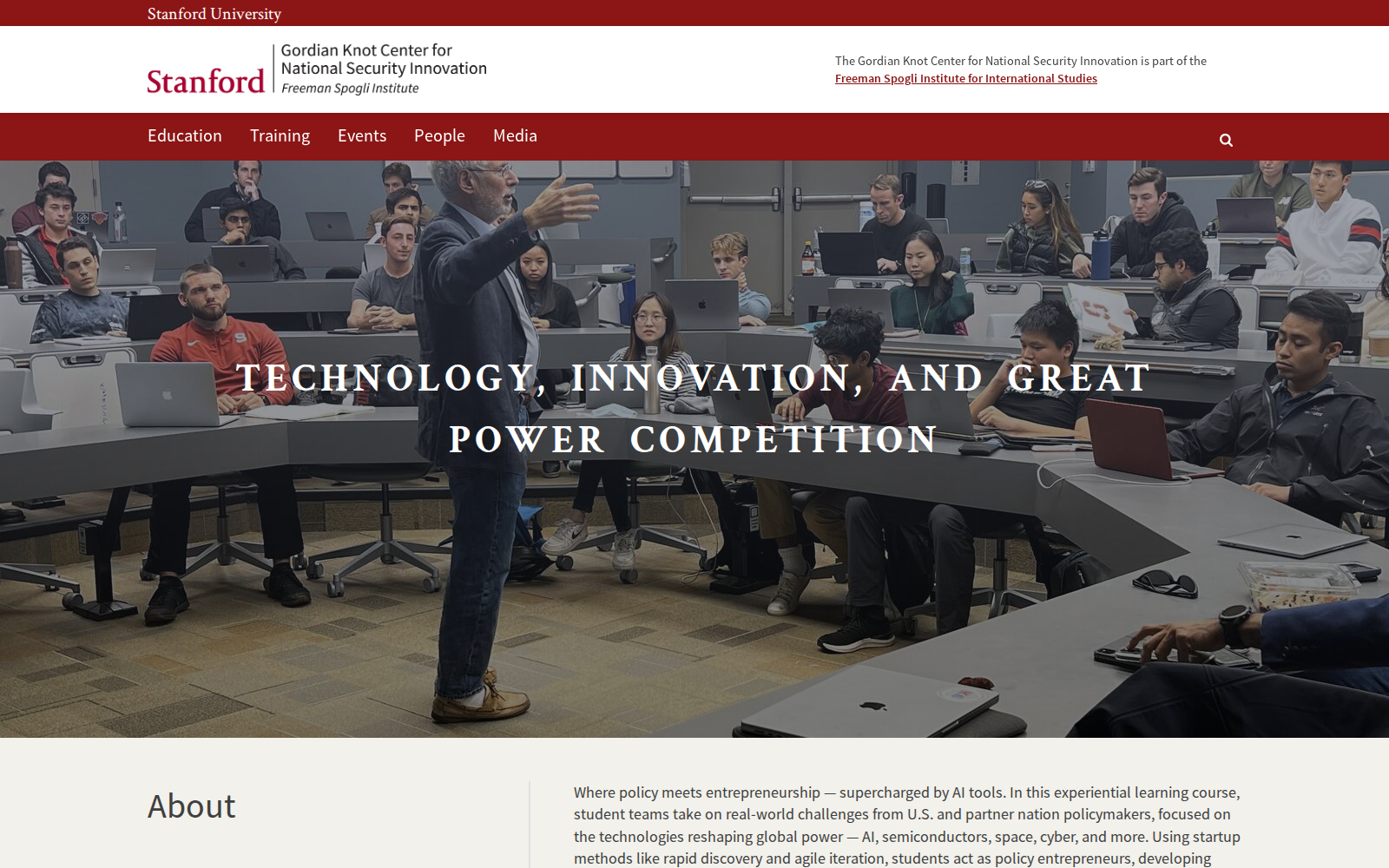
Technology, Innovation, and Great Power Competition at the Gordian Knot Center for National Security Innovation, Stanford FSI.
A research team maps the post-quantum landscape
The project is led by Hannah Nabavi, a graduate student in Aeronautics and Astronautics at Stanford and a Threshold Venture Fellow, whose team is exploring the future of quantum computing and post-quantum cybersecurity. Several members of the research team joined the advisory session. Kop's briefing gave the team the working map of the field: the Q-Day threat—the anticipated moment when cryptographically relevant quantum computers can break today's public-key encryption—and why harvest-now, decrypt-later collection makes it a present-tense problem; post-quantum cryptography (PQC) mitigation in finance, where long-lived records and systemic interdependence concentrate the exposure; and the three quantum pillars—computing, sensing, and networking—each with its own capability curve, supply chain, and policy questions.
The conversation then widened from threat to opportunity: investment dynamics across the quantum ecosystem, where startups are forming and what separates durable ventures from hype, and how the Stanford Quantum Incubator translates governance frameworks into real quantum and quantum-AI applications. For a course built on policy entrepreneurship, that pairing—security stakes on one side, venture opportunity on the other—is precisely the terrain where useful policy gets made. The team set out to share its final paper at the end of the fall quarter.
Teaching the quantum policy generation
The session continues a thread that runs through Kop's work at Stanford and beyond: making the quantum field legible to the people who will govern it next. He has addressed Stanford Quantum Computing Association students on responsible quantum innovation, and the finance-facing PQC arguments the team explored echo the Bletchley Park framework for the quantum age—the allied crypto-modernization agenda he published at War on the Rocks. That an Aeronautics and Astronautics graduate student chose post-quantum cybersecurity as her team's great-power-competition challenge says something that, in Kop's reading, the policy world should register: the next generation of technologists is treating quantum security as core strategic literacy, not as a specialist's afterthought.
For students anywhere weighing a project at the intersection of artificial intelligence (AI), quantum technology, and national security: the field has room—and need—for exactly this kind of disciplined curiosity.
Last updated: June 5, 2026.