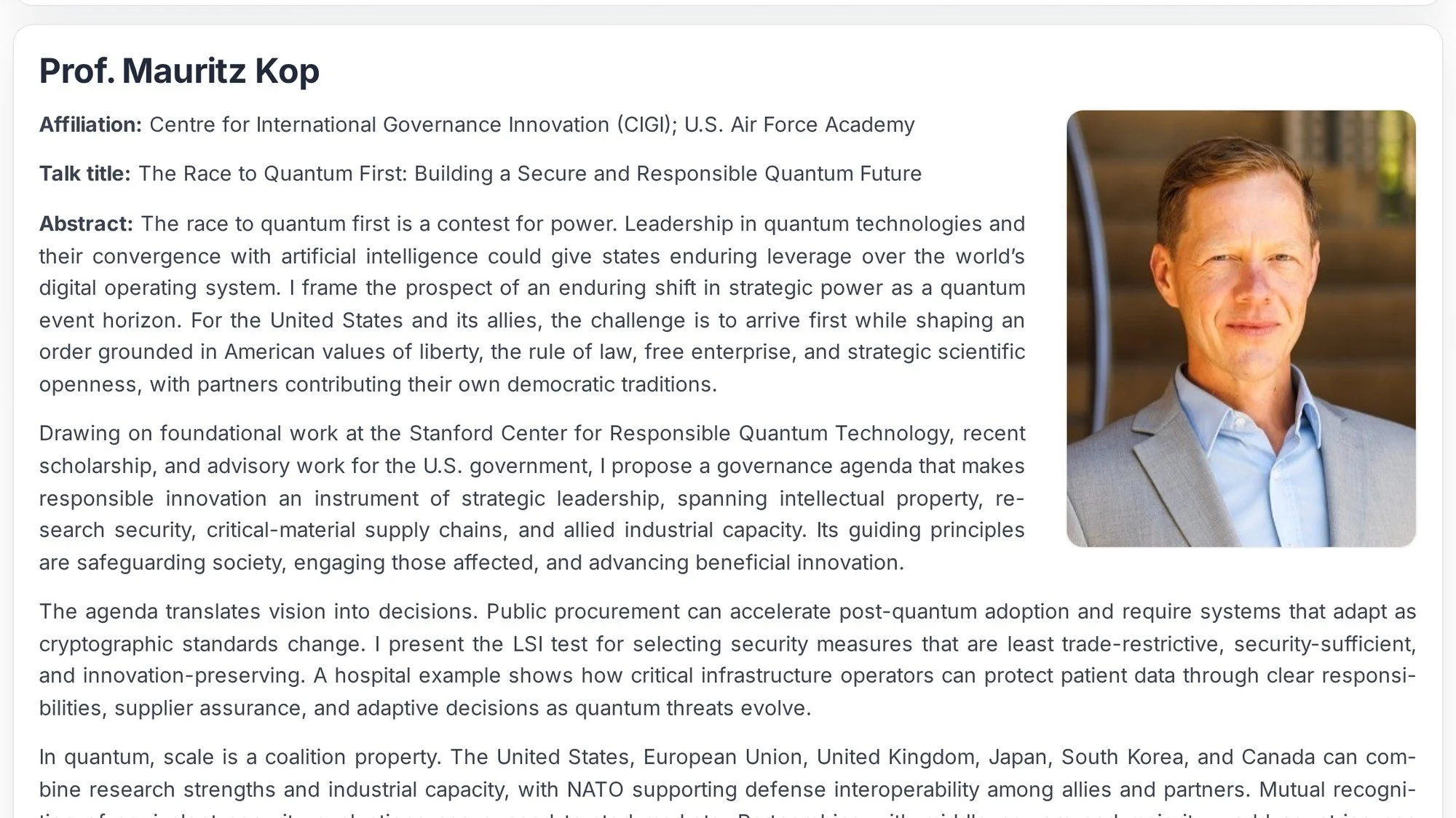
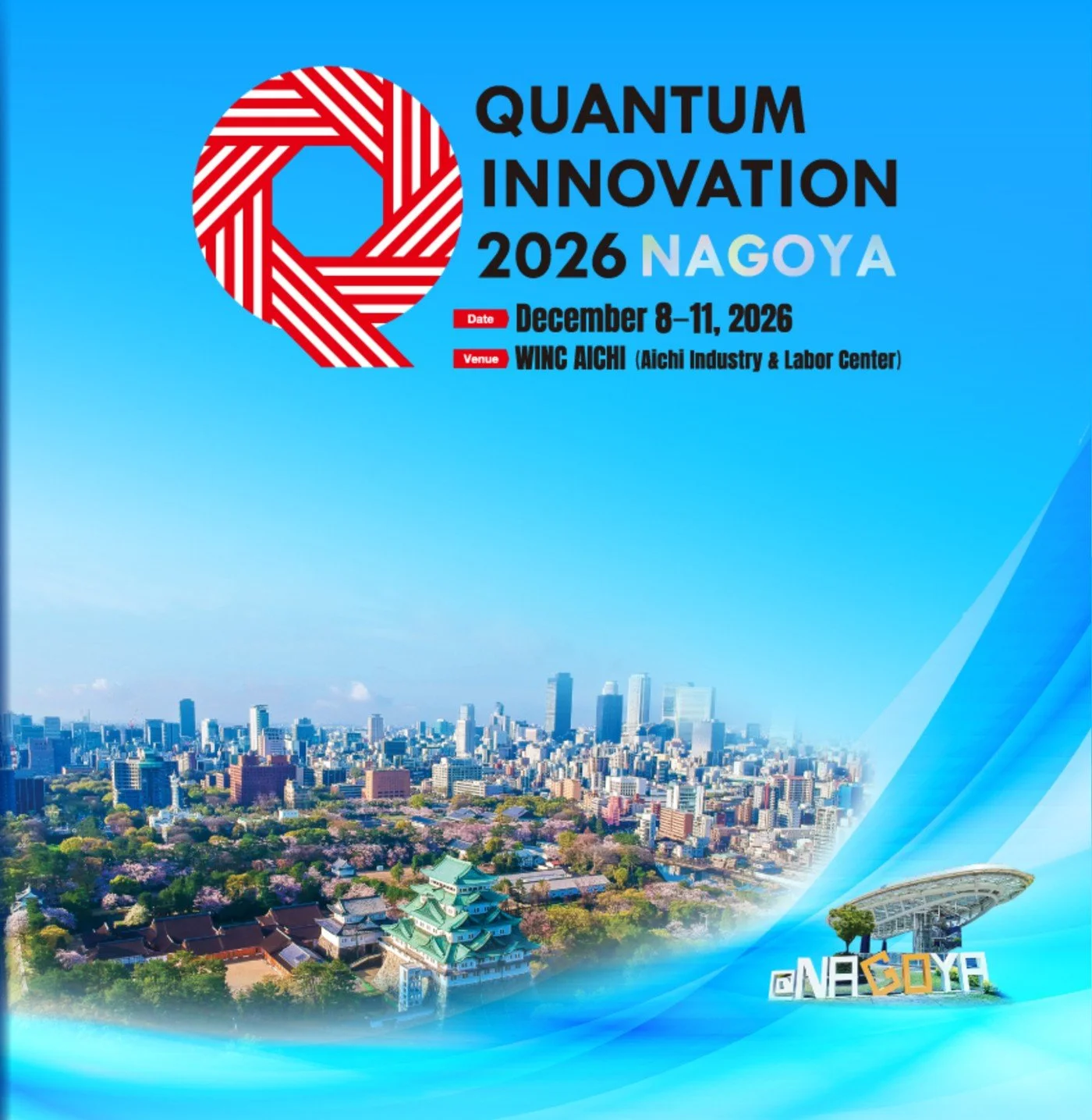
Prof. Mauritz Kop has been invited to speak at Quantum Innovation 2026, the International Symposium on Quantum Science, Technology and Innovation, held from December 8 to 11, 2026 at WINC AICHI in Nagoya. The symposium is organized by Japan's Quantum Technology Innovation Hubs with the support of the Government of Japan and JST. Kop closes the session on Practical Quantum Computing on December 8 with a talk on the legal and governance side of quantum security, titled Before Q-Day: Responsible Quantum Innovation, Standards, and the Post-Quantum Transition.
Japan's National Quantum Symposium Comes to Nagoya
Co-organized by Japan's Cabinet Office, three ministries, JST, RIKEN, AIST, NICT, Q-STAR, and leading universities, and sponsored by Fujitsu, Toyota, Toshiba, and Hitachi, the symposium covers quantum computing, sensing, and cryptography over four days, with a closing day on Japan's Moonshot goal of a fault-tolerant quantum computer. The program spans quantum computing, the post-quantum transition, and quantum networks. Keynotes come from Dorit Aharonov, Amir Yacoby, and Hoi-Kwong Lo, and the invited speakers include Elham Kashefi, Google Quantum AI, IonQ, Intel, and RIKEN. A Japan-Netherlands matchmaking workshop on December 9 links the Dutch and Japanese ecosystems, and Kop will also visit a quantum computer in Japan with the delegation. Participation is free; registration closes on November 22.
Standards, Certification, and the LSI Test for the Post-Quantum Transition
Following two talks on quantum cryptanalysis, Kop speaks from 5:40 to 6:10 PM Japan time on responsible quantum innovation, standards, and the post-quantum transition. He brings Stanford RQT's foundational work, the Quantum-ELSPI framework, and the LSI test from his Nexus paper, which asks that security measures be least trade-restrictive, security-sufficient, and innovation-preserving. Nagoya joins his forthcoming engagements at CIGI, the University of Virginia, and ACM. Our article also profiles Japan's quantum computers at RIKEN, Fujitsu, Quantinuum, and IBM, and a panel on certifying quantum key distribution.
Meer lezen