
Musical Interludes at the 2nd Annual Stanford Responsible Quantum Technology Conference
By our Editor
On May 20, 2024, the 2nd Annual Stanford Responsible Quantum Technology Conference did something academic gatherings rarely do: between panels on quantum law, policy, and ethics, it paused repeatedly, and by design, for live music. The musical interludes threaded through the day became one of the conference's signature features. The substantive proceedings are captured in the official summary of core themes and selected highlights.
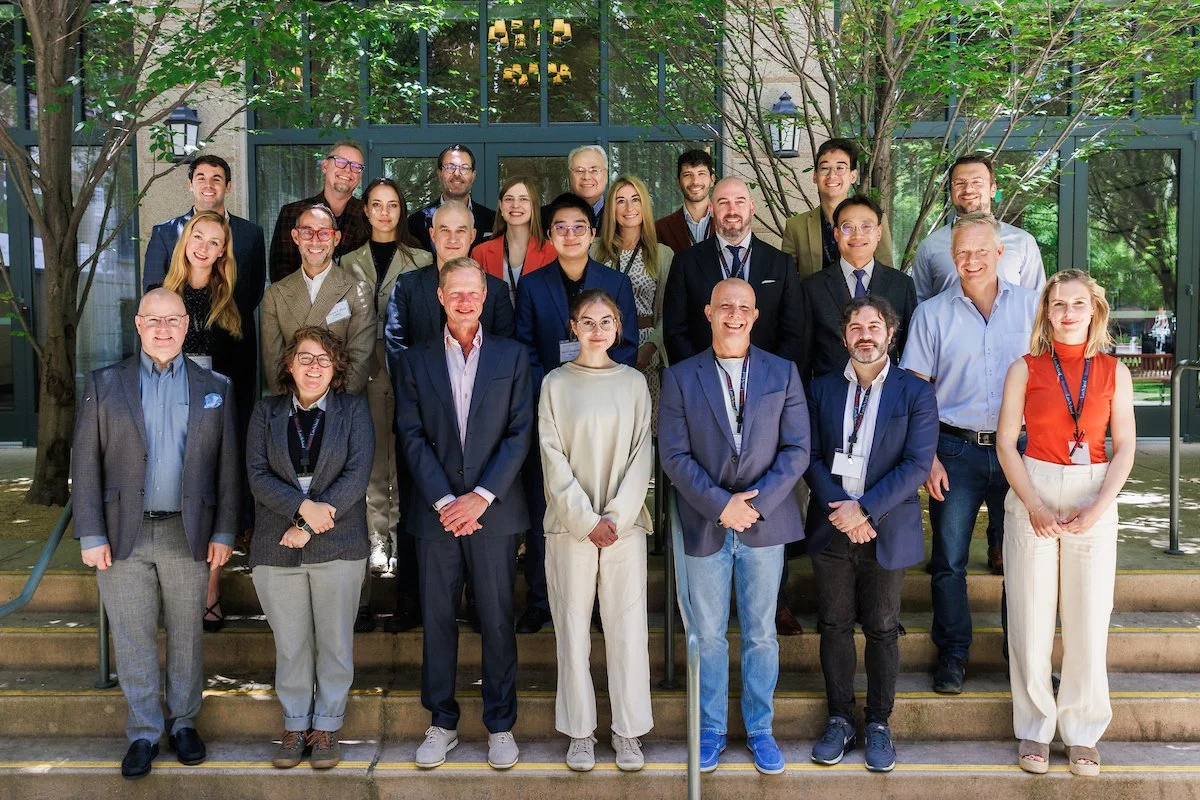
Speakers and participants of the 2nd Annual Stanford Responsible Quantum Technology Conference, Stanford Law School, May 20, 2024.
The program between the panels: Chopin, Schubert, Schoenberg, Bolling, and student ensembles
The interludes were woven directly into the schedule, from the morning's opening through the evening reception. Pianist Katie Liu and coloratura soprano Jin-Hee Catherine Lee carried much of the day, with a repertoire prepared for the conference that ranged from Chopin (the Andante spianato, two mazurkas, the Grande Polonaise Brillante) through songs by Liszt, Handel, and Gounod, to Schubert's Der Hirt auf dem Felsen (The Shepherd on the Rock) and Schoenberg's Drei Klavierstücke. Flutist Daniel Changxiao Sun brought Claude Bolling's jazz-inflected Suite for Flute, and student ensembles, a groove-based jazz collective and a bluegrass band, rounded out the roster toward the reception.
The music was curated and performed largely from within the conference community itself, conference chair included, at the piano. For the scholarly counterpart to the day, the conference summary is permanently archived in the Stanford Digital Repository.
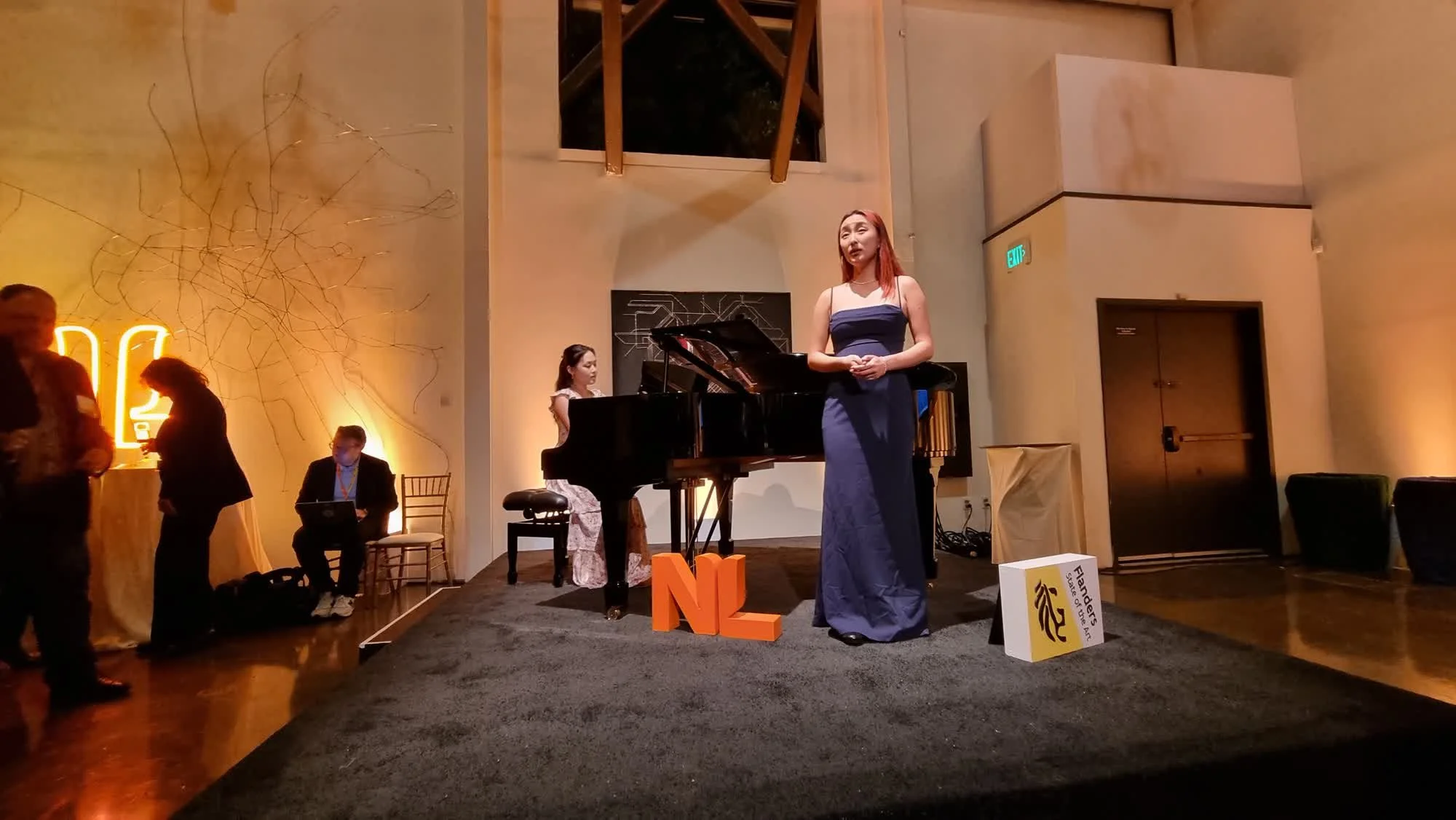
Jin-Hee Catherine Lee (coloratura soprano) and Katie Liu (piano), musicians of the Stanford RQT community, in performance.
Why a governance conference pauses for music: interference you can hear
The choice was deliberate. Music and quantum mechanics share the mathematics of waves. A struck piano string vibrates in many overtones at once, and what the ear receives is their interference, a faithful classical cousin of the amplitude interference that quantum computing harnesses when it steers probability toward a right answer. For an audience spending a full day on the governance of quantum technology, three minutes of Schubert supplement the slides by letting the audience hear classical wave behavior, with an emotional register and a memory attached.
There is a second, quieter reason. Responsible technology depends on institutional culture as much as on legal governance. A conference that mixes physicists, jurists, ethicists, diplomats, and industry, the same mix that debates AI as readily as qubits, needs moments in which the room stops negotiating and simply listens together. The interludes gave participants from different disciplines a shared experience.
How the Stanford RQT conferences built a culture of their own, from 2023 onward
From its first edition, RQT 1.0 in 2023, the Stanford conference cultivated a register distinct from both physics meetings and law reviews: interdisciplinary, candid, and humane. The 2024 edition extended that signature across panels on standards, national security, healthcare, and the convergence of quantum with artificial intelligence. A fuller impression of the day is in the companion report, Inside the Second Stanford Responsible Quantum Technology Conference.
That the conference chair, Mauritz Kop, is a classically trained musician, see the music-law side of this blog, explains how the program came together. The reason it belonged there is simpler: informal cultural programming helps participants in an interdisciplinary field build working relationships.
For conference organizers in emerging-technology governance, the practical message is to program the conference culture as carefully as the panels. Organizers should judge cultural programming by whether it supports substantive exchange across disciplines, and the Stanford interludes met that test.

Mauritz Kop plays piano at Stanford RQT 2.0_May 2024
Last updated: September 3, 2026