
Stanford RQT 2.0: Inside the Second Stanford Responsible Quantum Technology Conference at Stanford Law School, Chaired by Mauritz Kop
By AIRecht Editor
Stanford, CA, May 20, 2024—On a spring Monday at Stanford Law School, the quantum technology community gathered for the second annual Stanford Responsible Quantum Technology Conference, chaired by Mauritz Kop, Founder of the Stanford Center for Responsible Quantum Technology (Stanford RQT). This account follows the chair's own record of the day: how the conference came together, the argument of his welcome address, and the arc of the program from opening remarks to the concluding panel on national security. A complementary summary of core themes and selected highlights was published separately as the conference's thematic companion; what follows is the organizer's-eye view of the event itself.
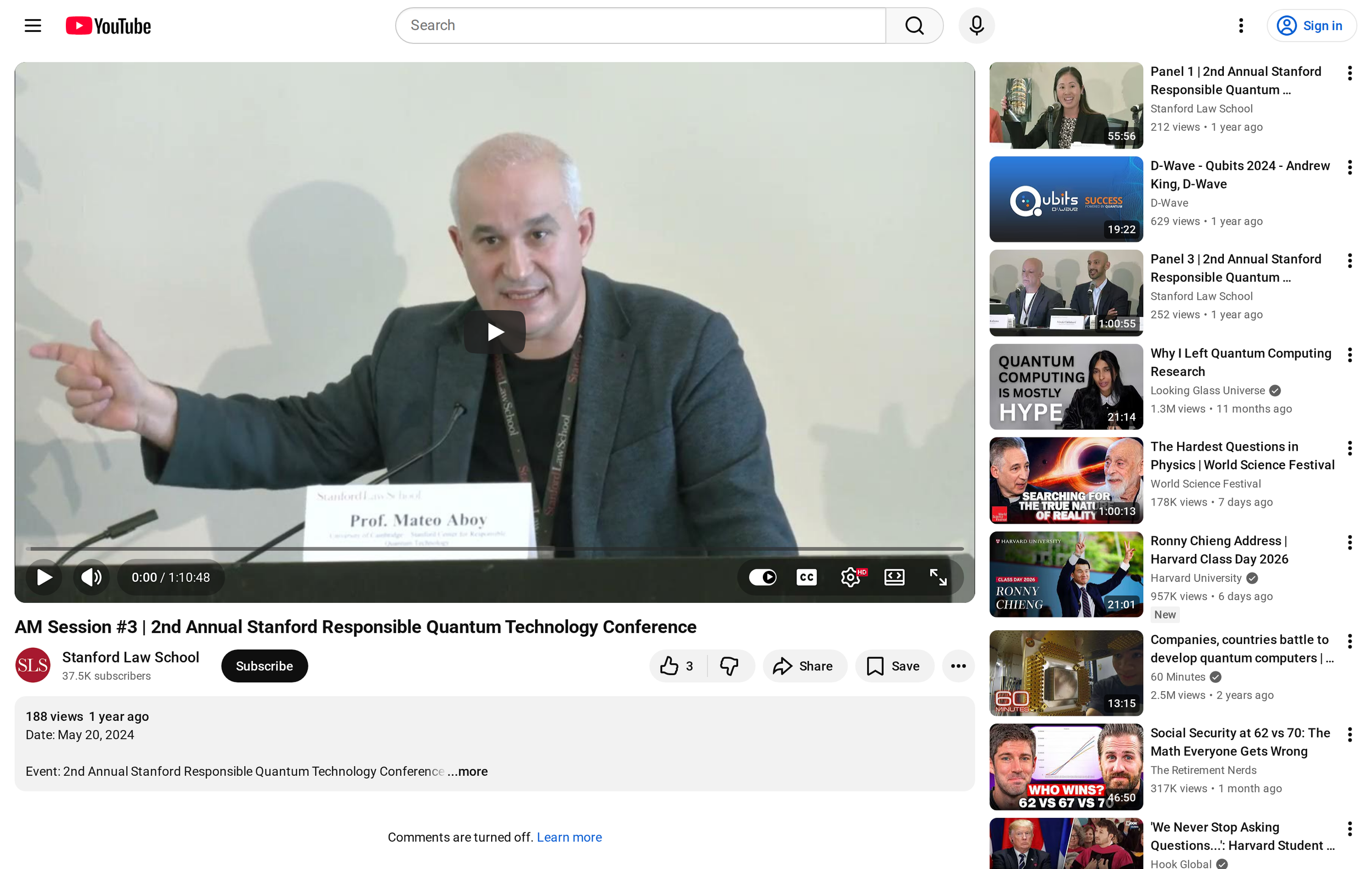
YouTube / Stanford Law School — conference recording, May 20, 2024.
The welcome address: responsible quantum technology, without breaking the laws of physics
Kop opened by setting the table. “Welcome everyone to the second Stanford Responsible Quantum Technology Conference!” he told the room, before recording the institutional debts that made the day possible—an unusually deliberate act of thanks that doubled as a map of the program's support. He thanked Stanford Law School interim Dean Professor Paul Brest; the faculty moderators, Professors Mark Lemley and Hank Greely; Roland Vogl; and the staff who assembled the event. He named the conference's sponsors: Daiki, the University of Copenhagen's Centre for Advanced Studies in Biomedical Innovation Law (CeBIL), and the Novo Nordisk Foundation Inter-CeBIL Program.
The address then made its central claim. “Over the past two years I had the honor to lead an interdisciplinary team of leading lights, and together we conceptualized what Responsible Quantum Technology amounts to, without breaking the laws of physics,” Kop said. That clause—without breaking the laws of physics—is the governing discipline of the whole RQT project: a governance program built to respect the mechanics rather than to wish them away. The work, he noted, had produced foundational papers at Stanford, the Berkman Klein Center at Harvard, and in Nature Physics, and the establishment of the Center itself, inaugurated on campus the previous December. This account belongs to the Stanford-facing responsible quantum technology arc that the Center has built across scholarship, conferences, and standards.
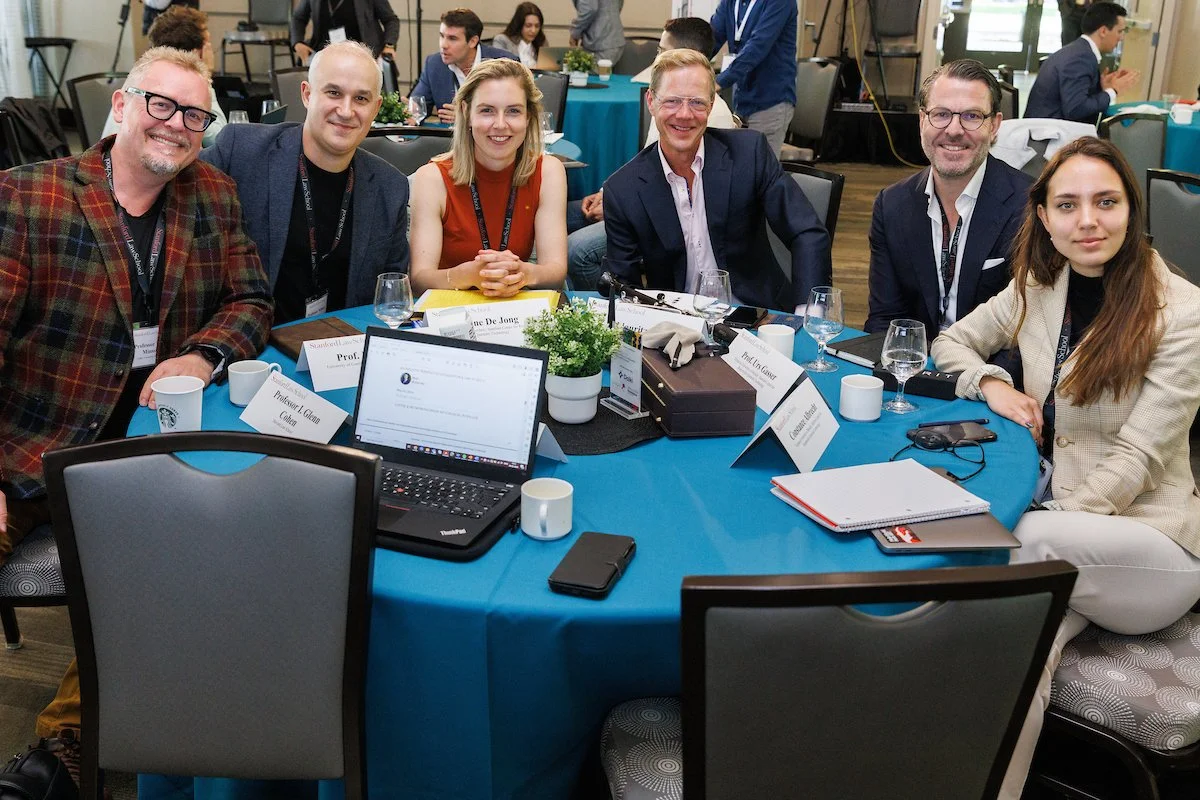
This year's theme was quantum simulation, which Kop framed precisely: it “enables the study of quantum systems by utilizing another quantum system that operates under the same rules.” The framing matters for a law-and-policy audience, because quantum simulation is among the nearest-term applications of the second quantum revolution—the move from merely observing quantum effects to engineering superposition, entanglement, and tunneling as working primitives. What makes a quantum machine a faithful stand-in for molecules and materials is that its own dynamics obey the same quantum mechanics—superposition, entanglement, and interference—as the system it models, rather than approximating them classically. The same mechanics impose hard limits: an arbitrary unknown quantum state cannot be copied and cannot be measured without disturbance, and those constraints are exactly what shape the security and verification questions a governance framework must answer. The mechanics, in other words, are not decoration around the legal argument; they are its premise.
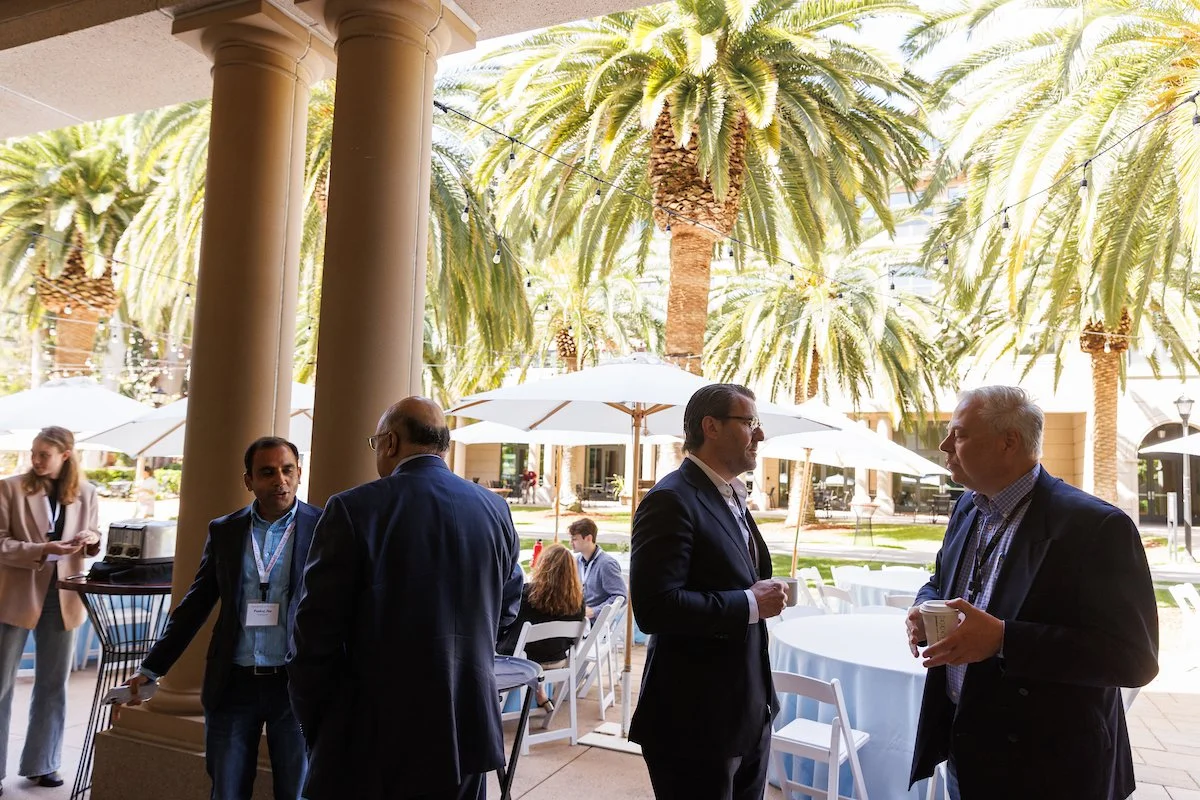
Kop also stated the Center's posture plainly. While respecting the demystification efforts of hard-science colleagues, the Center takes “a slightly techno-optimistic stance”—pro-innovation, deliberately calibrated “to avoid underpromising and policy makers lagging.” The conference, he said, would examine how to balance maximizing benefits and mitigating risks across computation, sensing, simulation, communication, materials, and quantum-classical hybrid approaches, taking a pro-innovation stance throughout. He situated the day within the Center's two-year record: the foundational papers, the inauguration of the Center on campus the previous December, and the expansion of the Center with a group of fellows and affiliated faculty whose RQT projects would be presented over the course of the day. The program, in short, was structured so that the Center's own research—not only invited guests—would carry the argument.
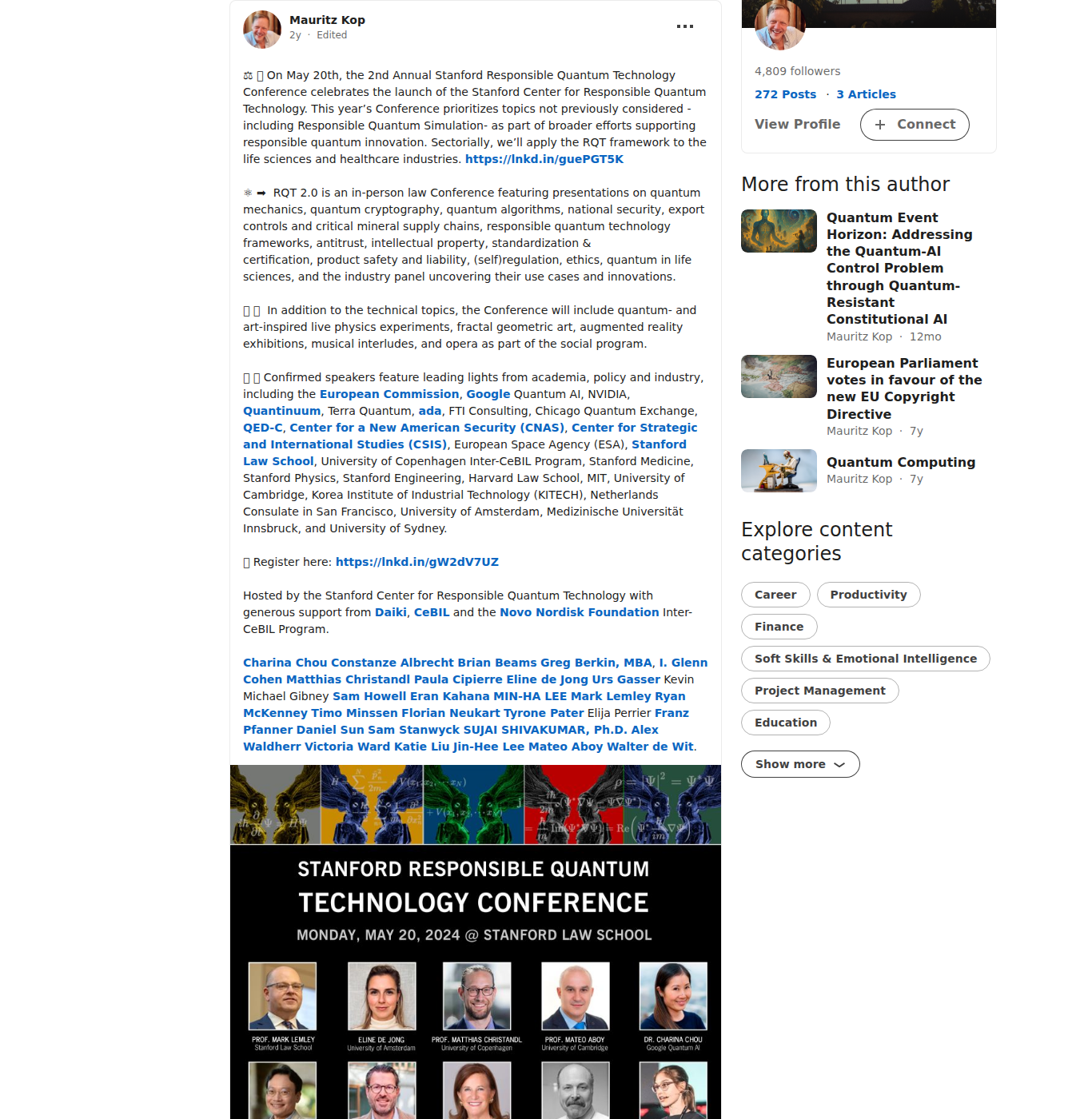
LinkedIn announcement by Mauritz Kop with the official conference poster, May 2024.
How the day was built
The housekeeping in the welcome address revealed the conference's architecture as a designed object. Technical talks were interleaved with quantum- and art-inspired live physics experiments, fractal art, twelve musical interludes, and an opera, performed by Stanford musicians—many pursuing double masters across music, computer science, and physics. A timekeeper, who had studied physics at Yale and worked with Stanford's RegLab, held speakers to strict limits with green and stop signs. Audience members were asked to state name and affiliation before questions. The point of the format was approachability: the program was, in Kop's words, meant to be “illuminating in many dimensions.” (The musical program is the subject of a dedicated forthcoming piece and is therefore noted here only in passing.)
The program arc, panel by panel
Opening Session: Responsible Quantum Innovation
The morning opened on responsible quantum innovation. Professor Timo Minssen, Director of CeBIL and the Novo Nordisk Copenhagen-Cambridge-Harvard Inter-CeBIL Program, described that program's quantum-related work—established in 2018 on a Novo Nordisk Foundation grant, renewed in 2023, and committed to empirically grounded, evidence-based legal research across patents, information law, quantum-safe cryptography, and adaptive regulation. He framed the lawyer's role with care: regulators must “play in the sandboxes” alongside quantum scientists rather than scare them off, supporting the beneficial side of dual-use technology while preventing harm.
Keynote: The Nature Physics Commentary, the SEA Framework, and the Ten Principles
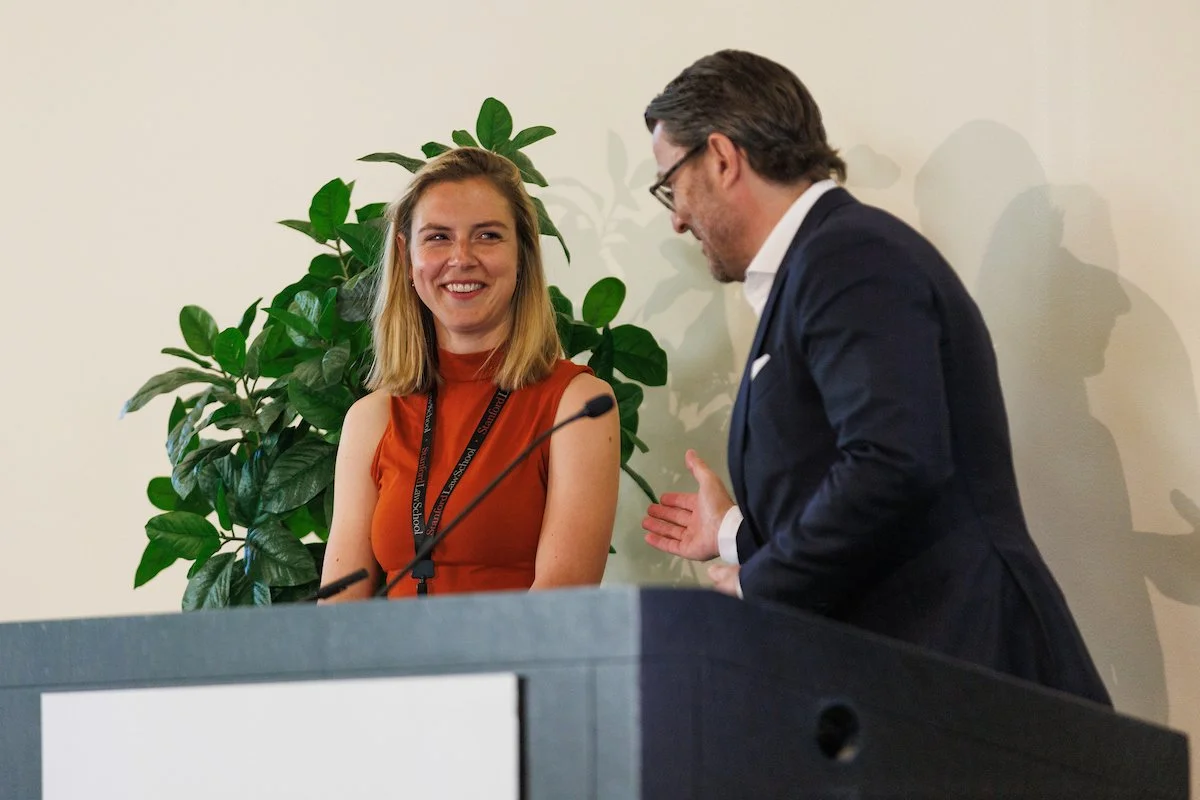
Eline de Jong and Professor Urs Gasser then presented the Nature Physics commentary on responsible quantum technology, co-authored with Kop. Their argument turned on two claims: that the time has come to consider guardrails, and that the science community shares responsibility for developing them. De Jong introduced the SEA framework—safeguarding, engaging, and advancing society—and the team's Ten Principles for Responsible Quantum Innovation. In a later fellowship talk she pressed three philosophical challenges the framework raises: how risks are defined (often, she argued, as constructed risks built on expectations and decisions, as with the cybersecurity threat from large-scale quantum computers), how society can be engaged meaningfully given that engagement is “epistemically conditioned,” and how to decide what counts as the right impact.
Hardware: Quantum Materials and the Physics of New Functions
Professor Mark Brongersma, of Stanford's Department of Materials Science and Engineering, brought the hardware. He traced a personal arc from Faraday's ruby-red gold colloids to flat metamaterial optics and atomically thin quantum materials, showing how new materials repeatedly unlock new functions—tunable lenses, transparent antennas, eye-tracking layers—and observing that quantum defects in atomically thin sheets can serve as sources for quantum optics and quantum computing. He closed on the interdisciplinary lesson of the day: that working with Kop had taught him to see the ethical, legal, societal, and policy implications of work he had never before framed that way.
Industry Panel: Novel Quantum Applications and Use Cases
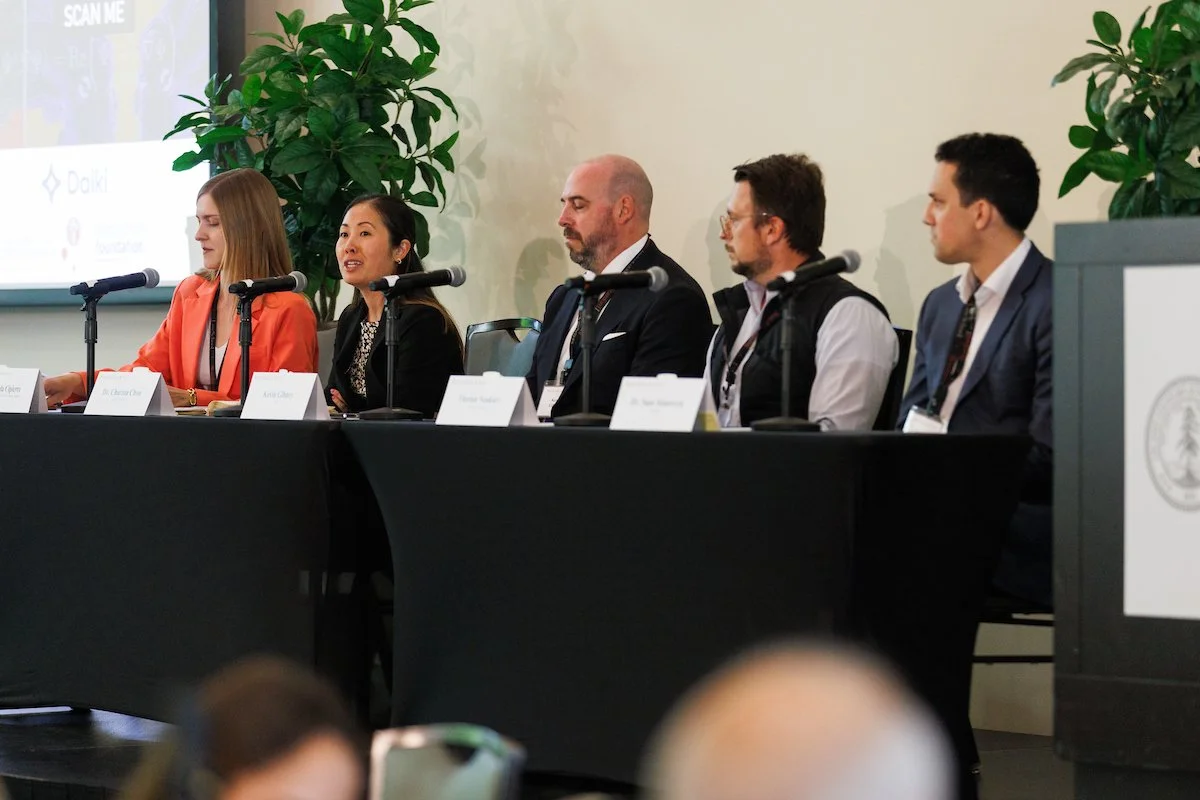
An industry panel moderated by Paula Cipierre examined novel quantum applications and use cases, drawing together perspectives from research and industry on where quantum computing genuinely helps and where it does not yet. Panelists pressed the recurring questions of the day—where the real risks lie, how to engage regulators without killing innovation, and how to allocate the very large resources flowing into the field. A representative from the conference sponsor Daiki described a platform that operationalizes the Ten Principles into a working governance system, built around standards such as ISO/IEC 42001 and a recipe-style approach to compliance—an effort to bridge the persistent gap between technical and legal teams inside organizations.
Panel: Quantum in the Life Sciences and Healthcare
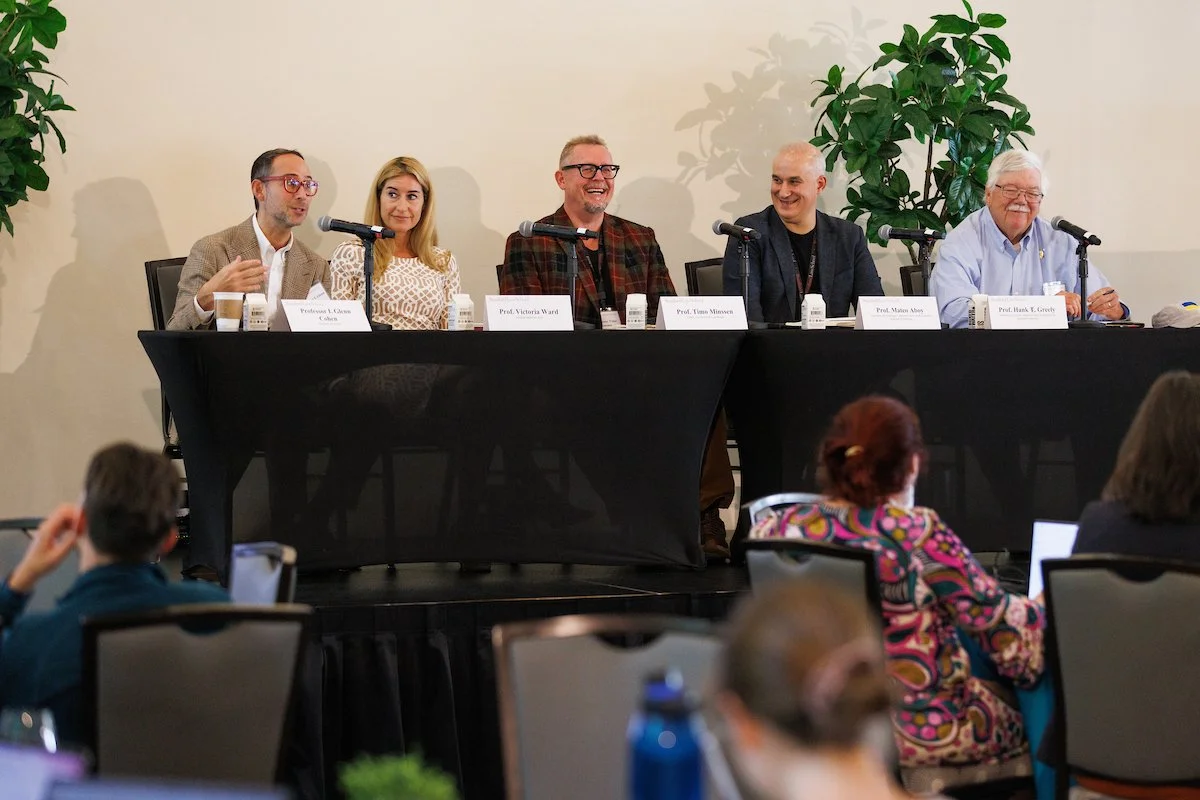
After lunch, Professor Hank Greely moderated a panel on quantum in the life sciences and healthcare, with Professor Mateo Aboy, Professor Timo Minssen, an associate professor of pediatrics, and Professor Glenn Cohen. Aboy walked the room through research, invention, and commercialization, arguing from peer-reviewed studies, the patent landscape, and public companies' own filings that quantum in healthcare sits at an early technology-readiness level—closer, in his analogy, to mid-century semiconductors than to artificial intelligence (AI)—and that disclosures themselves state no current quantum advantage. The pediatrician grounded the discussion in field realities, from community-health technology in rural settings to metabolomic prediction of preterm birth and satellite detection of forced labor, with a plea to weigh equity for those who most need the technology's benefits. Cohen, in turn, asked the lawyer's sharpest question: what, if anything, is genuinely novel here—and what that means for whether existing regulatory models already suffice.
Fellowship Talk: “Project Quantum Leap” — Patenting Trends in Quantum Computing
Professor Mateo Aboy also presented his RQT fellowship project, “Project Quantum Leap,” an empirical study of patenting trends in quantum computing. Using audience participation, he showed that the patent record contains both stagnation and growth—“a kind of quantum mechanical superposition where the stagnant and the growing are correct”—with a marked uptick since 2018, claims concentrated in physical realizations and error correction, and a profile far closer to semiconductors than to AI. His methodological point was the through-line of the conference: governance proposals should be tested against empirical evidence rather than asserted.
Governance Session: An FDA-Style Framework and the Quantum-Governance Handbook
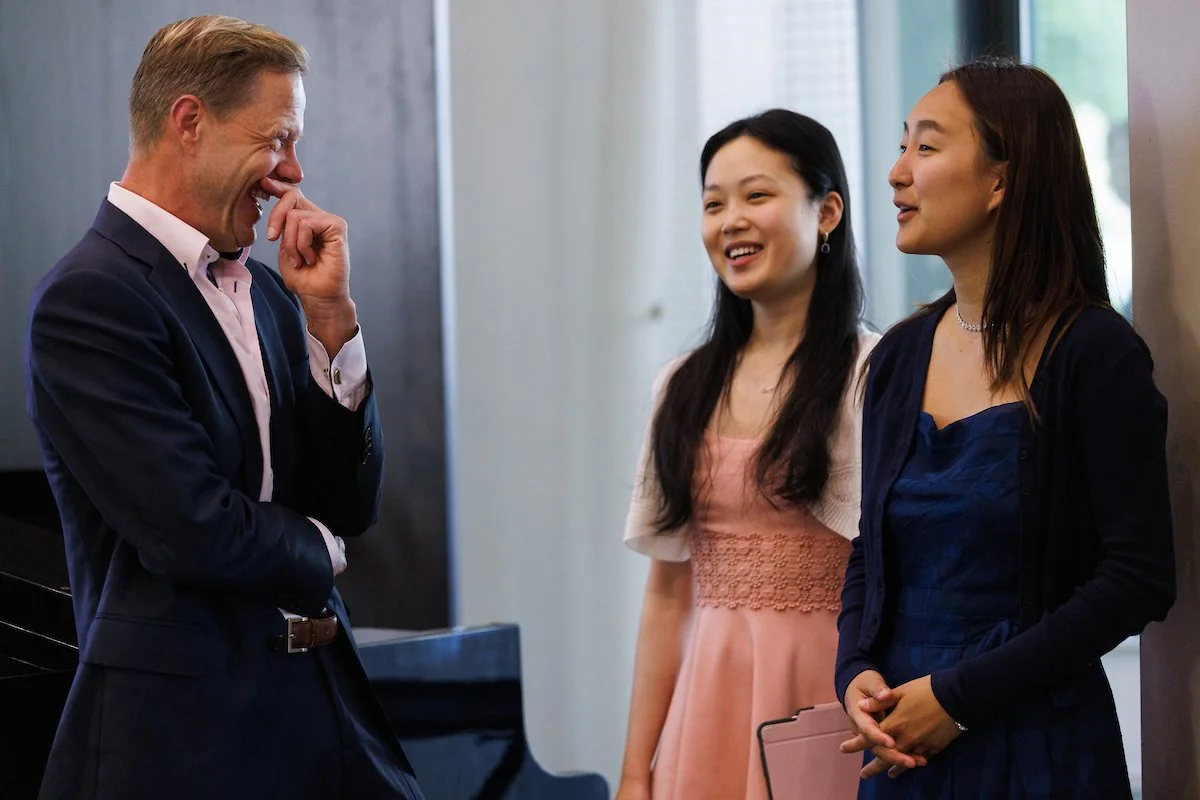
A wide Stanford Law School conference hall under arched sandstone, the air above the seats dissolving into an entangled-qubit lattice.
The middle of the program turned to governance and regulation directly. A session built around Professor Alexandra Waldherr, Professor Glenn Cohen, and Kop set out the case for a regulatory framework for quantum technology modeled, by analogy, on the U.S. Food and Drug Administration: a phased pipeline in which theory and experiment must converge, each phase producing standardized documentation, with mandatory registration of quantum approaches in a database—protective of intellectual property, yet visible enough that the field knows where it stands. The proposal, anchored in the Ten Principles and in lessons from the biosciences, drew constructive stress-testing from the floor on whether pure mathematics or algorithms should fall within any registration regime. A separate session previewed a forthcoming quantum-governance handbook edited by a Center Fellow, mapping the governance “stack”—actors, instruments, and the genuinely sui generis question of what changes when one's claim is about how a computation unfolds on a quantum machine, where state cannot simply be copied or inspected as on a classical computer.
Fellowship Talks: Building Global Capacity and the Quantum Criticality Index
Two fellowship talks broadened the lens internationally. Professor Urs Gasser and Constanze Albrecht reported on “Building Global Capacity for Responsible Quantum Technologies,” describing a global listening tour that began in Bangkok and a candid reading of Thailand's national roadmap against its on-the-ground realities—fragmentation, short-term investment, and the risk that security concerns prompt restrictive regulation too early. A fellowship presentation on the “Quantum Criticality Index” addressed vulnerabilities in the supply chains critical to quantum technology, proposing an indicator-based methodology for identifying choke points in critical raw materials.
Strategic Sessions: Quantum Sensing, Deterrence, and Government Perspectives
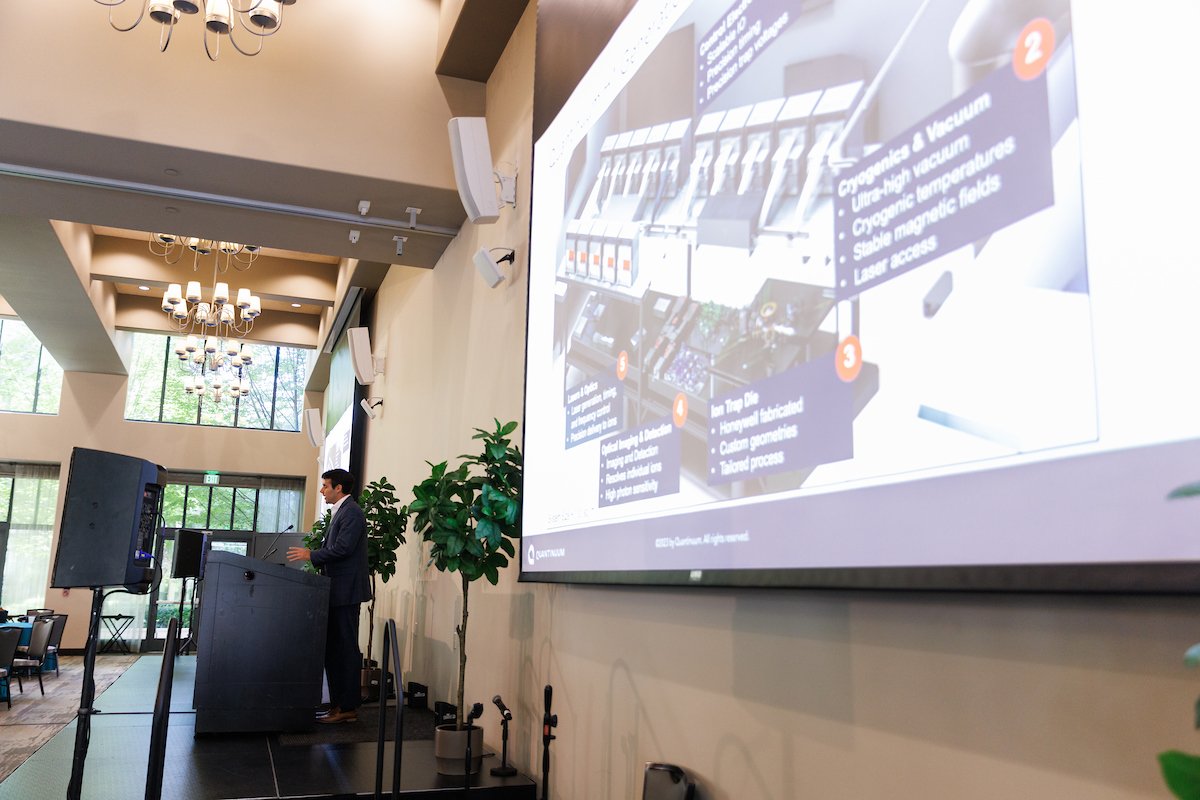
The afternoon's strategic sessions added government and security voices. A presentation on quantum sensing and nuclear deterrence examined, soberly, how quantum sensing might affect submarine detection and missile accuracy while stressing how far operational reality still lags the theory. An industry talk from a quantum-computing company surveyed advances in error correction and called for sustained government support and use-case-driven regulation. A representative of the Netherlands Innovation Network situated the day in the Dutch innovation strategy and its 2035 quantum ambitions, candidly noting that, within his own government, the channels for capturing a quantum opportunity are clearer than the channels for raising a quantum worry. A recorded message from a European Commission director set out Europe's infrastructure-led approach and its position that, for the use cases known today, existing digital legislation—including the EU AI Act and health-data rules—already supplies much of the needed safeguard.
Closing Panel: Quantum Governance, National Security, and Geopolitics
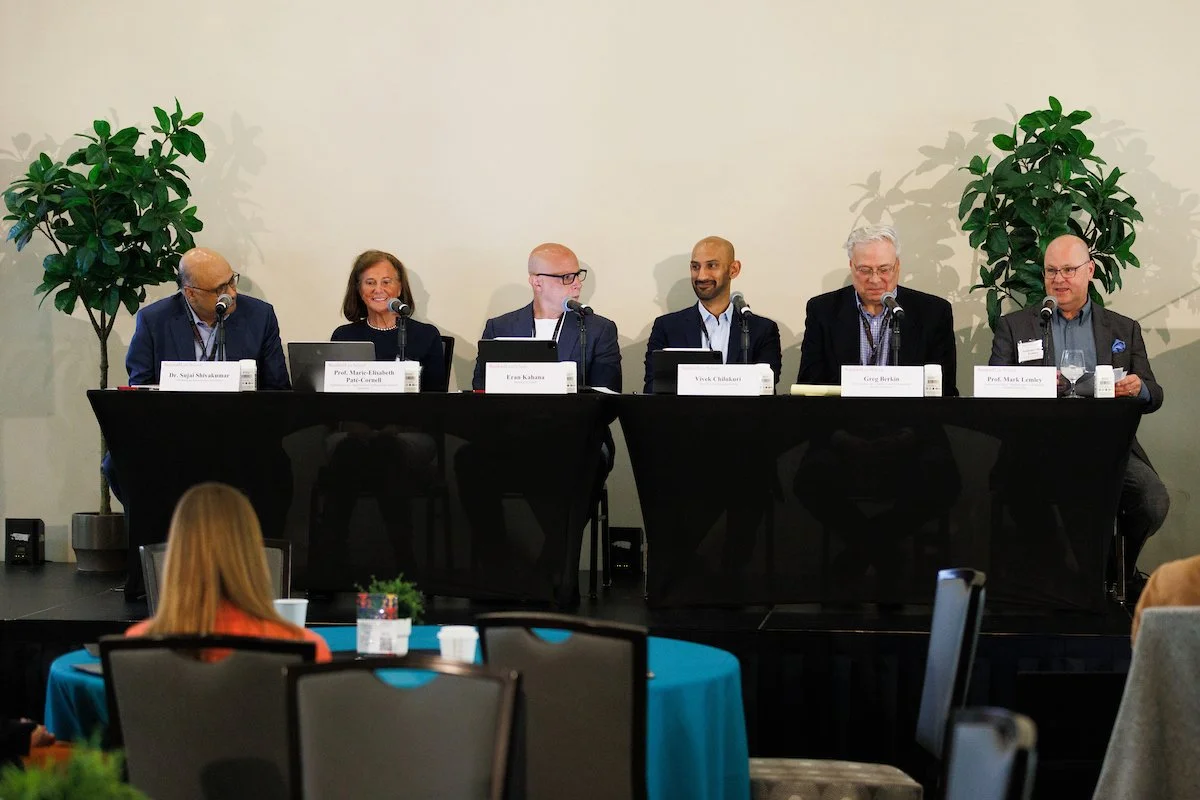
The conference closed with a panel moderated by Professor Mark Lemley, Director of Stanford's Program in Law, Science and Technology, on quantum governance, national security, and geopolitics. Its panelists—Greg Berkin, Vivek Chilukuri, Eran Kahana, Professor Marie-Elisabeth Paté-Cornell, and Sujai Shivakumar—worked through U.S.–China competition, supply-chain dependencies, export controls, the open-versus-closed question familiar from AI, and the persistent gap between long-horizon strategic technology and short-horizon legislative attention. The exchange was pointedly unsettled: several panelists doubted that comprehensive legislation would precede deployment, and pressed instead the faster levers of standards and best practice—work led by bodies such as NIST and ISO—while a recurring counterpoint warned against waiting for harm before acting. The panel also returned, repeatedly, to a question the morning had raised: how to regulate something that means so many different things at once—sensing, communication, simulation, and computing each sitting at different points on the technology-readiness curve, and each implicating different instruments. Regulating specific applications, several speakers suggested, was more sensible than legislating “quantum” as a single object. The encryption thread ran through the discussion as the one concrete, near-consensus risk: because a sufficiently capable quantum computer would break widely deployed RSA, Diffie-Hellman, and elliptic-curve public-key systems, the “harvest now, decrypt later” problem makes the migration to post-quantum and quantum-safe methods a present task rather than a future one.
The institutional fabric
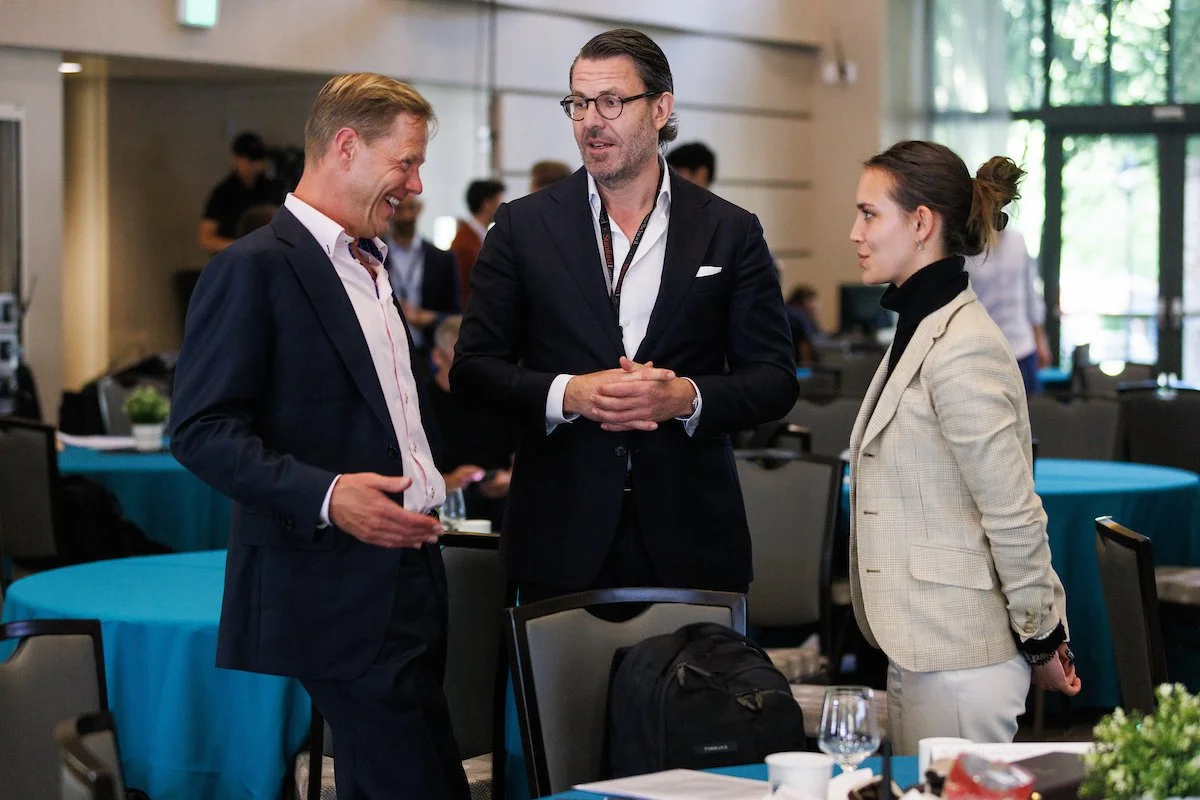
What held all of this together was Stanford Law School and the network around it. Kop's thanks, recorded in the transcript, name the architecture explicitly: interim Dean Paul Brest; Professors Mark Lemley and Hank Greely as moderators; Roland Vogl; and the staff who organized, promoted, and catered the event, secured the venue, and—he made a point of it—got the piano in on time. Conference support came from Daiki, the University of Copenhagen's CeBIL, and the Novo Nordisk Foundation Inter-CeBIL Program. In his closing remarks Kop reserved a special thanks for Lemley, “who has been such an inspiring and caring mentor to me over the past five years,” and credited the students, musicians, and the writer of the conference summary. The naming is not ceremony for its own sake; it records that responsible quantum technology, as practiced here, is an institutional achievement rather than an individual one—an alignment of a law school, two European research programs, an industry sponsor, and a center of fellows and affiliated faculty.
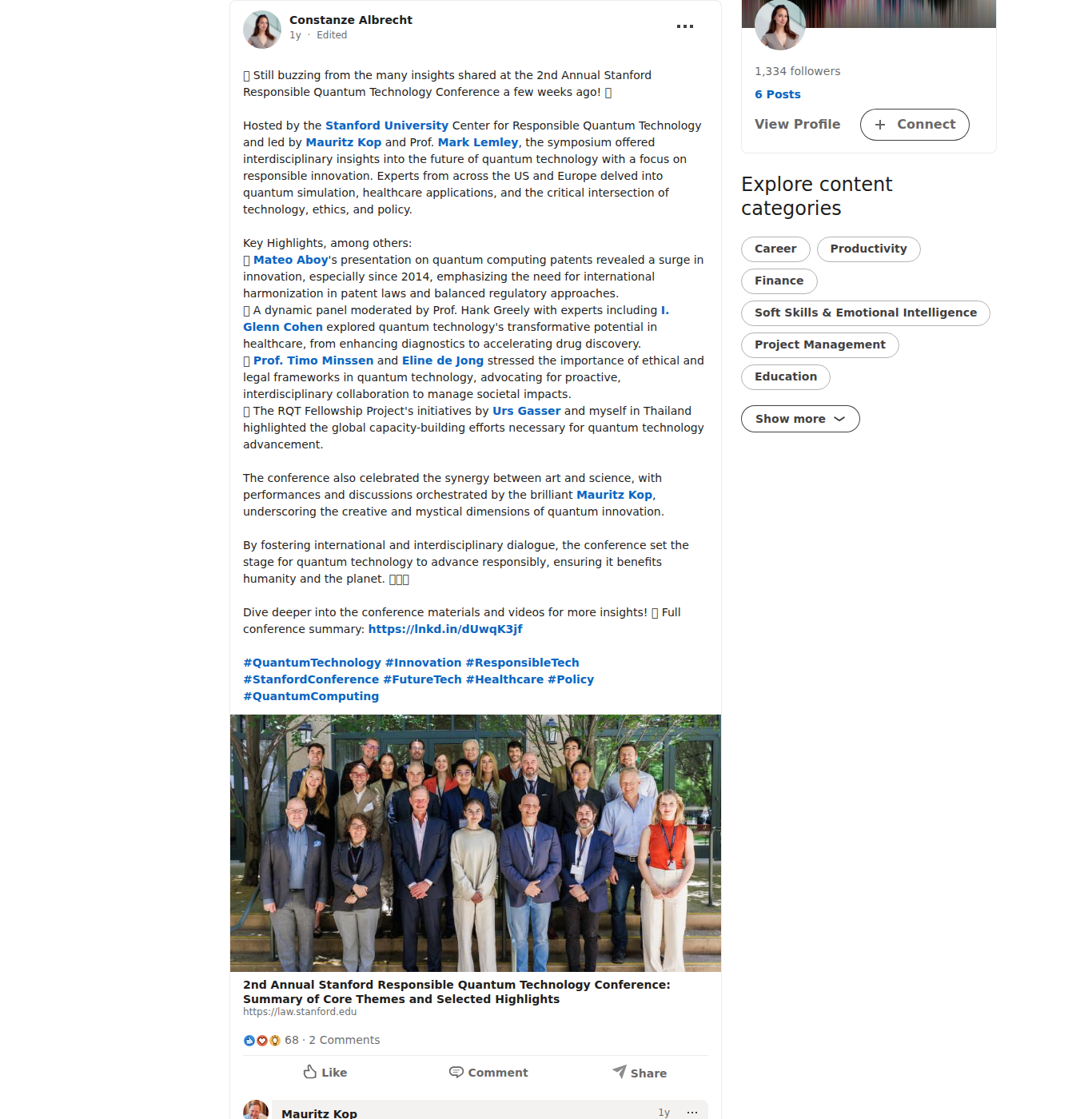
LinkedIn post on the 2nd Annual Stanford RQT Conference, June 2024.
What the second edition says about a maturing field
A second annual conference is itself a datum. Where a first event must argue that the question exists, a second can assume it and move to method. The 2024 edition did exactly that: it took the existence of a responsible quantum technology agenda for granted and spent the day pressure-testing how to do it—through empirical IP studies, constructed-risk analysis, the SEA framework and the Ten Principles, a phased FDA-style proposal and its critics, capacity-building abroad, supply-chain criticality, and the national-security frame. Disagreement was the point. The healthcare panel and the closing panel openly contested whether quantum is genuinely novel for law, whether an agency model would help or merely slow new entrants, and whether standards should lead where statutes cannot keep pace.
Kop's closing read that maturity back to the room. The day, he said, had ranged across “quantum simulation, materials, devices, governance and national security, societal impacts, quantum AI hybrids, and novel use cases.” He pointed to the Stanford Quantum Incubator as the Center's vehicle for building “a competent values based quantum ecosystem here in the Valley and beyond,” and framed the combined effort as a research agenda in a “golden triangle of academia, industry, and policy.” He ended on the mechanics he had begun with: “As we stand on the cusp of the second quantum revolution, we face unprecedented opportunities and challenges in the field of quantum technology”—and an invitation to return for the third edition.
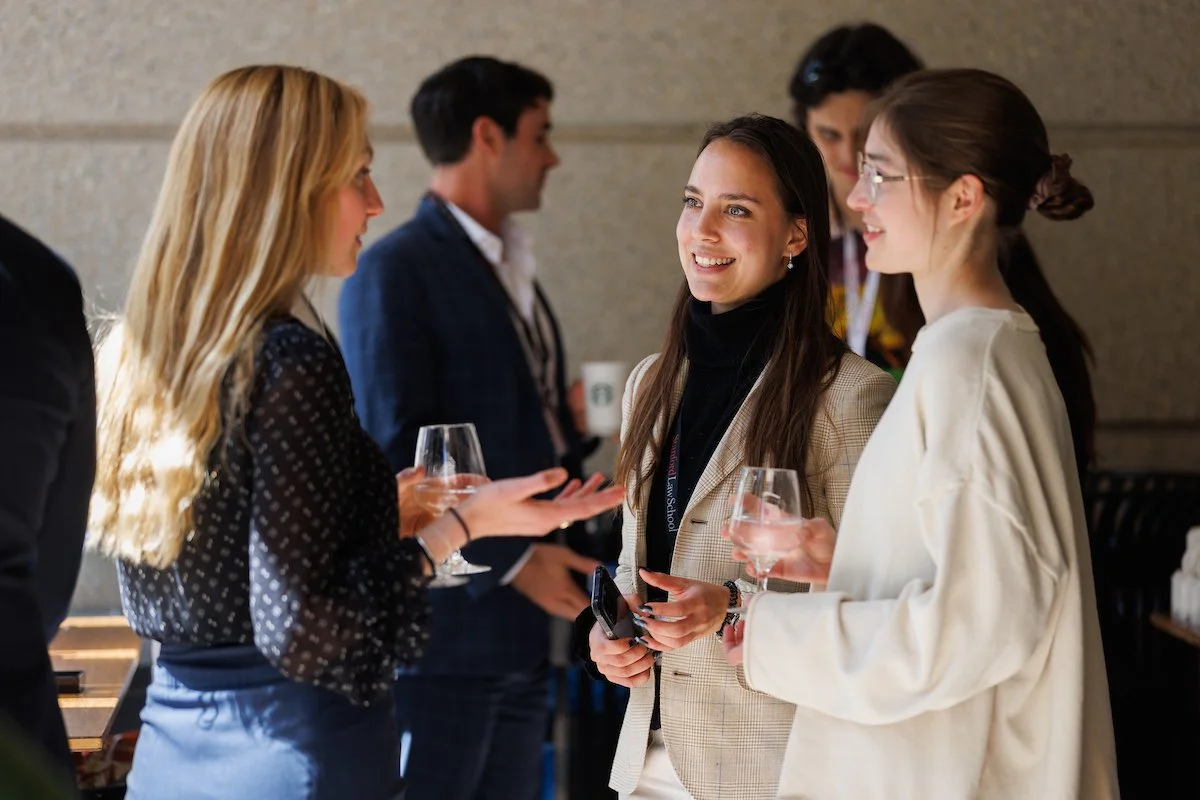
For readers tracing the institutional arc, the conference sits within a documented sequence: the inaugural 2023 Stanford RQT Conference; the launch of the Stanford Center for Responsible Quantum Technology directed by Kop; and the Stanford Quantum Incubator launched at Stanford Law School. The framework refined here has since traveled to new audiences, including the cadets to whom Kop later taught quantum governance at the United States Air Force Academy. Together with the separately published thematic summary, the chair's record above is intended as the durable account of how the second edition came together, what it set out to do, and what its existence says about a field that is, deliberately and self-critically, learning to govern itself before it has fully arrived.
Last updated: June 5, 2026.
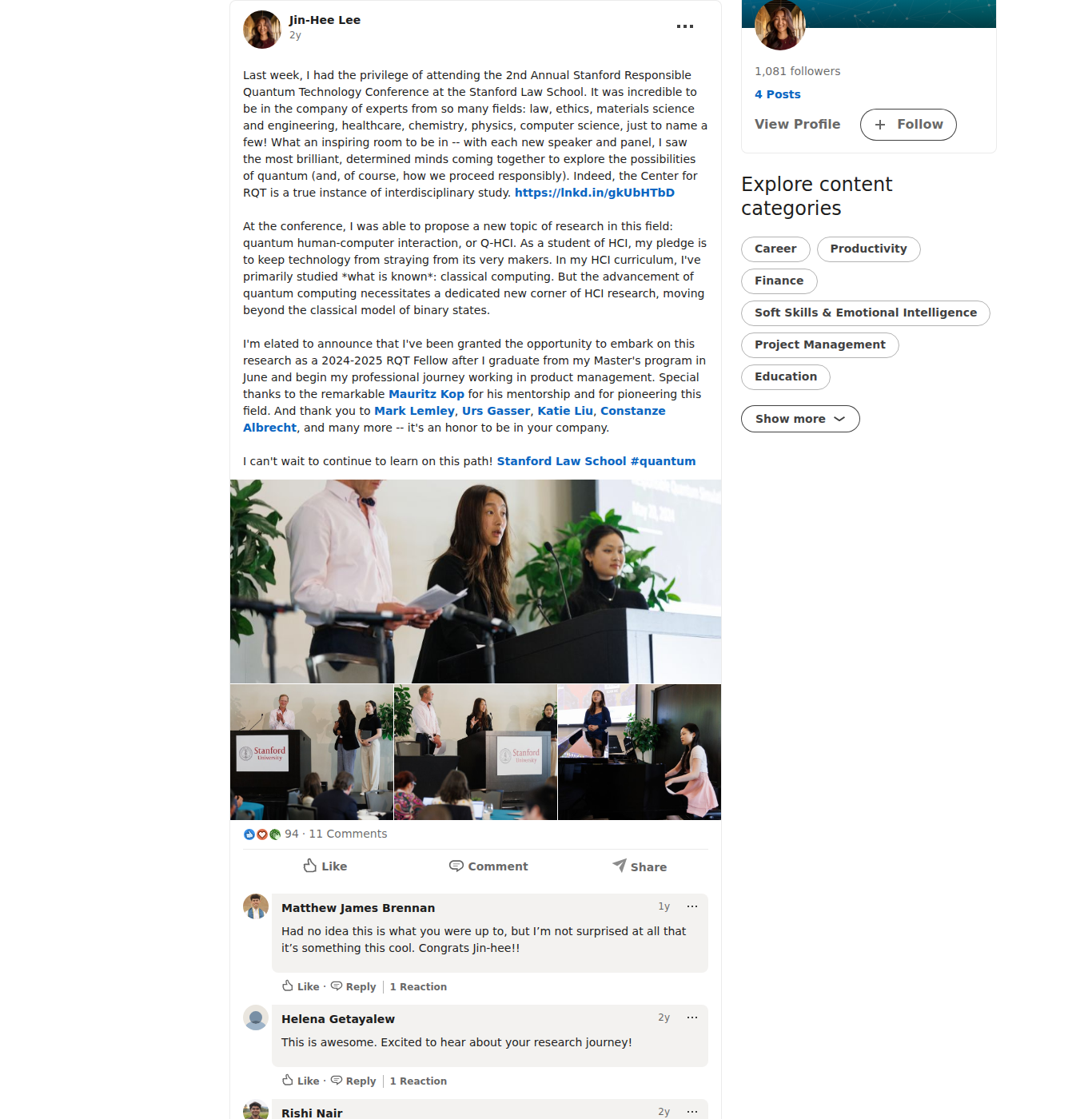
LinkedIn post on the 2nd Annual Stanford RQT Conference, May 2024.