Innovation, Quantum-AI Technology & Law

Blog over Kunstmatige Intelligentie, Quantum, Deep Learning, Blockchain en Big Data Law

Blog over juridische, sociale, ethische en policy aspecten van Kunstmatige Intelligentie, Quantum Computing, Sensing & Communication, Augmented Reality en Robotica, Big Data Wetgeving en Machine Learning Regelgeving. Kennisartikelen inzake de EU AI Act, de Data Governance Act, cloud computing, algoritmes, privacy, virtual reality, blockchain, robotlaw, smart contracts, informatierecht, ICT contracten, online platforms, apps en tools. Europese regels, auteursrecht, chipsrecht, databankrechten en juridische diensten AI recht.

Berichten in Conference
Mauritz Kop gives Quantum Governance Seminar at G7 Think Tank CIGI, the Centre for International Governance Innovation

Honoured to give a Quantum Governance seminar this Monday at the Centre for International Governance Innovation (CIGI), a leading non-partisan G7 think tank based in Waterloo. We’ll address a critical question: Are our governance frameworks ready for Quantum-AI? https://www.cigionline.org/events/responsible-quantum-ai-governance-from-ethical-principles-to-global-frameworks/

We are approaching a metaphorical ‘Quantum Event Horizon’—an inflection point, or quantum governance ‘tipping point’ beyond which our ability to steer advanced quantum technology and AI towards beneficial societal outcomes, may be lost. In a geopolitical context defined by a winner-takes-all race for the keys to the world’s operating system, the stakes could not be higher. This issue is at the heart of CIGI’s project on the guidance of emerging dual-use technologies.

Responsible Quantum AI Governance: From Ethical Principles to Global Frameworks

My lecture, titled ‘Responsible Quantum AI Governance: From Ethical Principles to Global Frameworks’ explores why traditional governance and quantum diplomacy are not enough to address systemic rivalry and human-machine control problems. Instead, it requires planetary-level thinking and a fundamental shift from reactive oversight to novel paradigms of architectural control. The work builds on ideas we first explored in 'Ethics in the Quantum Age' (Physics World) and 'Establishing a Legal-Ethical Framework for Quantum Technology' (Yale Journal of Law & Technology).

Multi-layered governance strategy

I will make the case for a multi-layered governance strategy. In addition to hardwiring universal values into the technology itself via Quantum-Resistant Constitutional AI, we need robust global legal frameworks and oversight bodies ensuring non-proliferation of dual-use quantum-AI technologies via safeguards implementation (inspired by nuclear governance), including the creation of an 'Atomic Agency for Quantum-AI' and a new international treaty to constitute a ‘Quantum Acquis Planétaire’, or 'Global Quantum Acquis'. This dual approach is grounded in the principles of responsible quantum innovation we've outlined in recent publications with Nature, Harvard Law, Stanford Law, and the Institute of Physics.

I will conclude my talk with emphasizing that building a safe and equitable quantum future requires unprecedented international collaboration, drawing inspiration from successful large-scale scientific cooperation models like CERN and ITER. Now is the critical window for the international community to design and build these innovative governance structures, steering the immense power of quantum science towards beneficial outcomes for all of humanity.

We hope you can join what promises to be a vital discussion.

Meer lezen
Mauritz Kop Delivers Keynote on Global Quantum Governance Frameworks at the World Quantum Summit in Washington DC

At the World Quantum Summit in Washington, DC, held during DC Climate Week on May 2, 2025, Mauritz Kop, Founder of the Stanford Center for Responsible Quantum Technology, delivered a keynote on Global Quantum Governance Frameworks. The address landed in a symbolic year—the centennial of quantum mechanics and the International Year of Quantum Science and Technology—and made a single, sustained argument: that quantum's distinctive physics demands tailored governance, and that the world should cooperate to unlock quantum for societal progress rather than fracture into rival blocs.

A fragmented compliance web—and a standards-first answer

Kop's diagnosis is that developers of quantum and hybrid systems already face a fragmented web of regional and global requirements, from export controls to sector-specific rules supported by standards, certifications, and quality-management systems. His remedy is unified quantum interoperability standards to avert a "quantum splinternet," paired with the Responsible Quantum Technology (RQT) framework and its benchmarks. This standards-first posture—building technical consensus before locking in less adaptable legislation—runs through his scholarship on responsible quantum innovation, including the Ten Principles for Responsible Quantum Innovation published in IOP Quantum Science and Technology.

Benefits, risks, and Quantum-ELSPI

The keynote mapped quantum's promise and peril by domain. On the benefit side, Kop aligned responsible quantum innovation with the UN Sustainable Development Goals—drug discovery, weather forecasting, battery chemistry, carbon capture. On the risk side, he flagged "Q-day," when current RSA and AES encryption fails, alongside dual-use ambiguity in quantum simulation and sensing. These interrelated ethical, legal, socio-economic, and policy implications form what he calls Quantum-ELSPI, the lens through which he argues quantum should be governed in line with civil liberties, human rights, and the rule of law.

An Atomic Agency for the quantum age

The address built toward an institutional proposal: a globally harmonized "Quantum Acquis Planétaire," a UN Quantum Treaty modeled on the 2024 UN AI Resolution and the 1968 Nuclear Non-Proliferation Treaty, and an "Atomic Agency for Quantum/AI" inspired by the IAEA's safeguards model, complemented by CERN-style international resource pooling. The keynote is distinct from Kop's role as a speaker for the International Year of Quantum Science and Technology 2025: that recognition concerns the year's designation, whereas this address sets out the specific governance architecture he believes the quantum age now requires. His central claim is that the architecture must be designed today—before second-generation, agentic quantum and AI systems outpace the law—and that it should be standards-first, rights-respecting, and global by construction, so that quantum technology serves a collective future of widespread, equitably distributed prosperity.

Meer lezen
Mauritz Kop Speaker at XPANSE 2024 Abu Dhabi: The Seminal Exponential Tech Event

Abu Dhabi, Nov. 22, 2024—Professor Mauritz Kop, the Founder and Executive Director of the Stanford Center for Responsible Quantum Technology, was invited to speak at the XPANSE 2024 forum in the captivating city of Abu Dhabi. His involvement represented a significant contribution to the global dialogue on the future of exponential technologies. Held from November 20th to 22nd, the festival-style event at the ADNEC Centre convened international experts to establish a forward-looking agenda for technology governance and development. The forum was structured as an "ecosystem-building engine" intended to guide the next phase of development for industries and societies.

XPANSE, hosted by ADQ and developed in partnership with the international think tank MATTER, brought together approximately 2,500 participants. The attendees included Nobel Prize Laureates such as Sir Roger Penrose, Steven Chu, and Anton Zeilinger, as well as industry leaders, government ministers, and scientists. The agenda covered a wide range of exponential technologies, including quantum computing, artificial general intelligence (AGI), genomics, fusion energy, and brain-machine interfaces. The initiative functions as a continuous, year-round program designed to connect scientific research with leadership, policy, and investment on a global scale. Special recognition is due to Dr. Zina Jarrahi Cinker, Chief Creator of XPANSE, for her exceptional work in organizing this seminal event.

Charting the Course for Responsible Quantum Governance

A central component of Professor Kop's participation was his role on the high-level panel, "Global Policy Frameworks for Quantum Technology." The session addressed the need for proactive governance frameworks for emerging quantum technologies, drawing lessons from the development of prior technological waves like the internet and artificial intelligence. The objective was to outline adaptive and principled regulatory structures that support innovation while ensuring societal safeguards.

Professor Kop was joined on the panel by a distinguished group of colleagues. The discussion was moderated by Fabienne Marco, Director of the Quantum Social Lab at the Technical University of Munich (TUM), and featured insights from Professor Urs Gasser, Dean of the TUM School of Social Sciences and Technology, and Dr. Hoda Al Khzaimi, Associate Vice Provost of Research Translation and Innovation at New York University Abu Dhabi. The collaboration with TUM's think tank highlighted the importance of international cooperation in this field.

Quantum Meets Fractal Geometric Art at the Intersection of Art, Infinity, and Intuition

In addition to the policy discussions, Professor Kop presented his "Quantum Meets Fractal Geometric Art" installation. This performance, held on the Main Stage in the Imaginarium’s Enchanted Forest, was designed as an immersive experience exploring the connections between mathematics, art, and physics. The installation had previously been performed at the TUM Festival of Ideas event in Munchen, Germany in November 2023 and at the Stanford RQT Conference in May 2024.

Mauritz Kop Featured Quantum Expert in The Innovator Interview

Professor Kop's perspectives were further disseminated through an interview with Jennifer Schenker of The Innovator. This conversation provided a platform to deliver clear, actionable recommendations for preparing for the quantum era to a global audience of leaders.

He outlined the broad scope of quantum technologies, including computing, sensing, networking, and quantum-AI hybrids. He linked these technologies to the United Nations' Sustainable Development Goals (SDGs), illustrating their potential to address major global challenges in areas such as medicine, carbon capture, and climate modeling.

His primary message to the corporate sector was direct: "I advise corporates to invest heavily both in quantum and quantumAI today to get ahead of the curve and to start learning about its responsible use to remain compliant." He emphasized the need for "quantum literacy" among leaders and cautioned governments against overly restrictive regulations, such as broad export controls, that could impede innovation. He advocated for "planetary thinking" and smart, pro-innovation regulation tied to established technical safety and interoperability standards.

Meer lezen
2nd Annual Stanford Responsible Quantum Technology Conference: Summary of Core Themes and Selected Highlights

The 2nd annual Stanford Responsible Quantum Technology Conference convened by the Stanford Center for Responsible Quantum Technology and expertly orchestrated by its Executive Director Mauritz Kop, provided a broad overview of the latest developments in quantum technology, with a focus on quantum simulation. It brought together a diverse and interdisciplinary group of experts from the US and Europe – united in their interest in responsible development and use of second-generation quantum technologies – to discuss innovations, challenges, and future directions in this emerging space. The conference included both in-depth presentations and far-ranging panel discussions, with artistic and musical performances interspersed as alternative spaces of approximation and exploration.

The following write-up by Constanze Albrecht does not aim to offer a comprehensive overview of the wealth of perspectives and insights shared at the conference. Instead, it introduces some of the conference’s core themes by summarizing some of the anchor presentations and is intended as an invitation to readers to dive deeper into the conference materials and videos posted online.

Technological Advancements and Market Dynamics

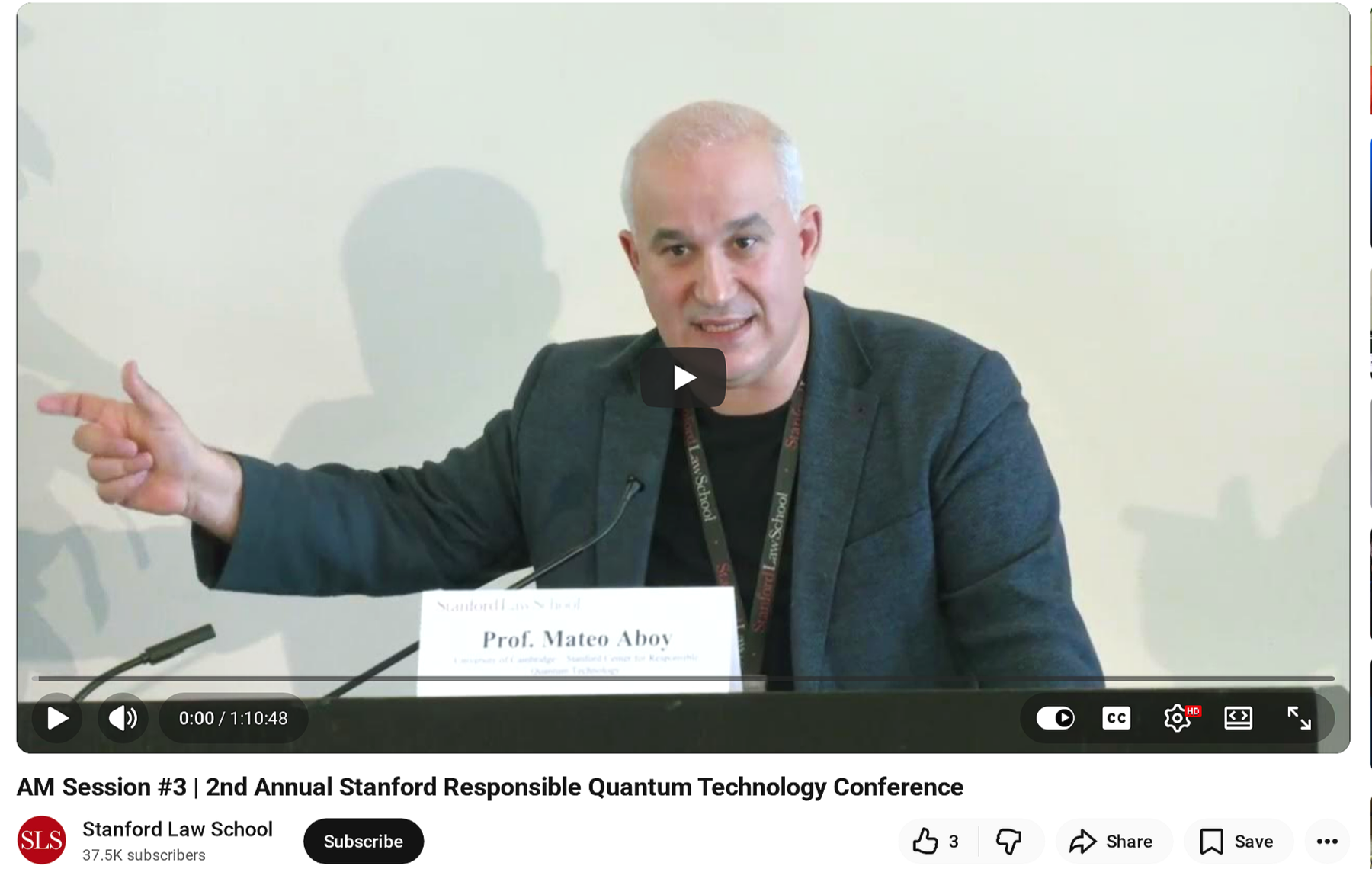
One of the standout presentations was “Project Quantum Leap: Quantum Computing Innovation—Patenting Trends Innovation & Policy Implications” by Mateo Aboy. This presentation offered an in-depth empirical study of the intellectual property landscape in quantum computing. He emphasized the necessity of evidence-based IP studies to inform policy and innovation governance in this rapidly evolving field. Aboy revealed significant growth in quantum computing patents over the past two decades, particularly noting an uptick since 2014, with patents mainly focuses on physical realizations, quantum circuits, error correction, and quantum algorithms. This surge reflects the increased involvement of diverse entities, including universities, startups, and established corporations.

The presentation further highlighted the critical role of international harmonization in patent laws and the importance of public disclosures in advancing technology. Mateo Aboy also explored the state-of-the-art applications of quantum computing in healthcare, emphasizing its potential to revolutionize both fundamental and clinical research despite being in its early stages. He concluded with a call for a balanced regulatory approach that promotes technological advancement while safeguarding against potential risks, underscoring the need for proactive policy measures.

Quantum Use Cases in Healthcare and Life Sciences

In this context, a fascinating panel discussion moderated by Hank Greely offered a deep dive into the applications and use cases of quantum technology in the health and life sciences. Mateo Aboy, Glenn Cohen, Timo Minssen and Victoria Ward examined the transformative potential of quantum computing, sensing, and simulation in enhancing diagnostic tools, personalizing treatment plans, and accelerating drug discovery processes. The discussions also addressed market dynamics, highlighting the competitive landscape and the strategic positioning of key players in the quantum technology market. The panelists underscored the importance of fostering a robust innovation ecosystem that supports the growth of startups and encourages collaboration between academia, industry, and government bodies.

Providing insight into the technical aspects of quantum technology innovation, Mark Brongersma, Professor in the Department of Materials Science and Engineering at Stanford University, presented cutting-edge research at the intersection of materials science and quantum technology. His presentation focused on developing and analyzing nanostructured materials for nanoscale electronic and photonic devices. Key research topics included nanophotonics, which enhances light manipulation at the subwavelength scale, and microcavity resonators, which confine light to boost light-matter interactions. This pioneering work paves the way for future innovations that could revolutionize current sensing and simulation technologies.

Meer lezen
Stanford RQT 2.0: Inside the Second Stanford Responsible Quantum Technology Conference at Stanford Law School, Chaired by Mauritz Kop

The second annual Stanford Responsible Quantum Technology Conference, chaired by Mauritz Kop at Stanford Law School, took a question that an inaugural event had to argue into existence and treated it instead as settled—then spent the day pressure-testing how to answer it. This is the chair's record of how the conference came together and unfolded, from the welcome address to the concluding panel on quantum geopolitics. A separate write-up summarizes the conference's core themes; the account here follows the program itself.

An address that respects the mechanics

Kop opened by recording the institutional debts behind the day and by stating the project's governing discipline: conceptualizing responsible quantum technology “without breaking the laws of physics.” The year's theme, quantum simulation—studying one quantum system by building another that obeys the same rules—anchored the framing. Because an unknown quantum state can be neither copied nor measured without disturbance, the mechanics are not ornament around the legal argument; they are its premise, shaping every downstream question about verification, security, and trust. The Center's stance, he said, is deliberately and modestly techno-optimistic: pro-innovation, calibrated to keep policymakers from lagging the science.

A program built to be argued with

The day moved from responsible-innovation foundations—the Nature Physics call, the SEA framework of safeguarding, engaging, and advancing society, and the Ten Principles for Responsible Quantum Innovation—through materials science, an industry applications panel, a healthcare and life-sciences panel, and empirical studies of the quantum patent landscape. A governance session set out a phased, FDA-style proposal for quantum technology and invited its critics to stress-test it in real time. International perspectives followed, from a global capacity-building listening tour to supply-chain criticality, a Dutch innovation strategy, and a European Commission view. Disagreement was the design, not a defect: panelists openly contested whether quantum is genuinely novel for law, whether an agency model would help or merely slow new entrants, and whether standards should lead where statutes cannot keep pace.

What a second edition signals

That a conference reached its second edition is itself a datum about a maturing field. The institutional fabric—Stanford Law School, the moderating faculty, two University of Copenhagen and Novo Nordisk Foundation research programs, and an industry sponsor—shows responsible quantum technology as an institutional achievement rather than an individual one. The chair closed where he began, on “the cusp of the second quantum revolution,” and framed the combined work as a research agenda spanning a golden triangle of academia, industry, and policy. The encryption question supplied the day's one near-consensus risk: a capable quantum computer would break widely deployed RSA, Diffie-Hellman, and elliptic-curve public-key systems, making the migration to quantum-safe methods a present task. For the field's intellectual lineage, see the underlying Nature Physics call for responsible quantum technology.

Meer lezen
Mauritz Kop Keynote Speaker at Quantum Governance Workshop at Arizona State University's Sandra Day O'Connor College of Law

Phoenix, Arizona—On May 15, 2024, the Center for Law, Science & Innovation at Arizona State University's Sandra Day O'Connor College of Law hosted a timely Workshop on Quantum Governance, bringing together a diverse group of experts to chart a course for the responsible development of quantum technologies. Mauritz Kop, Founding Director of the Stanford Center for Responsible Quantum Technology, delivered the keynote address, setting the tone for a day of critical and forward-looking discussions.

Hosted at ASU's Beus Center for Law and Society in beautiful Phoenix, the workshop provided an ideal academic setting for this crucial conversation. ASU's Sandra Day O'Connor College of Law is renowned for its focus on the intersection of law, science, and innovation, making it a natural hub for exploring thecomplex governance challenges presented by quantum's second revolution.

Kop's Keynote: Towards Responsible Quantum Technology Governance

In his keynote address, Mauritz Kop presented a comprehensive vision for establishing robust governance frameworks before quantum technology becomes widely integrated into society. He argued that the world must proactively prevent the missteps seen in the governance of previous transformative technologies like artificial intelligence, genetics, and nuclear power.

Kop's talk, "Towards Responsible Quantum Technology Governance," articulated the profound dual-use nature of the field. He detailed the immense potential benefits, from enhancing medical imaging and accelerating drug discovery to mitigating climate change and improving macroeconomic policy-making. Simultaneously, he outlined the significant risks, including the "Q-Day" threat to global cybersecurity, the potential for a new quantum arms race, and the dangers of misuse by authoritarian regimes for mass surveillance.

Learning from AI, Biosciences, and Nanotech

A core theme of the workshop, championed by host Professor Gary Marchant, was the importance of drawing lessons from the governance of prior technological waves. Professor Marchant, a leading scholar in the governance of emerging technologies, and other speakers presented valuable analyses of the successes and failures in regulating fields like biotechnology, nanotechnology, and AI.

A Synergy of Interdisciplinary Expertise

The workshop's strength lay in its rich diversity of speakers. The agenda featured experts from law, computer science, government, and industry, ensuring a holistic and multifaceted discussion. Presentations from Kaniah Konkoly-Thege of Quantinuum on regulatory developments, Jeffery Atik of Loyola Law School on antitrust implications, Royal "Aubrey" Davis of the United States Air Force Academy on historical approaches to transformative technologies, and Megan Wagner & Sarah Wastek from Sandra Day O’Connor College of Law on Governance Lessons from Nanotechnology, among others, created a vibrant intellectual exchange. This collaborative environment is essential for developing governance solutions that are not only technically sound but also legally robust and ethically grounded.

A Lasting Contribution: The Workshop Paper

A significant outcome of this collaborative event is the group-authored paper, "Learning From Emerging Technology Governance for Guiding Quantum Technology," which is available on SSRN here: https://papers.ssrn.com/sol3/papers.cfm?abstract_id=4923230. The paper synthesizes the insights and discussions from the workshop, providing a comprehensive roadmap for policymakers, industry leaders, and researchers. It serves as a durable and influential contribution to the global dialogue on quantum governance, outlining actionable strategies for fostering innovation while ensuring safety, equity, and accountability.

Meer lezen
Mauritz Kop and Urs Gasser at the TUM Festival of Ideas: A Live Quantum-Art Demonstration (November 2023)

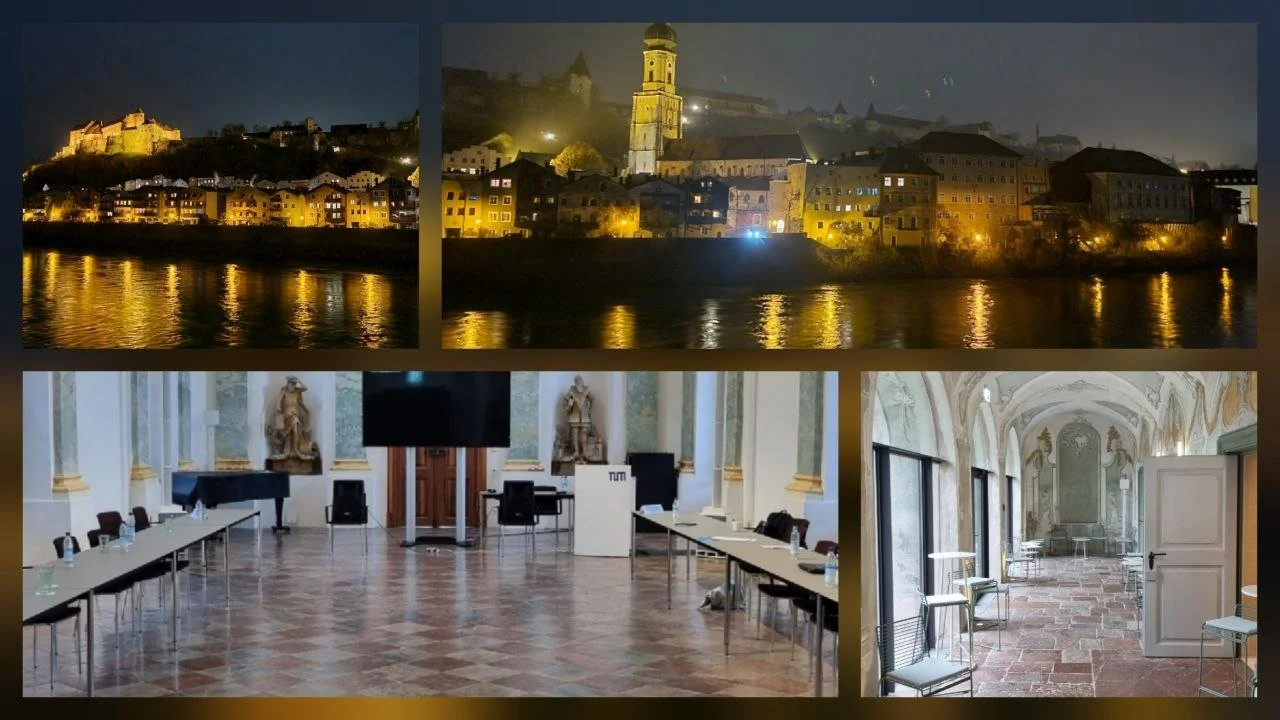
In November 2023, the inaugural Festival of Ideas gathered scholars, technologists, and policymakers at the Technical University of Munich and its historic Science & Study Center at Raitenhaslach Monastery to ask how society should design a new "operating system" for an age of artificial intelligence and quantum computing. I took part as a Stanford Center for Responsible Quantum Technology participant, alongside Professor Urs Gasser of TUM.

Quantum governance on the agenda

Quantum technology ran through the program rather than sitting at its edge. A closing use-case session on responsible technology—focused on quantum, AI, and immersive tools—was moderated by Urs Gasser, Rector of TUM's Hochschule für Politik. It was the same collaboration that soon produced the Nature Physics call for responsible quantum technology that Gasser, Eline de Jong, and I co-authored, making the Festival an early working session for that line of scholarship.

A live demonstration of quantum intuition

My contribution went beyond a conventional talk. I gave a live demonstration using my own photo, video, and music as input to a real-time, beat-synced audiovisual system inspired by fractal geometry, with a generative-AI element in the loop. Fractal patterns recur in nature—and have been observed in quantum materials—so inviting the audience to become the input data made an abstract idea tangible: that art can foster the quantum intuition an interdisciplinary, double-educated quantum workforce will need.

From Abu Dhabi to a Munich grand piano

The Munich demonstration was one public instance of a format I have also performed in Abu Dhabi, on exponential-technology stages of the kind I later addressed as a speaker at XPANSE 2024. As a working musician, I added an unscripted piano interlude on the venue's grand piano—of a piece with the Festival's argument that creativity is a method, and that the most durable guardrails for fast-moving technology are designed where law, ethics, science, and art are allowed to meet.

Meer lezen
Mauritz Kop Judge at 6th Annual Junior Faculty Forum for Law and STEM at Stanford

On October 27, 2023, Stanford Law School hosted the 6th Annual Junior Faculty Forum for Law and STEM, a premier event organized and hosted by Professor Mark Lemley that convenes the next generation of leading legal scholars to present and refine their cutting-edge research. The forum, which rotates between Stanford, the University of Pennsylvania, and Northwestern University, provides a vital platform for interdisciplinary dialogue on the complex legal challenges posed by rapid scientific and technological advancement. Mauritz Kop, a recognized expert in technology law and governance, had the honor of serving as a judge and commentator, contributing to the rigorous intellectual exchange that defines the event.

The forum's mission is to foster the development of early-career academics by providing a supportive yet critical environment for them to receive feedback from senior scholars in their fields. Over two days, junior faculty presented works-in-progress on a diverse array of topics, from the metaverse and quantum computing to medical device regulation and genome governance, showcasing the breadth and depth of contemporary law and STEM scholarship.

The Call for Papers: Fostering Interdisciplinary Law & Technology Scholarship

The selection of presenters for the forum is a rigorous process, initiated by a formal Call for Papers issued by the organizing universities: Northwestern, the University of Pennsylvania, and Stanford Law School. The call invites junior faculty from any discipline to submit papers on any topic related to the intersection of law and STEM. The goal is to promote interdisciplinary research that explores how developments in STEM are affecting law and vice versa, with a preference for papers that strongly integrate these two fields.

A Rich Tapestry of Emerging Legal Questions

The agenda for the 2023 forum was a testament to the pressing legal and ethical questions emerging from the frontiers of science and technology. The papers presented offered a glimpse into the future of legal scholarship and the complex societal issues that lawmakers, judges, and regulators will face in the coming years.

Among the thought-provoking works discussed were:

  1. "Taxing the Metaverse" by Christine Kim (Cardozo School of Law): This paper tackles the novel challenge of how to apply principles of taxation to the burgeoning virtual economy. Kim argues that economic activity within the metaverse satisfies traditional definitions of income and that failing to tax it would create a new kind of tax haven. The paper explores how the metaverse could serve as a laboratory for modernizing the tax system, potentially overcoming the traditional realization requirement.

  2. "Regulating Medical Device Innovation" by George Horvath (University of Akron School of Law): Horvath reframes the debate around medical device safety, moving beyond the narrow concept of "predicate creep" in the 510(k) clearance process to a broader analysis of "device creep." He makes the counterintuitive argument that properly structured safety regulations can stimulate, rather than stifle, innovation by building a more robust clinical knowledge base.

  3. "Who Owns Children's DNA?" by Nila Bala (UC Davis School of Law): This article addresses the critical and underexplored issue of parental control over children's genetic information. Bala argues that parental consent is an insufficient safeguard against the collection and use of a child's DNA by law enforcement, particularly in the context of direct-to-consumer genetic testing. She proposes moving from a framework of parents-as-owners to parents-as-fiduciaries, drawing on property law principles to protect the child's long-term interests.

  4. "Gene Stewards: Rethinking Genome Governance" by Shelly Simana (Stanford Law School): Simana confronts the exploitative practices of entities that collect and use human genetic material. She proposes a new statutory category of "Gene Stewards," which would impose quasi-fiduciary duties of loyalty and care on these powerful public and private entities, ensuring they act as responsible stewards of this sensitive information.

Reviewing "Privacy in the Quantum Age"

As part of his role, Mauritz Kop, alongside Professor Christopher Yoo of the University of Pennsylvania, served as a commentator for the paper "Privacy in the Quantum Age" by Anat Lior (Yale Law School). Lior's paper addresses the profound privacy implications of quantum computing, particularly its potential to break current encryption standards.

In his review, Kop commended Lior for her courage in tackling such a complex and deeply interdisciplinary subject. He emphasized the need for legal scholars entering this domain to achieve a high level of "quantum literacy" to engage credibly with both the technology's promise and its perils. He offered several pieces of constructive feedback aimed at strengthening the paper's impact and scholarly contribution.

Meer lezen
SandboxAQ Invites Mauritz Kop to Give RQT Lecture and Workshop

On October 25, 2023, SandboxAQ hosted Mauritz Kop, visiting ‘quantum and law’ scholar at Stanford University, for a lecture and interactive workshop focused on the principles of Responsible Quantum Technology (RQT). The opportunity to engage with a leading enterprise at the intersection of artificial intelligence and quantum science was both timely and imperative. The dialogue that unfolded underscored the critical importance of embedding ethical, legal, and societal considerations into the fabric of quantum innovation from its outset.

Appreciation was extended to the SandboxAQ team for organizing this important event, particularly Marianna Bonanome, PhD, Head of External Education Programs; Kayla Quinnies, PhD, Residency Program Manager; Nina Bindel; Amro Imam, and Vice-President Fernando Dominguez Pinuaga. Their commitment to fostering a culture of responsible development is a testament to the company's forward-thinking leadership.

The SandboxAQ Mission: An Intersection of AI and Quantum

To fully appreciate the context of the discussion, it is useful to understand the unique position SandboxAQ occupies in the technology landscape. The company, which began as an independent research group within Alphabet Inc. and officially launched as a standalone company in 2022, is built on the convergence of AI and quantum technologies, an area they term 'AQ'. This strategic focus allows them to develop commercially viable, enterprise-scale solutions today, without dependency on the eventual arrival of fault-tolerant quantum computers.

Led by CEO Jack D. Hidary, SandboxAQ directs its efforts toward solving complex challenges across several key domains:

Simulation & Optimization: Accelerating the discovery of new medicines and materials by simulating molecular interactions, with applications in life sciences, chemicals, and finance.

Quantum Security: Providing solutions for the transition to post-quantum cryptography (PQC), a critical undertaking for protecting sensitive, long-lifespan data from the future threat of cryptanalytically relevant quantum computers. The company emphasizes that "Store Now, Decrypt Later" attacks are an immediate concern, necessitating urgent action.

Quantum Sensing: Leveraging the inherent sensitivity of quantum systems to develop novel sensors for applications in medical imaging, navigation, and material science.

A cornerstone of the company's ethos is its Education (EDU) division. With a charter "To educate the world on AQ so any person or institution can participate in and develop technology to impact the world in positive ways," the EDU team focuses on growing the AQ market, building a diverse talent pipeline, and instilling a culture of ethical and responsible innovation. This commitment to education and responsibility provided a fertile ground for the dialogue on the governance of quantum technologies.

Laying the Foundation: From Quantum-ELSPI to Responsible Quantum Technology

The central theme of the lecture was the proactive governance of quantum technology. The potential for this suite of technologies to be transformative—impacting everything from global security and economic stability to fundamental scientific research—demands a departure from the reactive regulatory postures that have characterized previous technological waves.

The starting point was the concept of Quantum-ELSPI, which refers to the interconnected Ethical, Legal, Socio-economic, and Policy Implications of quantum technologies. This framework serves two purposes: normatively, it acts as a metaparadigm for guiding development; descriptively, it establishes a broad, interdisciplinary research agenda. By examining the successes and failures in the governance of AI, nanotechnology, nuclear, and biotechnology, valuable lessons can be derived for the quantum era.

From this foundation, the concept of Responsible Quantum Technology (RQT) was introduced. This is a comprehensive framework developed by a transatlantic, interdisciplinary team of scholars from institutions including Stanford, Harvard, Oxford, and Cambridge, led by Stanford Law School’s Mauritz Kop. RQT integrates Quantum-ELSPI considerations with the established dimensions of Responsible Research and Innovation (RRI): anticipation, inclusion, reflection, and responsiveness. Its objective is to ensure that quantum research and innovation efforts are aligned with societal needs and enhance planetary welfare, deliberately steering development toward beneficial outcomes while the technology is still malleable.

Meer lezen

Stanford Responsible Quantum Technology Conference 2023

Stanford, CA – May 22, 2023 – The 21st century is undeniably the Quantum Age, and on May 22, 2023, Stanford University hosted the inaugural Stanford Responsible Quantum Technology Conference at the iconic Paul Brest Hall, Stanford Law School. This landmark annual event, themed "Quantum-ELSPI" for its first iteration, brought together the global quantum community to explore the multifaceted ethical, legal, socio-economic, and policy implications (ELSPI) of this transformative field.

The conference was designed as a unique confluence of quantum physics, law, and art, aiming to discuss informed suggestions on how to balance maximizing the benefits and mitigating the risks of applied quantum technology. It covered state-of-the-art quantum computing, sensing, simulation, communication, materials, and quantum-classical hybrids, all within diverse multidisciplinary settings and taking a pro-innovation stance.

A Day of Interdisciplinary Exploration and Artistic Inspiration

The day was marked by deeply interdisciplinary presentations and an elegant intellectual atmosphere, uniquely punctuated by live musical interludes featuring works by Mozart, Schönberg, and Chopin, and opera arias by Handel, Liszt, and Gounod. Attendees also witnessed interactive quantum physics experiments, including demonstrations of quantum sensing and interferometry, designed to make the counter-intuitive quantum world more accessible.

The program began with Opening Remarks by Mauritz Kop of Stanford University, AIRecht.nl, and Daiki. This set the stage for a day of profound discussions.

What Responsible Quantum Technology & Innovation Entails

As attendees experienced, the conference provided an illuminating platform for discussing the state-of-the-art in quantum science, governance tipping points, risk-benefit analyses, intellectual property, societal impact assessments, and the myriad exciting novel use cases being developed. The discussions on what Responsible Quantum Technology & Innovation truly entails in diverse, multidisciplinary, and intergenerational settings were a highlight for all participants.

Mauritz Kop offered closing remarks, and the day concluded with a reception, further fostering the sense of community and shared purpose.

Deep gratitude was extended to all the speakers, moderators, musicians (Ireh Kim, Jin-Hee Catherine Lee, Zoe Logan Schramm, Katie Liu, Daniel Changxiao Sun, and Mauritz Kop), and physicists (Franz Inthisone Pfanner, Daniel Changxiao Sun) who contributed to the success of this inaugural event. Special thanks were also conveyed to Professor Mark Lemley and the team at Stanford Law School for making this memorable conference a reality.

The Stanford Responsible Quantum Technology Conference has set a high bar for future discussions, and the quantum community eagerly anticipates Stanford RQT 2.0.

Meer lezen
Quantum Days Canada: CCA Panel on Quantum Technologies

When the Council of Canadian Academies brought its quantum expert panel to Quantum Days in January 2023, it did something unusual for a national academy: it opened an unfinished study to public input. Mauritz Kop joined the session to frame the ethical, legal, social, and policy stakes of quantum adoption—and to invite the audience to help shape the questions, not just receive the answers.

A government-commissioned panel, in public

The panel had been formed at the request of federal sponsors, including the National Research Council of Canada and Innovation, Science and Economic Development Canada, and was chaired by the physicist Raymond Laflamme. The Quantum Days appearance gathered members of that panel—Laflamme, Jeff Kinder, Mauritz Kop, and Jacqueline Bartlett among the named participants—to discuss the panel's mandate, key questions, and priorities while its assessment of Canadian quantum adoption was still being written. It was a national study opened up mid-draft, with its conclusions deliberately still open.

Live polls and equitable access

The session's signature move was procedural: the audience was invited to feed the eventual report through live polls, under the banner of helping Canada build a quantum ecosystem. That design choice carries an argument. Responsible quantum governance, on Kop's reading, treats equitable access to quantum-enabled prosperity as a question to be settled by deliberation rather than left to the market, and asks how codes of conduct and design guidelines can be agreed across cultures whose ethical intuitions differ. Live audience input is well suited to surfacing exactly the trade-offs that have no single technically correct answer—and it reflects the distributive themes that run through Kop's broader scholarship on responsible technology.

Why the policy lens belongs at a physics conference

Quantum systems invite governance because their behavior is genuinely unfamiliar. Superposition and entanglement change what computation can do, with consequences for cryptography and security that existing law did not anticipate. The case for an ethical, legal, social, and policy lens at a technical conference is that the rules must be drafted while the science is still moving—a position consistent with the standards-and-principles direction Kop and colleagues set out in the Ten Principles for Responsible Quantum Innovation.

A panel on its way to a report

The Quantum Days session is one step in a longer process. The same panel, under the same chair, is carrying its study through 2023 toward a national assessment of quantum adoption in Canada, with Kop among its members. The sequence—open the questions in public, gather input through live polls, then translate that deliberation into evidence for decision-makers—offers a working model of quantum governance that is both expert-led and publicly grounded, an early example of treating quantum policy as a question worked out in the open rather than a finished product to be announced. (That study became the CCA's Quantum Potential report, published November 30, 2023.)

Meer lezen