Quantum mechanics is the most counterintuitive physics we have, and it deserves better than bullet points. An exploratory project presented in the spring of 2024 at Stanford's virtual-reality lab by Jin-Hee Lee, Katie Liu, and Mauritz Kop, titled Stanford RQT Meets VR Lab Meets Classical Music Meets Fractal Art, asks what happens when quantum-AI meets music in immersive space. It is at once an art project, a teaching experiment, and a governance strategy, and each part strengthens the others.
What the project imagines: from the conductor's podium to the qubit
The project's imagined applications are concrete: standing inside an orchestra and watching the conductor from the oboe's chair; sheet music that responds to touch, with tempo bending in real time; a classroom where students rehearse alongside a professional ensemble in virtual reality. Music turns out to be an ideal test bed because it is structured, emotional, and time-based, exactly the qualities that make abstract physics graspable. A carefully designed audiovisual model can introduce selected features of quantum measurement, provided its mapping to the physics is stated and its limits are explained.
Why governance scholars care about public intuition for quantum technology
Citizens are being asked to form opinions about quantum technology they cannot picture. Superposition and entanglement defy everyday intuition, and policy made on bad metaphors becomes bad policy. Immersive sound and space can offer a partial corrective: an intuitive introduction to quantum computing before the regulatory questions arrive. The Stanford responsible-quantum circle has long paired scholarship with performance, a musical orbit that reaches back to music-law teaching at the Royal Conservatoire in The Hague, because a community that plays together explains together.
Which legal questions quantum-AI-shaped music raises for copyright
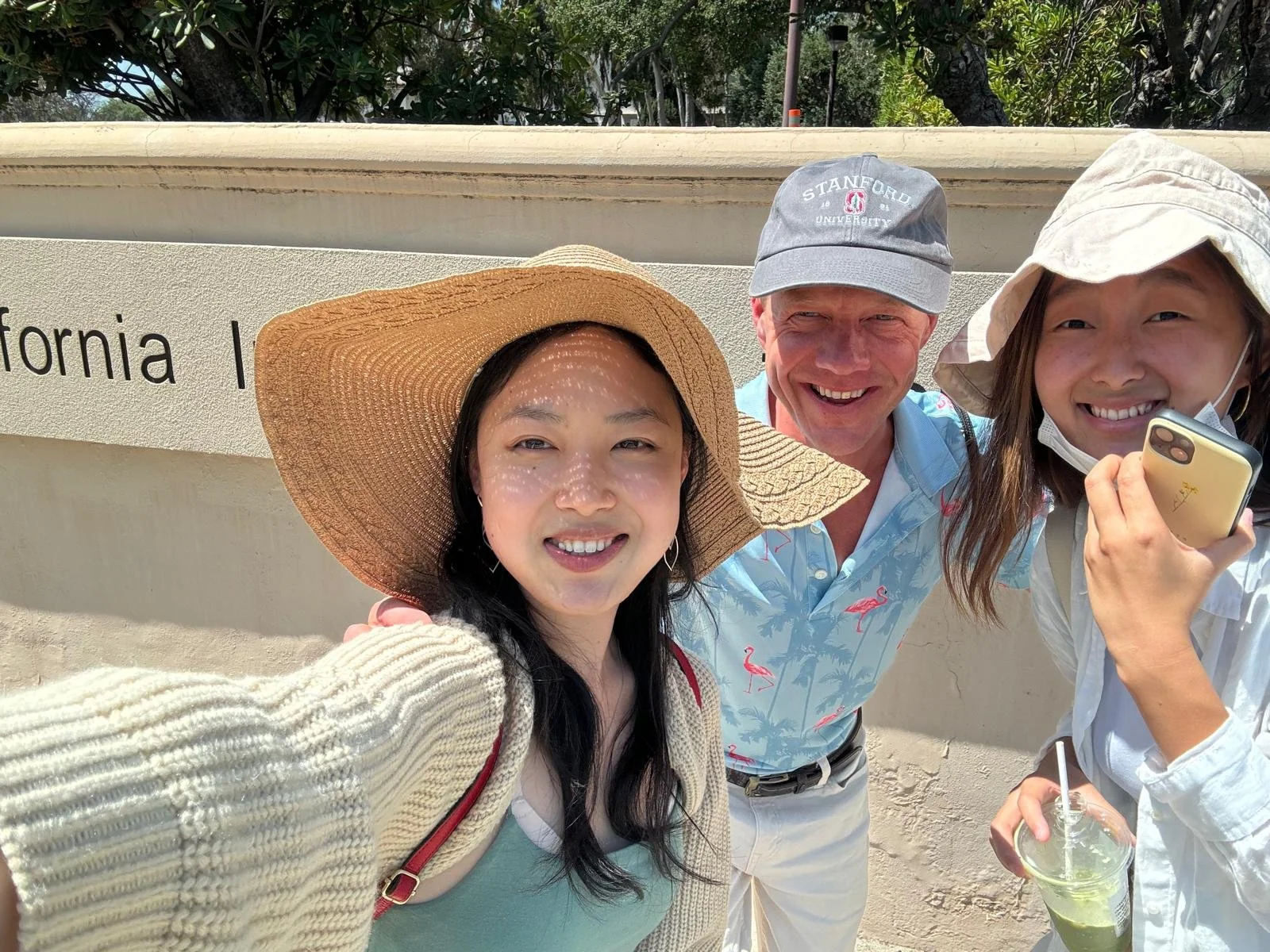
When artificial intelligence and quantum processes help shape a composition, familiar doctrines wobble: authorship, originality, and the credit owed to human creative direction all need re-examination. The project sits on that fault line, with three collaborators who move between the law school, the laboratory, and the keyboard and treat art as a research instrument. Their earlier joint expedition to Caltech's quantum laboratories was the same instinct pointed at hardware; this project points it at perception.
The full post traces what the VR collaboration imagines for education, science, and the concert hall, why science communication is governance infrastructure, and how the musician-jurists of the Stanford quantum circle keep finding each other at the piano.
Meer lezen