
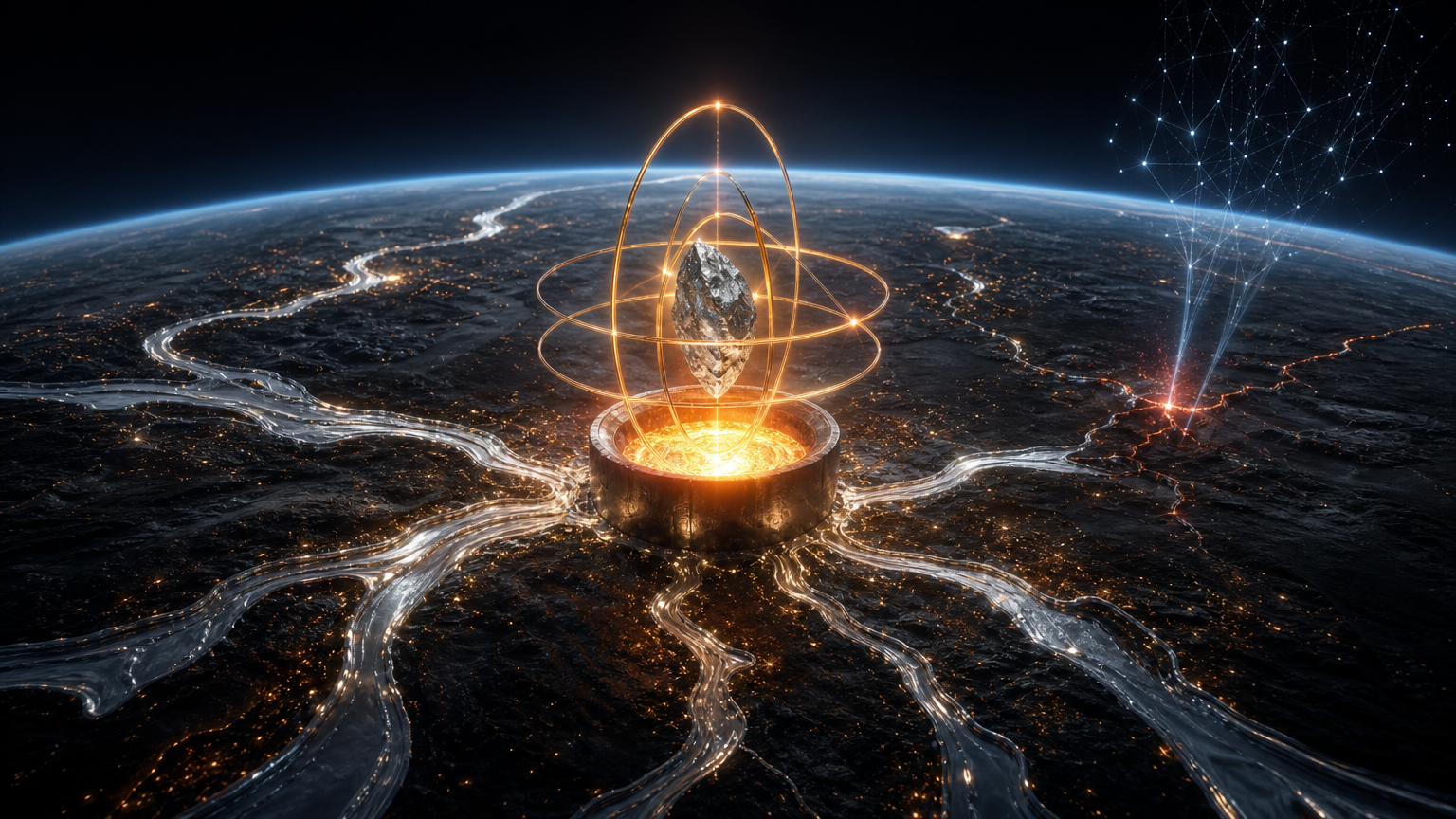
EPJ Quantum Technology has published a peer-reviewed framework by Dongyoun Cho, Mauritz Kop, and Min-Ha Lee that gives policymakers something the quantum field has lacked: a Quantum Criticality Index designed to flag supply-chain chokepoints before they harden into strategic crises.
A tri-axial index for fragile supply chains
Quantum hardware depends on inputs most governments have never inventoried—helium-3, isotopically enriched silicon-28, thin-film lithium niobate, superconducting niobium, dilution refrigerators from a handful of specialist suppliers. The QCI scores each input on supply risk, substitutability, and strategic significance, then adds an artificial neural network foresight layer that detects trend shifts and stress-tests scenarios: demand surges, export restrictions, regional shocks. Static critical-minerals lists update too slowly for a technology that scales architecture by architecture; the QCI is built to move at the field's own pace.
The molybdenum case
Preliminary QCI results flagged molybdenum's concentration risk publicly in May 2024; in February 2025, China placed the metal under export licensing, with global price effects the paper documents. The index had flagged the chokepoint before the shock—one episode that neatly illustrates the argument for criticality-based foresight. The same anticipatory logic drives the geostrategic work Kop contributes to the Eric Schmidt-backed von Neumann Commission on quantum-AI geostrategy.
Hardware shield, software shield
The framework's strategic claim is that supply-chain assurance and post-quantum cryptography migration are twin pillars of quantum security: PQC protects the data, the QCI protects the physical capability to build the machines. Diagnosis feeds decision feeds delivery—allied procurement, targeted licensing, calibrated stockpiling, verifiable assurance. Quantum statecraft, the paper argues, begins with knowing your own dependencies better than your rivals know them.
Meer lezen