Innovation, Quantum-AI Technology & Law

Blog over Kunstmatige Intelligentie, Quantum, Deep Learning, Blockchain en Big Data Law

Blog over juridische, sociale, ethische en policy aspecten van Kunstmatige Intelligentie, Quantum Computing, Sensing & Communication, Augmented Reality en Robotica, Big Data Wetgeving en Machine Learning Regelgeving. Kennisartikelen inzake de EU AI Act, de Data Governance Act, cloud computing, algoritmes, privacy, virtual reality, blockchain, robotlaw, smart contracts, informatierecht, ICT contracten, online platforms, apps en tools. Europese regels, auteursrecht, chipsrecht, databankrechten en juridische diensten AI recht.

Berichten met de tag cybersecurity
De stille verkeersleider: AI-toezicht op quantumfoutcorrectie

Een veiligheidslaag die bijna niemand ziet

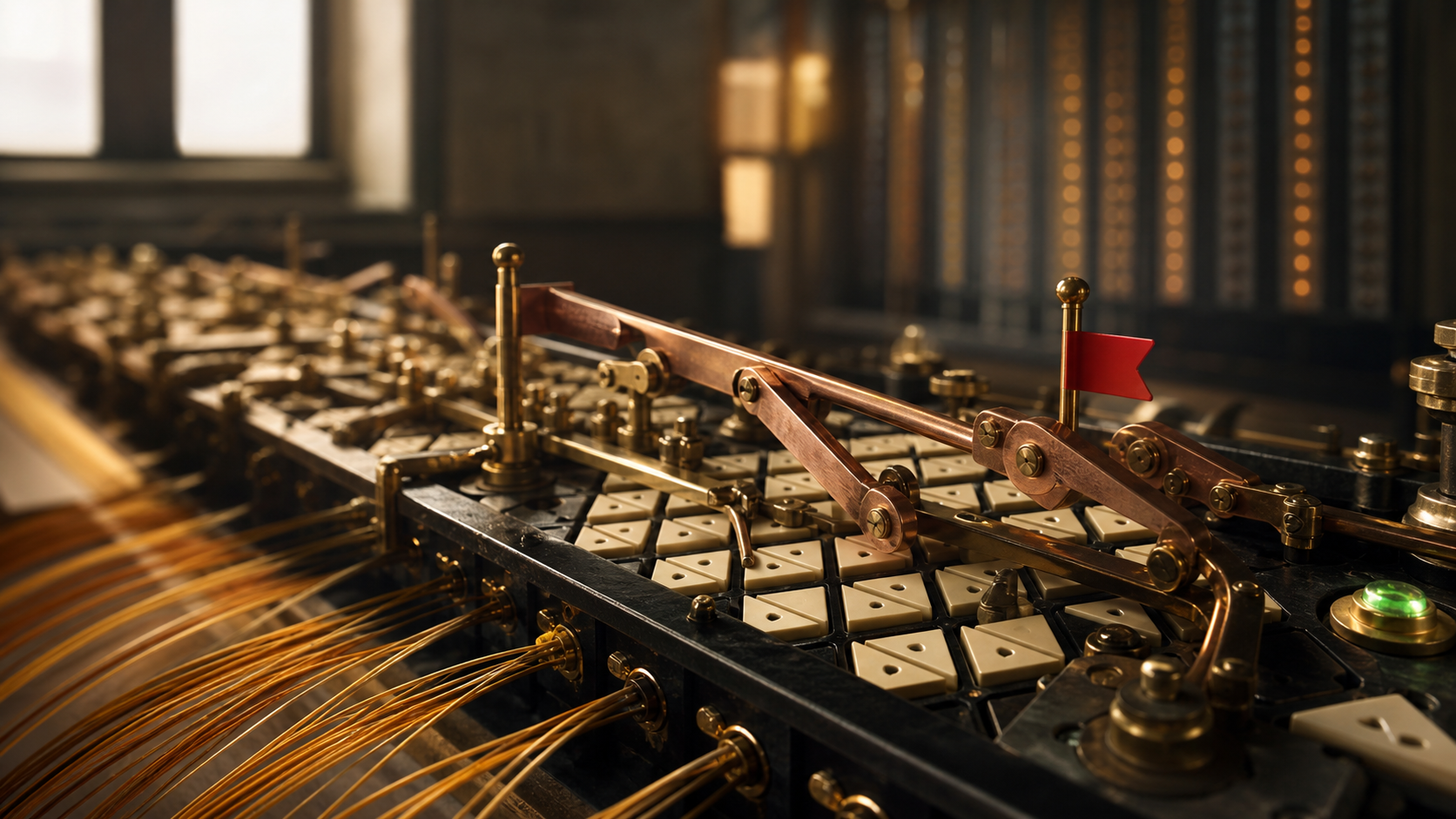
In een klassiek seinhuis grepen stangen en sloten fysiek in elkaar voordat een spoorwegsein op groen kon. Twee conflicterende rijwegen konden daardoor niet tegelijk worden vrijgegeven. Quantumfoutcorrectie heeft een verwante functie. Een quantumcomputer meet foutpatronen, waarna een decoder onder hoge tijdsdruk kiest welke correctie nodig is. NVIDIA publiceerde op 13 juli 2026 dat een machine-learningdecoder voor color codes in één specifieke testconfiguratie een logical error rate van circa 1/347,7 van die van Chromobius behaalde, met een gemelde runtimeverbetering van 7,3×. Die cijfers zijn leveranciersresultaten, gebonden aan codeafstand, fysieke foutkans en testopstelling. Toch is de bestuursvraag nu concreet: zodra AI in deze stille veiligheidslus terechtkomt, moeten kopers weten welke versie besliste en onder welke ruisveronderstellingen zij is getest.

De AI Act begint bij de juiste kwalificatie

Een neuraal netwerk in een technische stack valt niet automatisch onder alle regels voor hoog-risico-AI. Beoogd gebruik, marktrol, productvorm en sector bepalen de route. Als de decoder wel als hoog-risicosysteem kwalificeert, sluiten artikelen 9, 12, 15, 17 en 72 van de AI Act opvallend goed aan. Zij verbinden risicobeheer met vooraf bepaalde testdrempels, logging, kwaliteitsbeheer, robuustheid, cyberveiligheid en monitoring gedurende de levenscyclus. Voor AI-toezicht op quantumfoutcorrectie betekent dat dat een recordscore nooit los mag raken van model, hardware, codeafstand, ruisprofiel, latency en foutverdeling. De Cyber Resilience Act, NIS2 en DORA kunnen daarnaast relevant zijn, afhankelijk van product- en sectorscope.

Inkoop moet de veranderlijke component vasthouden

NVIDIA stelt modelgewichten, trainingsrecepten, synthetische-datahulpmiddelen en een trainingspipeline openbaar beschikbaar. Dat helpt onderzoek en reproductie, maar open code levert geen automatische onafhankelijke validatie. Een werkbaar dossier koppelt de prestatieclaim aan code, model, compiler en hardware; bewaart testdata en onzekerheden; legt incidentdrempels en logs vast; verdeelt wijzigingsrecht en hertestkosten; en regelt migratie naar een andere leverancier. Vooral die laatste stap telt. Een decoder kan diep vergroeien met het ruisprofiel en de interfaces van één processorarchitectuur. Quantumdecoder governance vraagt daarom om exporteerbare logs, gedocumenteerde koppelingen en een contractuele plicht om na relevante updates opnieuw te testen. Zo blijft een onzichtbare technische laag leesbaar voor inkoper, auditor en toezichthouder.

Meer lezen
Cyber Week 2021 Tel Aviv University Israel

AIRecht Director Mauritz Kop will speak at Cyber Week 2021 Tel Aviv University Israel, and participate in the Panel 'Debating Collective Cyber Defense for Democracies'. He will present his Stanford essay ‘Democratic Countries Should Form a Strategic Tech Alliance’ on July 22nd at 20:00 Israel time, see: https://papers.ssrn.com/sol3/papers.cfm?abstract_id=3814409

Cyber Week 2021 hosts a range of distinguished speakers from across the globe, including the Prime Minister of Israel Naftali Bennett, see: https://cw2021.b2b-wizard.com/expo/speakers

Debating Collective Cyber Defense for Democracies

Line-up and speakers of the ‘Debating Collective Cyber Defense for Democracies’ panel (notice the strong Dutch@Stanford representation):

Keynote: Ambassador Heli Tiirmaa-Klaar, Ambassador-at-Large for Cyber Diplomacy at the Estonian Ministry of Foreign Affairs

Lectures by:

Prof. Chris Demchak, Strategic and Operational Research Department, U.S. Naval War College

Lior Tabansky, Ph.D., (Moderator), Head of Research Development, Blavatnik Interdisciplinary Cyber Research Center, Tel Aviv University

Mauritz Kop, Stanford Law School TTLF Fellow, Founder of MusicaJuridica, and Strategic Intellectual Property Lawyer at AIRecht

Marietje Schaake, International Policy Director at the Cyber Policy Center; International Policy Fellow at the Institute for Human-Centered Artificial Intelligence, Stanford University

See the complete agenda at: https://cw2021.b2b-wizard.com/expo/agenda

Democratic Countries Should Form a Strategic Tech Alliance

Kop’s essay titled ‘Democratic Countries Should Form a Strategic Tech Alliance’ concludes that to prevent authoritarianism from gaining ground, democratic governments should do four things: (1) inaugurate a Strategic Tech Alliance, (2) set worldwide core rules, interoperability & conformity standards for key 4IR technologies such as AI, quantum, 6G and Virtual Reality (VR), (3) win the race for 4IR technology supremacy, and (4) actively embed our common democratic norms, principles and values into the architecture and infrastructure of our technology.

REGISTER for the conference following the link: https://cw2021.b2b-wizard.com/expo/home

Meer lezen
Legal Status of Robots and AI in Healthcare - Symposium Academy Het Dorp

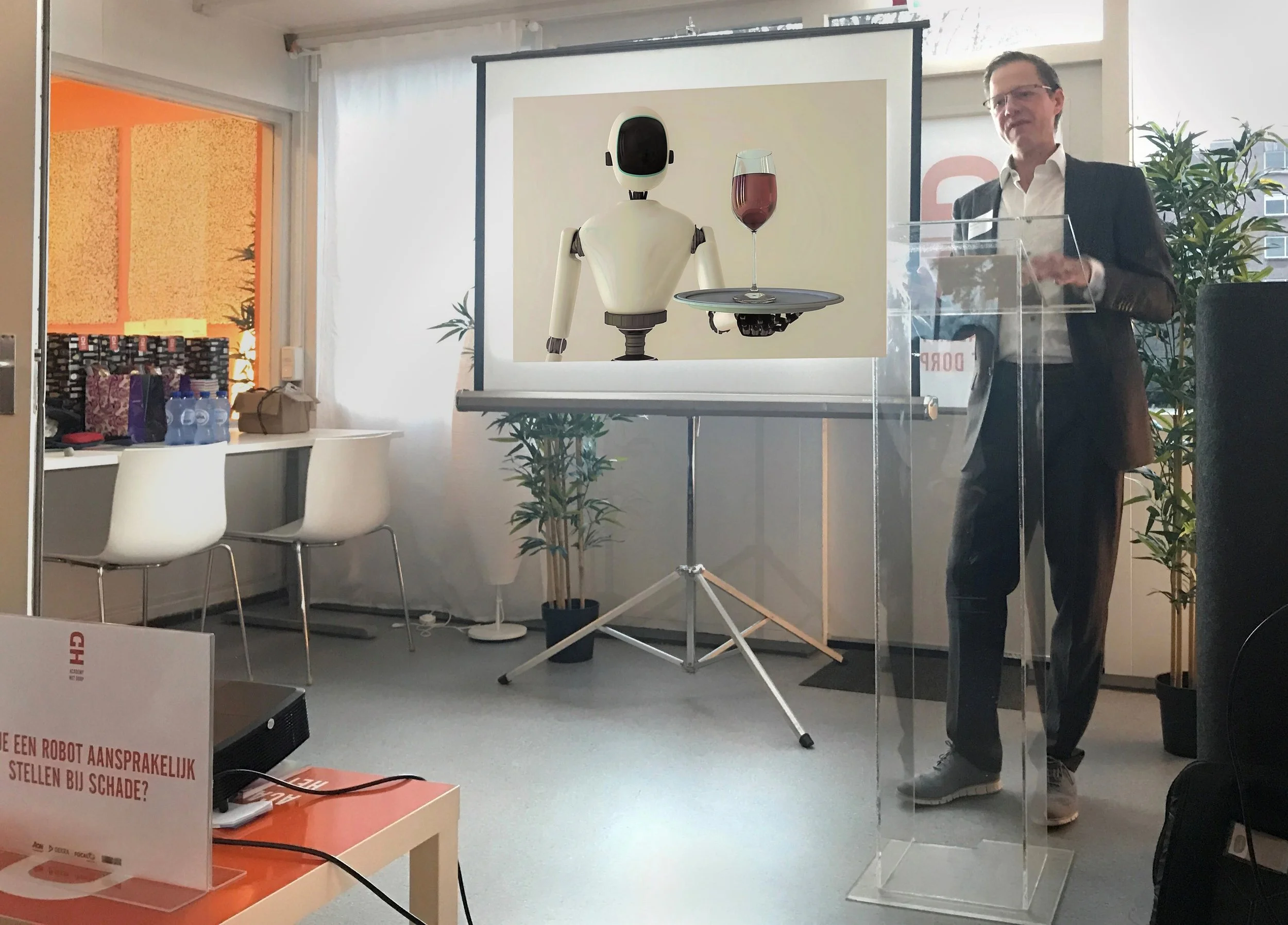
On December 3, 2018 our office Artificial Intelligence & Law delivered the lecture 'The legal status of smart robots: legal personality, intellectual property and fundamental rights'. On the occasion of the Symposium on robotisation and eHealth in the pharmaceutical industry, organized by Academy Het Dorp and Proeftuin Robotica. The central theme of this seminar on healthcare regulation was: Can you hold a robot liable in case of damages?

How should we deal with liability in robotics?

The following questions were addressed: Should robots equipped with AI have a separate legal status? How do you - as a developer/supplier and consumer/user/patient get a grip on liability for autonomous machines and artificial intelligence algorithms? How do we safeguard ethical principles and fundamental human rights? Who owns intellectual property rights in smart robots and copyrights on computer and AI generated works? How should we deal with liability in robotics?

Meer lezen