
Innovation, Quantum-AI Technology & Law

Blog over Kunstmatige Intelligentie, Quantum, Deep Learning, Blockchain en Big Data Law

Blog over juridische, sociale, ethische en policy aspecten van Kunstmatige Intelligentie, Quantum Computing, Sensing & Communication, Augmented Reality en Robotica, Big Data Wetgeving en Machine Learning Regelgeving. Kennisartikelen inzake de EU AI Act, de Data Governance Act, cloud computing, algoritmes, privacy, virtual reality, blockchain, robotlaw, smart contracts, informatierecht, ICT contracten, online platforms, apps en tools. Europese regels, auteursrecht, chipsrecht, databankrechten en juridische diensten AI recht.

Berichten met de tag Quantum Act
Genesis Q (DOE, 17 september 2026): 215 miljoen dollar, in fase II pas bij 100 aangetoonde logische qubits. Wat dit betekent voor Europese quantuminkoop onder Richtlijn 2014/24/EU

Wat het DOE op 17 september 2026 uitzette

Het Amerikaanse Department of Energy kondigde op 17 september 2026 de Quantum Genesis Q Competition aan: tot 215 miljoen dollar, met in fase I vaste bedragen tot 1,5 miljoen dollar per deelnemer voor vroege mijlpalen en in fase II een pot van 100 miljoen dollar voor wie een foutbestendige quantumcomputer met ten minste 100 logische qubits demonstreert, plus bonuspotten van 50 miljoen dollar voor 150 en 200 logische qubits. Aanvragen sluiten op 19 oktober 2026. Van het bedrag is in 2026 slechts 2,5 miljoen dollar beschikbaar; de rest hangt af van het Congres. Naast de prijs financiert het DOE een apart keuringstestbed van 45 miljoen dollar bij de nationale laboratoria, los van de prijzenpot. In het rapport van de SCAC Quantum Subcommittee van september 2026 bepleiten geïnterviewde partijen onafhankelijke, reproduceerbare benchmarks die steeds tegen de beste klassieke methode worden afgezet, en inkoop op basis van aangetoonde prestaties in plaats van alleen roadmaps van leveranciers.

Waarom de definitie van een logische qubit het prijzengeld verdeelt

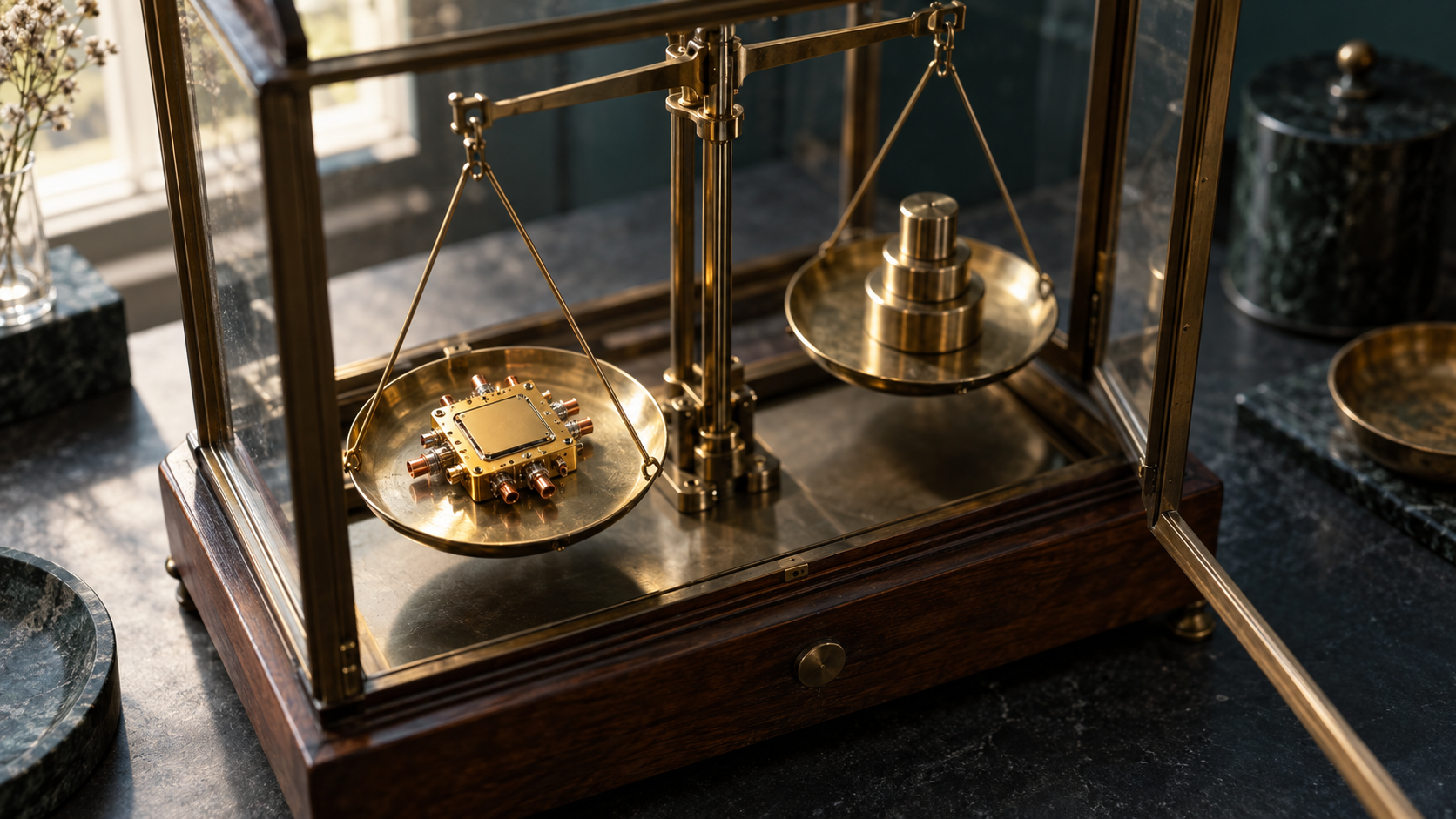
Een logische qubit is een prestatieclaim die afhangt van de foutcorrectiecode, de codeafstand, de decoder en het foutmodel. Twee leveranciers kunnen met dezelfde fysieke qubits tot verschillende aantallen komen. Wie de definitie in de stukken schrijft, bepaalt wie wint. Het artikel legt de constructie naast de Longitude Act van 1714, waarin het Britse parlement een prijs uitloofde die pas na een proefvaart en een oordeel van de Board of Longitude werd uitbetaald, en laat zien dat het conflict tussen Harrison en de Board over de acceptatievoorwaarden de waarschuwing is die in 2026 nog geldt.

Wat Europese en Nederlandse inkopers hiermee kunnen

Richtlijn 2014/24/EU kent met het innovatiepartnerschap van artikel 31 en de prestatiegerichte specificaties van artikel 42 de instrumenten om betaling aan een gedemonstreerd resultaat te koppelen; de Aanbestedingswet 2012 neemt ze over in de artikelen 2.31a, 2.75 en 2.76. Het gelijkheids- en transparantiebeginsel eisen dan wel dat de meetmethode vooraf vastligt en niet tijdens de rit wordt bijgesteld; de keurende partij vooraf benoemen is een praktische aanbeveling om belangenconflicten te vermijden. De Quantum Europe Strategy van 2 juli 2025 beloofde een Quantum Act die de gemeenschappelijke benchmark zou kunnen dragen; die verordening is er nog niet. Het Nationaal Groeifonds werkt bij Quantum Delta NL al met fasen van 54, 228 en 333 miljoen euro en met mijlpalen als subsidieverplichting in de beschikking van 18 december 2025; die gepubliceerde beschikking noemt zelf geen door een onafhankelijk laboratorium bevestigd aantal logische qubits als betalingsvoorwaarde. Het artikel sluit af met vijf vragen die elke Europese quantuminkoper of subsidiegever nu in de stukken moet zetten, van de codeafstand tot de eigendom van de meetdata.

Meer lezen
Mauritz Kop calls for a Quantum Governance Act at the University of Copenhagen, Faculty of Law

Much enjoyed giving a lecture titled ‘Quantum-ELSPI: A Call for a Quantum Governance Act’ on Thursday June 9, 2022 at the University of Copenhagen, Faculty of Law. This was an internal CeBiL event that took place before The Quantum Future symposium, organized by the Royal Danish Academy of Sciences and its newly established Committee for Quantum Information and Quantum Computing, together with the Niels Bohr Institute’s Quantum Life Centre.

EU Quantum Governance Act

With its own Copenhagen interpretation of quantum mechanics in which physical phenomena must be observed and measured to exist, the University of Copenhagen, Faculty of Law was the perfect place to propose an outline for a novel Quantum Governance Act on a European level, fostering open innovation while putting targeted, technology and industry specific risk based controls in place. The EU Quantum Act should jointly optimize advancing quantum technology (investment and innovation) with safeguaring quantum technology, society and humankind (guardrails, standards, values, IP protection and national security). For example, it could contain a product safety regime as found in the EU AI Act, combined with pro-innovation mechanisms as found in the US CHIPS Act. In addition, I connected regulating quantum to regulating general purpose technologies (GPT) like artificial intelligence (AI), but also to nanotechnology, biotechnology, semiconductors, and last not least to managing dual use fissionable materials such as nuclear isotopes and nuclear weapons, utilizing export and intellectual property controls.

The Law of Quantum: Quantum Regulatory Frameworks

The Quantum & Law lecture gave an overview of work done over the past 3 years on quantum regulatory frameworks, incentive and rewards systems, competition law, beyond intellectual property innovation law, ethics, national security policy, standardization, technology impact assessment, benchmarking and certification published or forthcoming in high impact journals at both sides of the Atlantic. My talk ended with discussing the latest research findings pertaining to the Law of Quantum, and Quantum-ELSPI academic disciplines. Thanks to the participants for their inspiring questions and comments!

Panel Debate about the Quantum Future at the Royal Danish Academy of Sciences

The brilliant lectures on atoms, photons, qubits, the nature of quantum information, the history of quantum physics, and current research into quantum computer paradigms -including combatting decoherence on both software and hardware levels- at The Quantum Future symposium where highly enjoyable. This fascinating program ended with a panel debate on how quantum technology will change our society, at the beautiful building of the Royal Danish Academy of Sciences, in attendance of fellow jurists Nicholson Price II, Louise C. Druedahl, Marcelo Corrales Compagnucci, and Agnieszka Radziwon.

Surfing the Waves of the Second Quantum Revolution

The panel debate at the Academy -superbly moderated by Nanna Bonde Thylstrup- gave a true, almost symptomatic picture of the various stakeholders' viewpoints and positions. But we are learning to speak each other's language better and better, a crucial and exciting step when it comes to balancing the societal impact of our mystical family of quantum technologies. Surfing the waves of the second quantum revolution requires building bridges between disciplines, beyond traditional research silos. Bringing together the humanities, social and natural sciences to spur sustainable innovation driven by a golden triangle of academia, government and industry is essential.

Thank you to Professor Timo Minssen and his team at CeBiL for the kind invite. https://jura.ku.dk/cebil/

Meer lezen