Innovation, Quantum-AI Technology & Law

Blog over Kunstmatige Intelligentie, Quantum, Deep Learning, Blockchain en Big Data Law

Blog over juridische, sociale, ethische en policy aspecten van Kunstmatige Intelligentie, Quantum Computing, Sensing & Communication, Augmented Reality en Robotica, Big Data Wetgeving en Machine Learning Regelgeving. Kennisartikelen inzake de EU AI Act, de Data Governance Act, cloud computing, algoritmes, privacy, virtual reality, blockchain, robotlaw, smart contracts, informatierecht, ICT contracten, online platforms, apps en tools. Europese regels, auteursrecht, chipsrecht, databankrechten en juridische diensten AI recht.

Berichten in Ethics
Harvard Law Publishes Hippocratic Quantum: The Ethics of Biomedical Discovery in the Quantum Age

Cambridge, MA, February 25, 2026—Harvard Law’s Petrie-Flom Center has published Mauritz Kop’s new article, Hippocratic Quantum: The Ethics of Biomedical Discovery in the Quantum Age:https://petrieflom.law.harvard.edu/2026/02/25/hippocratic-quantum-the-ethics-of-biomedical-discovery-in-the-quantum-age/

The article advances a proposition that is becoming increasingly difficult for health lawyers, policymakers, and biomedical innovators to ignore: as quantum technologies begin to enter biomedical discovery, the decisive challenge is no longer only scientific capability, but rather governance. In Kop’s account, quantum-enabled medicine should not be understood as a distant or speculative frontier that can be regulated later, once the engineering settles. It should instead be approached as a present-tense quantum governance problem, one that already implicates patient confidentiality, data integrity, cyber resilience, export controls, supply chains, and the geostrategic value of biomedical knowledge.

The article’s answer is not a new morality, but a more demanding implementation of an existing one: quantum medicine requires a Hippocratic framework that is technical enough for engineers, legal enough for regulators, and concrete enough for hospitals and pharmaceutical firms, yet flexible enough to let innovation breathe and encourage the crucial public-private investment necessary to advance allied quantum capabilities.

Five examples of quantum-enabled biomedical innovations

To ground this institutional view, one must consider the specific technological capabilities currently transitioning from theoretical physics to applied biomedicine. Five feasible vectors of innovation illustrate the breadth of this shift. In the domain of quantum computing, hybrid classical-quantum algorithms are emerging to optimize complex drug discovery pipelines and process large-scale genomic datasets. In quantum sensing, technologies such as diamond nitrogen-vacancy magnetometry enable ultra-sensitive, room-temperature mapping of neurological and cardiac activity. For quantum simulation, researchers are utilizing qubit-based systems to model molecular interactions and drug-target binding affinities with high accuracy, aiming to reduce reliance on extensive physical wet-lab screening. Within quantum imaging, techniques leveraging entangled photons permit the high-resolution visualization of cellular structures at lower light intensities, thereby mitigating phototoxicity in living tissues, benefitting medical diagnosis. Finally, in quantum networking, the deployment of quantum key distribution protocols offers a mechanism to cryptographically secure the transmission of sensitive multi-omics data across distributed hospital and research architectures.

From legal-ethical framework to Quantum-ELSPI

The Harvard article is best read as part of a longer intellectual trajectory. An early expression of that project appeared in March 2021 in the Yale Journal of Law & Technology, in Establishing a Legal-Ethical Framework for Quantum Technology: https://yjolt.org/blog/establishing-legal-ethical-framework-quantum-technology

That Yale piece argued that quantum technologies were moving from hypothetical ideas to commercial realities, and that law and policy should not wait for full technical maturity before building governance tools. It proposed a culturally sensitive legal-ethical framework for applied quantum technologies, drawing on AI governance and nanotechnology’s ELSI tradition while recognizing the distinct physical characteristics of quantum systems. Crucially, it also insisted that ethical aspiration must be accompanied by practical mechanisms for monitoring, validation, and life-cycle risk management. In retrospect, many of the themes that now reappear in Hippocratic Quantum were already visible there: the concern for human-centered design, the call for risk-based governance, and the insistence that ethics without institutionalization would be inadequate.

Why quantum medicine changes the governance question

The new Harvard article narrows the focus to biomedicine, but in doing so it sharpens the stakes. Biomedical discovery is not simply another application area. It is a setting in which long-lived and highly sensitive data, bodily integrity, public-health interests, commercial incentives, and geopolitical competition intersect. Quantum technologies matter here not because they promise speculative disruption, but because they may incrementally and then materially improve specific tasks: hybrid quantum-classical computational chemistry, de novo molecular design, lead optimization, selected toxicity and metabolism modeling, and perhaps aspects of high-fidelity sensing, simulation, and networked quantum computation. The issue, then, is not whether every promise will be realized immediately. It is whether institutions are preparing now for the forms of capability that are already foreseeable.

A Harvard-facing research arc

This Harvard publication also extends a longer Harvard-facing research arc across AI, health law, and responsible quantum governance. That arc includes:

  1. The Right To Process Data For Machine Learning Purposes In The EU (Harvard JOLT) https://jolt.law.harvard.edu/digest/the-right-to-process-data-for-machine-learning-purposes-in-the-eu

  2. Towards Responsible Quantum Technology (Harvard Berkman Klein) https://cyber.harvard.edu/publication/2023/towards-responsible-quantum-technology

  3. EU And US Regulatory Challenges Facing AI Health Care Innovator Firms (Harvard Petrie-Flom) https://petrieflom.law.harvard.edu/2024/04/04/eu-and-us-regulatory-challenges-facing-ai-health-care-innovator-firms/

  4. A Brief Quantum Medicine Policy Guide (Harvard Petrie-Flom) https://petrieflom.law.harvard.edu/2024/12/06/a-brief-quantum-medicine-policy-guide/

  5. How Quantum Technologies May Be Integrated Into Healthcare: What Regulators Should Consider (Stanford Law) https://hls.harvard.edu/bibliography/how-quantum-technologies-may-be-integrated-into-healthcare-what-regulators-should-consider/

Seen in this broader context, Hippocratic Quantum brings together early legal-ethical framing, responsible quantum governance, healthcare regulation, and geopolitical analysis into a single biomedical governance argument.

Meer lezen
CIGI Publishes Global Quantum Policy Brief by Mauritz Kop and Tracey Forrest

Waterloo, 5 February 2026—The Centre for International Governance Innovation (CIGI) has published a new policy brief, Global Quantum Governance: From Principles to Practice, authored by Mauritz Kop and Tracey Forrest. The brief is written for policy makers, regulators, standards bodies, and industry actors facing a practical transition: quantum technologies are moving from laboratory milestones toward deployment pathways where governance choices—especially around cybersecurity and cross-border infrastructure—become difficult to reverse.

Download the Policy Brief here: https://www.cigionline.org/documents/3746/PB_No.222_Kop_and_Forrest.pdf

Why this brief on quantum governance, and why now

The brief’s central timing claim is that near-term milestones—particularly post-quantum cryptography (PQC) migration and quantum networking—create a governance tipping point. After that point, certain security and societal harms may be costly (or impossible) to remediate. In the brief’s framing, PQC migration is not merely an engineering update; it is a “temporal rights and resilience” imperative because present-day decisions about crypto-agility, key life-cycle management, and data minimization determine whether sensitive data remains protected against future adversaries.

This urgency is paired with a structural diagnosis: national initiatives—including the EU’s proposed Quantum Act—are important, but insufficient on their own given quantum’s dual-use characteristics, global supply chains, and asymmetric capabilities across states and firms. The authors argue for a governance architecture that is “standards-first” and internationally coordinated, capable of sustaining what they call “security-sufficient openness,” and overseen by an International Quantum Agency.

The brief’s recommendations in practical terms

The brief concludes with a multi-pronged path “from principles to practice,” emphasizing four implementable priorities:

  1. Strengthen foundations through standards and PQC execution: align cryptographic profiles across sectors; update procurement so crypto-agility, key life-cycle management, and “harvest now, decrypt later” mitigation become baseline requirements; and adopt “cryptographic resilience” via agile standards, testing, and incident playbooks.

  2. Harmonize among allies: coordinate export controls, investment screening, and supply-chain security via mechanisms such as a proposed G7 Quantum Technology Point of Contact Group and narrowly scoped license-exception approaches in Five Eyes/AUKUS-style arrangements, while avoiding poorly designed measures that impose high compliance costs and chill benign collaboration.

  3. Incentivize global collaboration and capacity building: federate national quantum clouds, SDG-oriented demonstrators, and regional test networks under common governance rules; and consider, longer-term, a “CERN for Quantum” that provides shared access anchored in transparency and equitable access, including for Global South partners.

  4. Institutionalize foresight and bounded algorithmic regulation: resource international foresight capacities—within an IQA-type body or linked observatories—to update risk scenarios and stress-test legal frameworks, while experimenting with limited, well-governed AI-assisted monitoring and red-teaming to inform accountable human decision makers.

Takeaway for AIRecht’s readership

For legal and policy practitioners, the brief’s message is that quantum governance is entering a phase where operational artifacts—standards, benchmarks, procurement baselines, and interoperability profiles—will increasingly determine real-world rights, liabilities, and security outcomes. PQC migration and quantum networking are treated as the near-term proving ground for whether democracies can coordinate “security-sufficient openness” at scale.

For innovators and investors, the brief underscores that governance is not a brake on quantum progress but a design constraint that—if addressed early—can preserve global interoperability, reduce fragmentation, and support responsible diffusion of quantum capability without deepening geopolitical divides.

Meer lezen
Mauritz Kop Speaks at Oxford University on Quantum Threats

Oxford University, 10 November 2025—This afternoon, Professor Mauritz Kop joined distinguished colleagues at the University of Oxford for a high-level panel discussion titled “Quantum Supremacy: Technology, Strategy, and International Order.” Hosted by the Department of Politics and International Relations (DPIR) and the Oxford Emerging Threats & Technology Working Group (ETG), the event convened a diverse audience of scholars, policymakers, and industry leaders to dissect the rapidly evolving landscape of quantum technologies.

Moderated by Sarah Chen, the session moved beyond the hyperbolic headlines often associated with quantum computing to address the granular realities of strategy, governance, and international security. Alongside Kop, the panel featured Dr. Simson Garfinkel of BasisTech, Angus Lockhart of SECQAI, and Professor Michael Holynski of the UK Quantum Technology Research Hub. The resulting dialogue offered a dense, forward-looking examination of quantum threats and opportunities—ranging from the precision of quantum sensing and the urgency of post-quantum cryptography (PQC) to the geopolitical friction points of supply-chain resilience and the risk of sub-optimal governance lock-in.

The Mission of Oxford’s Emerging Threats & Technology Working Group

The context for this discussion was set by the unique mandate of the host organization. The Emerging Threats & Technology Working Group at Oxford University stands as one of the few academic platforms systematically examining how critical and emerging technologies (CETs) reshape the security environment. Meeting regularly to assess the national-security implications of technologies such as artificial intelligence, quantum computing, directed energy, and space systems, the Group brings together participants from academia, industry, and government in a hybrid format.

This institutional design is consequential. By convening interdisciplinary seminars and publishing detailed session reports, Oxford Emerging Threats builds a community capable of treating quantum technology not merely as a laboratory curiosity or a narrow industrial race, but as a systems problem. Within this forum, quantum is framed as a variable that touches deterrence, alliance cohesion, human rights, and the resilience of critical infrastructures. For Stanford RQT (Responsible Quantum Technology), represented by Kop, this mandate aligns closely with the necessity to develop governance, standards, and strategic frameworks that keep quantum innovation compatible with an open, rules-based international order.


Reframing the Narrative: From Quantum Supremacy to Allied Quantum Assurance

In his opening remarks, Kop challenged the utility of the term “quantum supremacy” when applied to state actors. While the term has technical validity in describing a computational threshold, legally and strategically it acts as a misleading metaphor. Kop argued that for democratic states, the more relevant concept is assurance: the ability of allies to deploy quantum-era capabilities in a way that is verifiable, interoperable, and resilient, while simultaneously preserving an open international order.

To operationalize this, Kop proposed the framework of Allied Quantum Assurance, a strategy built upon recognizing that the world is currently crossing a “quantum event horizon.” Much like an astrophysical event horizon represents a point of no return, the current governance tipping point implies that early decisions on standards, export controls, supply chains, and research security will lock allies into long-lasting path dependencies.

The immediate driver of this urgency is the “harvest-now, decrypt-later” (HNDL) risk—a metaphorical “Q-Day” scenario where data exfiltrated today is decrypted by a future, Shor-capable quantum computer. This reality reframes strategic stability: whereas classical nuclear deterrence rests on mutually assured destruction, quantum security centers on deterrence-by-denial, achieved through informational assurance and operational resilience.

Meer lezen
War on the Rocks Publishes "A Bletchley Park for the Quantum Age"

Washington DC, Nov. 6, 2025—War on the Rocks has published a major new commentary by Stanford RQT’s Mauritz Kop, titled “A Bletchley Park for the Quantum Age.” The article translates his broader research on quantum governance into a concrete, operational blueprint for post-quantum cryptography (PQC) migration across the United States and its allies.

Appearing in a venue read closely by practitioners in defence, intelligence, and foreign policy, the piece draws a deliberate conceptual line from the World War II codebreaking effort at Bletchley Park to today’s challenge of securing democratic communications. It argues that Bletchley Park was more than a geographic location; it was a method—an integrated system of science, engineering, operations, and alliance management. Kop contends that a similar methodology is required now to protect national security systems against cryptanalytically relevant quantum computers.

The Enigma Machine utilized a complex series of electromechanical rotors to produce a polyalphabetic substitution cipher, creating an encryption standard that was widely deemed unbreakable by contemporary adversaries. Defeating this system required the Allies to operationalize abstract mathematics into industrial capability, a feat that fundamentally altered the trajectory of the war.

The article situates PQC migration not as a narrow information technology upgrade, but as a core tenet of United States and allied quantum-AI grand strategy. It highlights how flagship programmes such as the United States Department of Defense’s Replicator initiative must be made “quantum-ready” to avoid becoming silently obsolete once large-scale quantum computers arrive.

Professor Kop extends his gratitude to War on the Rocks editor Lieutenant Colonel Walter ‘Rick’ Landgraf, PhD, whose precise editorial work helped sharpen the argument and tailor it to the publication’s strategic readership.

The Core Argument: A Bletchley Method for Post-Quantum Cryptography Migration

The essay begins from a straightforward technical premise. Once fault-tolerant quantum computers exist, Shor’s algorithm will efficiently factor large integers and compute discrete logarithms, thereby breaking the public-key cryptosystems—such as RSA and elliptic-curve cryptography—on which secure communication currently relies. In parallel, Grover’s algorithm will provide a quadratic speed-up in brute-force search, effectively halving the security margin of many symmetric-key schemes.

In this setting, the world’s cryptographic infrastructure cannot simply be patched at the margins. It requires a comprehensive, carefully managed transition to new, quantum-resistant algorithms.

Kop proposes that the United States and its allies apply a “Bletchley method” to this problem by tightly linking:

  1. Domestic execution of PQC migration, and

  2. An allied, standards-based certification compact that prevents fragmentation.

Defensively, this means post-quantum cryptography by default and certified interoperability across critical systems. Politically, it means that Washington earns the right to lead abroad by delivering verifiable results at home.

The framework is organised around two distinct but mutually reinforcing tracks:

  • Track One – “Ultra at Home”: rigorous domestic execution, and

  • Track Two – “Allied Codebook Abroad”: international architecture designed to avoid a “quantum splinternet.”

Meer lezen
Music Law and Artificial Intelligence: From Cloned Artists to AI-Generated Works

The rise of artificial intelligence (AI) in the music industry is sparking a revolution, profoundly changing how music is created. This development raises complex legal questions concerning AI and copyright, including related rights. How can we protect the creative rights of artists and composers while simultaneously allowing room for technological innovation? In this comprehensive yet accessible legal overview, we explore key issues regarding AI and music. These include whether AI can legally train on copyrighted materials without consent, TDM exceptions, how various rights organizations (such as Buma/Stemra and Sena) approach AI, the status of AI-generated musical works, the threshold of human creativity required, protection against AI voice cloning via privacy laws and moral rights, contractual implications, new obligations under the EU AI Act, differences between European and American law, and ongoing lawsuits. This article is tailored for artists, composers, music publishers, labels, voice actors, producers, and AI companies seeking clarity on their legal standing.

AI Training on Protected Music and Video Materials: Legal Framework and Debate

Can an AI model in the Netherlands and the EU train on copyrighted material (such as music or video) without permission from the rights holders? Generally, using protected material beyond private use or citation requires permission. Scraping or using data for AI training without permission is typically considered infringement unless a specific legal exception applies.

Buma/Stemra’s Opt-Out Policy

In the Netherlands, Buma/Stemra explicitly uses its opt-out rights, requiring prior consent for TDM on its repertoire, thus ensuring fair compensation for composers and lyricists.

EU AI Act: Transparency Obligations and System Monitoring

The EU AI Act, effective from August 2025, introduces important transparency requirements, obliging generative AI model developers to:

  1. Disclose training data used, including copyrighted music or texts.

  2. Maintain policies ensuring compliance with EU copyright law.

  3. Respect explicit opt-out signals from rights holders during training.

The Act doesn't prohibit using protected material for training outright but enforces transparency and compliance through oversight and penalties.

Composition, Lyrics, and Master Recordings: Different Rights Regimes

Music rights in the Netherlands broadly split into:

A. Copyright: Protects compositions and lyrics, managed by organizations like Buma/Stemra.

B. Neighboring Rights: Protect recordings and performances, managed by Sena.

AI-Generated Compositions and Lyrics: Completely AI-generated works often fail to meet traditional copyright criteria, as human creativity is essential.

Neighboring Rights: It remains uncertain whether AI-generated performances and recordings attract neighboring rights, as these typically rely on human involvement.

Copyright Status of AI-Generated Music

In the U.S., fully AI-generated works explicitly do not receive copyright protection. While Europe hasn't clarified explicitly, the prevailing legal view aligns with this stance—AI-generated works likely fall into the public domain unless there's significant human creativity involved.

Hybrid Creations: Music combining human and AI input may qualify for copyright protection depending on the human creative contribution's significance.

AI Voice Cloning: Personality Rights and Privacy

AI voice cloning technology poses challenges regarding personal rights and privacy. Artists may invoke:

  1. Privacy rights under EU law (Article 8 ECHR).

  2. Personality rights.

  3. Potential trademark and image rights analogously.

The EU AI Act mandates transparency in AI-generated content, aiming to mitigate unauthorized use and deepfake concerns.

Music Contracts in the AI Era

Existing music contracts require updates addressing AI-specific matters, including (1) Explicit licensing terms for AI training; (2) Ownership clarity of AI-generated content; and (3) Liability assignment for copyright infringements involving AI.

Conclusion: Balancing Innovation and Rights—Be Prepared

The intersection of AI and music law presents both opportunities and challenges. Stakeholders should proactively:

  1. Clearly define rights in AI-generated music contractually and update existing music contracts.

  2. Specify permissions (licenses) and restrictions (opt-out) regarding AI training explicitly.

  3. Seek specialized music & AI legal advice to navigate evolving regulations.

By strategically addressing these issues, artists, companies, and AI developers can legally and effectively harness AI innovations, maintaining both creative and commercial control.

Meer lezen
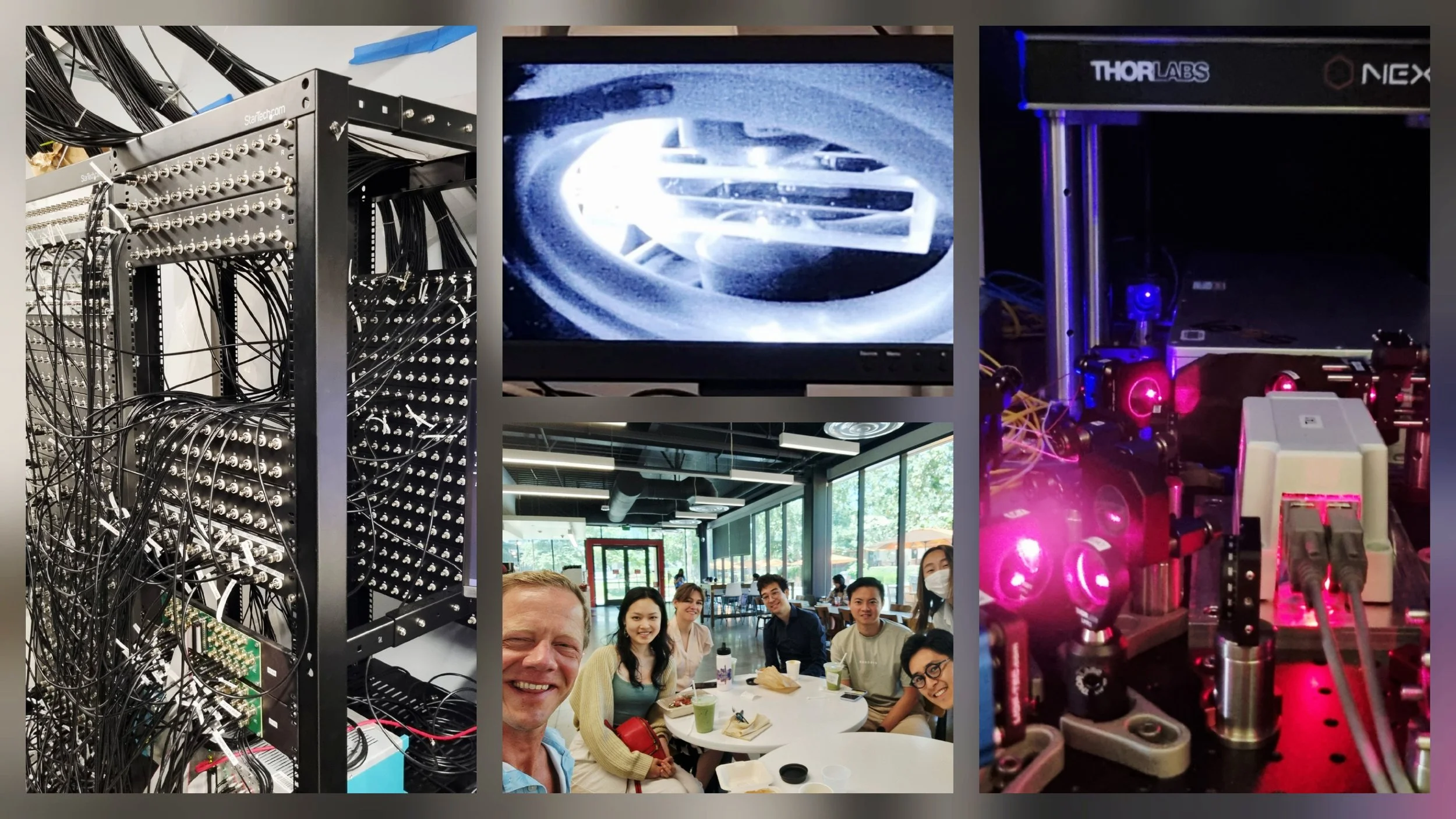
Stanford Law’s Jin-Hee Lee, Katie Liu and Mauritz Kop visit Caltech Quantum Research Center

Pasadena, CA – On July 6, 2024, a team from the Stanford Center for Responsible Quantum Technology (RQT) embarked on a research field trip to the California Institute of Technology (Caltech), one of the world's preeminent hubs for quantum science research. This visit, part of an ongoing collaboration between the two world-leading institutions, was a crucial exercise in bridging the gap between the deeply technical world of quantum research and the complex legal, ethical, and societal frameworks required to govern it. The delegation, consisting of RQT Founding Director Mauritz Kop, RQT Fellow Jin-Hee Lee, and Research Assistant to the Director Katie Liu, traveled from Stanford to the heart of Southern California to engage directly with the scientists and engineers who are building the future of quantum. The visit was hosted by RQT Fellow Franz Pfanner, a PhD candidate at Caltech, and focused on the groundbreaking work being done at Caltech's Institute for Quantum Information and Matter (IQIM).

The day was dedicated to exploring the groundbreaking work being done at Caltech's Institute for Quantum Information and Matter (IQIM), a flagship research center led by Professor Manuel Endres, within the university's prestigious Division of Physics, Mathematics and Astronomy. This visit underscores the RQT Center's commitment to fostering a deeply interdisciplinary dialogue, ensuring that the development of responsible quantum governance is informed by a hands-on understanding of the technology itself.

The Epicenter of Quantum Innovation: Caltech's IQIM

Caltech stands as a global powerhouse in quantum research, and at its core is the Institute for Quantum Information and Matter (IQIM). Under the leadership of Professor Manuel Endres, IQIM is dedicated to exploring the frontiers of quantum science, from the fundamental physics of quantum information to the development of novel quantum materials and devices. The institute's work is organized around several Major Activities (MAs), each tackling a different facet of the quantum puzzle.

Bridging Quantum Theory and Society: The Stanford RQT Projects

The visit to Caltech provided a rich technical context for the work being done by the Stanford RQT team, whose projects are focused on the human and societal dimensions of this emerging technological revolution.

Jin-Hee Lee, an RQT Fellow, is pioneering research in the nascent field of Quantum Human-Computer Interaction (Q-HCI). Her project addresses a critical, yet often overlooked, aspect of the quantum future: how will humans interact with these powerful and counterintuitive machines? As quantum computers move beyond the binary logic of classical computing and into the probabilistic realm of qubits and superposition, the interfaces through which we engage with them must be completely re-imagined. Jin-Hee's work, guided by the ELSPI (Ethical, Legal, Social, and Policy Implications) framework, aims to ensure that these interfaces are not only functional but also accessible, intuitive, and ethically designed, preventing the creation of a new digital divide and keeping humanity at the center of the quantum age.

Katie Liu, a Research Assistant at the RQT Center, is focusing on the intersection of quantum technology and neuroscience. Her project, "Responsible Quantum AI in Healthcare – Neurotechnology and Beyond," explores the transformative potential of quantum AI (QAI) to enhance diagnostics and treatments for complex neurological conditions like Alzheimer's and Parkinson's disease. Using the SEA (Safeguarding, Engaging, Advancing) principles as her guide, Katie is investigating how quantum algorithms can analyze the vast datasets generated by neuroimaging and real-time brain monitoring to create personalized treatment plans. Her research also addresses the profound ethical challenges of this work, from ensuring patient data privacy through quantum-resistant encryption to mitigating the dual-use risks of advanced neurotechnology.

A Cross-pollination of Disciplines and a Moment of Reflection

Following the intellectually stimulating day at Caltech, the Stanford delegation visited The Huntington Library, Art Museum, and Botanical Gardens, taking time to reflect in the serene beauty of the Chinese Garden. The garden, with its intricate design and harmonious balance of natural and man-made elements, served as a powerful metaphor for the work ahead: building a responsible quantum future requires a similar blend of technical ingenuity, ethical foresight, and a deep appreciation for the human values we seek to preserve and enhance.

The journey to a quantum-enabled world is just beginning. But as the collaboration between institutions like Stanford and Caltech demonstrates, by working together across disciplines, we can ensure that this powerful new chapter in human history is written not with reckless abandon, but with wisdom, responsibility, and a shared commitment to the common good.

Meer lezen
Nature Physics publishes A Call for Responsible Quantum Technology by Urs Gasser, Eline De Jong and Mauritz Kop

The leading journal Nature Physics has published "A Call for Responsible Quantum Technology," a significant Comment piece authored by a transatlantic team of scholars: Urs Gasser, Eline De Jong, and Mauritz Kop. Published on April 9, 2024, the article serves as a manifesto of the Stanford Center for Responsible Quantum Technology (RQT). It presents a compelling argument for proactively establishing ethical and societal guardrails for quantum technology (QT) while the field is still in its formative stages.

Citation: Gasser, U., De Jong, E. & Kop, M. A call for responsible quantum technology. Nat. Phys. 20, 525–527 (2024). https://doi.org/10.1038/s41567-024-02462-8

This foundational work builds upon the Stanford Center for RQT's prior scholarship, including the foundational paper "Towards Responsible Quantum Technology" published at Harvard and the University of California, and the "10 Principles for Responsible Quantum Innovation" published at IOP Science & Technology. All three authors are members of the Stanford RQT Center, which is founded and directed by Kop, who also served as the senior and corresponding author on the Nature publication. The article crystallizes the Center's crucial mission: to guide the development of quantum technologies in a direction that is safe, ethical, and beneficial for humanity and the planet.

Watch Urs Gasser and Eline De Jong present their Nature publication at the Stanford Responsible Quantum Technology Conference here: https://youtu.be/2vA9fID-7SA?si=MV67C9jN34UlsmuW&t=1279

The Core Argument: A Proactive Stance on Quantum Governance

The central thesis of "A Call for Responsible Quantum Technology" is both clear and urgent: the time to consider and implement governance frameworks for QT is now. The authors draw a crucial lesson from the history of other powerful innovations, such as nuclear fission and artificial intelligence (AI), where ethical, legal, and social considerations were often addressed reactively, "once the genie is already out of the bottle." Given the potentially transformative and disruptive power of quantum, the article argues that repeating this mistake is not an option.

A Framework for Responsible Quantum Innovation

To navigate this complex landscape, the authors propose a comprehensive framework for Responsible Quantum Technology. This is not a call for premature, heavy-handed legislation but for a systematic approach to anticipate and manage the ethical, legal, social, and policy implications (ELSPI) throughout the entire QT lifecycle.

The framework is designed to be operationalized through a set of quantum-specific guiding principles, which the authors organize into three functional categories, known as the SEA principles:

  • Safeguarding: Principles focused on mitigating downside risks, requiring that issues like information security and malicious dual-use scenarios are considered from the outset of research and development.

  • Engaging: Principles designed to foster robust interaction between innovators and diverse stakeholders to address complex issues like intellectual property, market competition, and equitable access.

  • Advancing: Principles that prioritize and incentivize the development of QT applications that serve desirable societal goals and the common good.

This layered approach, spanning technical, ethical, and socio-legal considerations, provides a navigational aid for researchers, funders, policymakers, and industry leaders, offering both an "issue spotter" to identify potential challenges and a "compass" to guide the technology's trajectory.

The Authors of the Nature Publication on Responsible Quantum Technology

The Nature article is a product of deep interdisciplinary expertise, authored by three leading figures at the Stanford Center for Responsible Quantum Technology:

Urs Gasser is a distinguished Professor at the Technical University of Munich (TUM), where he is Dean of the TUM School of Social Sciences and Technology. A Fellow at the Stanford RQT Center, he was previously the Executive Director of the Berkman Klein Center for Internet & Society at Harvard University. His research focuses on the societal and regulatory implications of emerging technologies, bringing a wealth of experience in technology law and policy.

Eline De Jong is a Dutch philosopher and ethicist serving as a Fellow at the Stanford RQT Center. She is currently a PhD candidate at the University of Amsterdam, specializing in the philosophy and ethics of quantum technology. Her background includes advising the Netherlands Scientific Council for Government Policy on the societal impact of AI, providing a deep understanding of the co-evolution of technology and society.

Mauritz Kop, the Founding Director of the Stanford RQT Center and the article's senior and corresponding author, is a tech lawyer, policy advisor, and academic whose work focuses on creating sui generis governance frameworks for exponential technologies like AI and quantum. His scholarship, published by leading institutions globally, aims to integrate risk management, regulatory compliance, and safety standards directly into the innovation process.

This collaboration between legal, policy, and ethics scholars underscores the article's central message: ensuring a responsible quantum future requires a concerted, interdisciplinary, and international effort. As the manifesto for the Stanford Center for RQT, Nature’s "A Call for Responsible Quantum Technology" is a foundational text, setting a clear and principled agenda for the global quantum community.

Meer lezen

Mauritz Kop and Mark Lemley Host High-Level EU Cybersecurity Delegation at Stanford Law

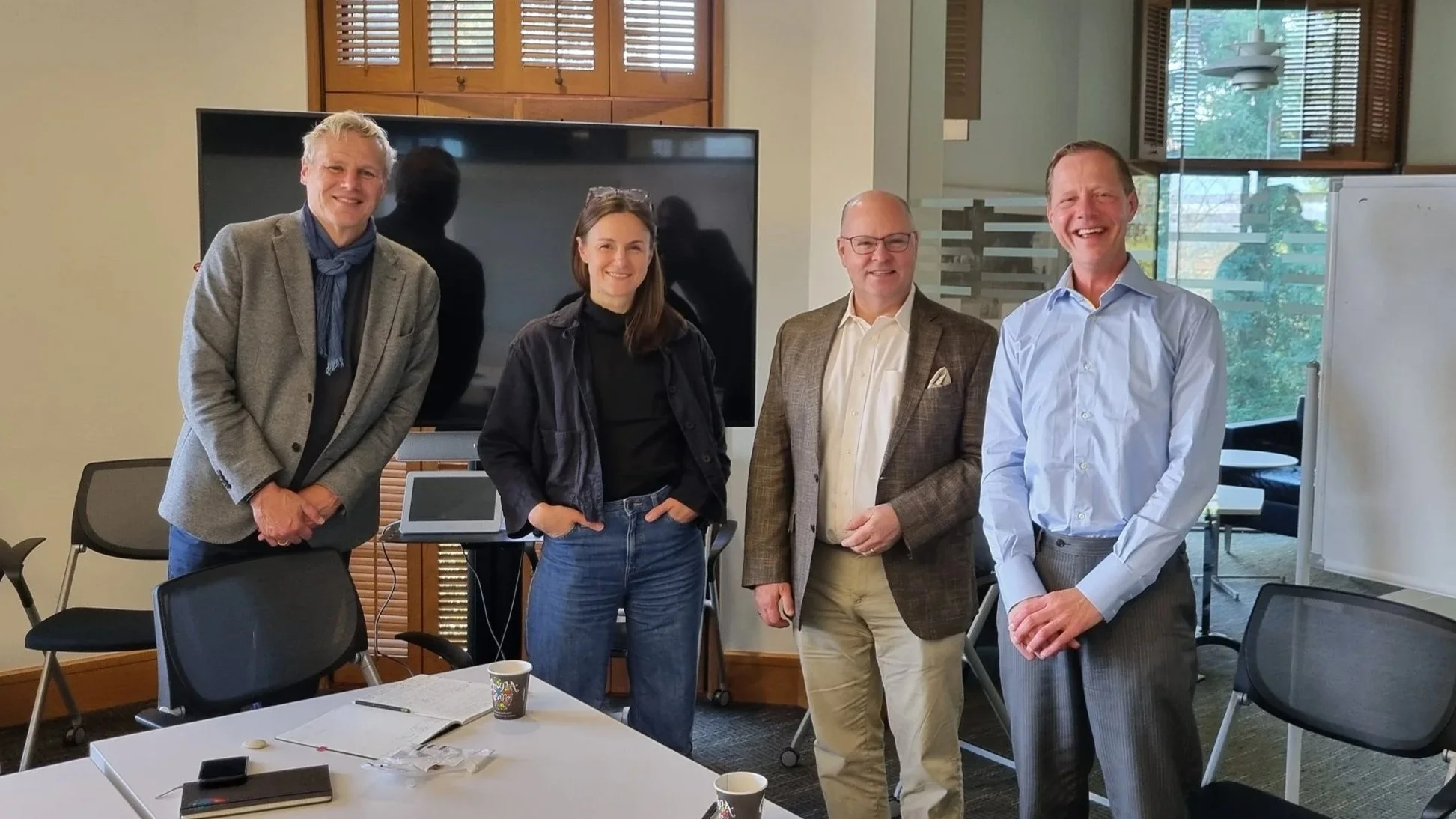
Stanford, CA – On February 26, 2024, the Stanford Center for Responsible Quantum Technology (RQT), a leading interdisciplinary hub operating under the aegis of the Stanford Program in Law, Science & Technology, had the distinct honor of hosting a high-level cybersecurity delegation from the European Commission. The meeting, led by the Center’s Founding Director, Mauritz Kop, and Professor Mark A. Lemley, Director of the Stanford Program in Law, Science & Technology, underscored the growing importance of transatlantic dialogue in shaping the future of digital security and responsible innovation in the quantum age.

The Stanford Center for RQT is dedicated to steering the development and application of quantum technologies toward outcomes that are not only innovative but also equitable, transparent, and beneficial for society at large. Its mission is to proactively address the complex ethical, legal, societal, policy and interoperability implications of quantum advancements, fostering a global ecosystem grounded in democratic values and human rights. The Center was officially inaugurated on December 6, 2023, by His Excellency Mark Rutte, then Prime Minister of the Netherlands and the current Secretary General of NATO, a testament to the geopolitical significance of its work. This recent meeting with the EU delegation builds on that foundation, reinforcing the Center’s role as a crucial bridge between Silicon Valley’s technological frontier and the world’s leading policymakers.

The dialogue centered on some of the most pressing challenges and opportunities at the intersection of quantum technology and cybersecurity, including building global capacity for responsible innovation and aligning EU and US national security strategies.

The EU Cybersecurity Delegation at Stanford RQT

The European Commission’s Cybersecurity Delegation was led by Gerard de Graaf, the Senior Envoy for Digital to the U.S. and Head of the European Union Office in San Francisco. A veteran of the European Commission with a distinguished career spanning several key digital policy areas, Mr. de Graaf is at the forefront of the EU’s efforts to promote a human-centric, ethical, and secure digital transition. His role involves strengthening transatlantic cooperation on digital regulation, from data governance and AI to cybersecurity and platform accountability. Mr. de Graaf, who was also present at the Center’s inauguration, has been a pivotal figure in shaping the EU’s landmark digital policies, including the General Data Protection Regulation (GDPR) and the Digital Services Act (DSA). His leadership in the San Francisco office is instrumental in fostering dialogue between European regulators and the heart of the global tech industry.

Accompanying Mr. de Graaf were Joanna Smolinska, Deputy Head of the EU Office in San Francisco and a key figure in transatlantic tech diplomacy, and Ilse Rooze, a Seconded National Expert at the EU Office who brings deep expertise in digital policy and international relations.

Representing Stanford were Mauritz Kop and Professor Mark A. Lemley. Mr. Kop is a pioneering scholar in the governance of emerging technologies, with a focus on quantum, AI, and intellectual property. As the Founding Director of the RQT Center, his work is dedicated to creating robust legal and ethical frameworks to ensure that transformative technologies are developed and deployed responsibly. Professor Lemley is the William H. Neukom Professor of Law at Stanford Law School and one of the world's most cited scholars in intellectual property and technology law. His extensive work on innovation, competition, and the digital economy provides a critical legal and economic lens through which to view the challenges of the quantum era.

The Quantum Cybersecurity Challenge: Preparing for Q-Day

A central theme of the discussion was the looming threat that fault-tolerant quantum computers pose to global cybersecurity. The immense processing power of these future machines will render much of the world’s current cryptographic infrastructure obsolete. This critical juncture, often referred to as “Q-Day” or the “Quantum Apocalypse,” is the moment when a quantum computer will be capable of breaking widely used encryption standards like RSA and ECC, which protect everything from financial transactions and government communications to personal data and critical infrastructure.

The implications of Q-Day are profound. Malicious actors could potentially decrypt vast archives of stolen encrypted data—a scenario known as "harvest now, decrypt later." This retroactive decryption capability poses a severe threat to long-term data security, national security, and economic stability.

In his opening remarks, Mauritz Kop emphasized the urgency of a proactive, coordinated global response. The conversation explored the transition to Post-Quantum Cryptography (PQC), a new generation of cryptographic algorithms designed to be resistant to attacks from both classical and quantum computers. The U.S. National Institute of Standards and Technology (NIST) is in the final stages of standardizing a suite of PQC algorithms, a process closely watched by governments and industries worldwide. The delegation discussed the immense logistical, technical, and financial challenges of migrating global IT systems to these new technical standards—a process that is expected to take more than a decade and require unprecedented public-private collaboration.

The discussion also touched upon other quantum security technologies, such as Quantum Key Distribution (QKD), which uses the principles of quantum mechanics to create secure communication channels. While PQC focuses on developing new mathematical problems that are hard for quantum computers to solve, QKD offers a physics-based approach to security. The participants explored how these different technologies could complement each other in a future-proof security architecture.

Meer lezen
Quantum Technology Impact Assessment (EU AI Alliance, European Commission)

Brussels, 20 April 2023—The emergence of powerful new capabilities in large AI models, such as Generative Adversarial Networks (GANs), underscores the critical need to continuously improve and update technology impact assessment tools, ensuring they keep pace with rapid technological development. As defined in recent scholarship, technology impact assessment is the systematic process of monitoring and determining the unintended, indirect, or delayed societal impacts of a future technological innovation. Crucially, it is also about capitalizing on opportunities and enabling responsible innovation from the outset.

An article by Stanford Law’s Mauritz Kop on this topic is also featured on the European Commission's Futurium website.

Shaping the Quantum Innovation Process

Quantum Impact Assessments (QIAs) are emerging as vital practical tools to facilitate the responsible adoption of quantum technologies. There are several related approaches to this assessment: (1) interactive QIA, which seeks to influence and shape the innovation process; (2) constructive QIA, where social issues guide the design of the technology from its earliest stages; and (3) real-time QIA, which connects scientific R&D with social sciences and policy from the start, before a technology becomes locked-in.

Often taking the form of codes of conduct, best practices, roadmaps, and physics de-risking tools, QIA instruments can be used by governments, industry, and academia. These soft law toolsallow stakeholders to explore how current technological developments affect the world we live in and to proactively shape the innovation process toward beneficial, societally robust outcomes.

Exploratory Quantum Technology Assessment

Implementing interdisciplinary, expert-based QIAs can help raise awareness about the ethical, legal, socio-economic, and policy (ELSPI) dimensions of quantum technology, including quantum-classical hybrid systems. For instance, QIAs cultivate a deeper understanding of the potential dual-use character of quantum technology, where beneficial applications (such as quantum sensing for medical diagnostics) can exist alongside potentially harmful ones (such as the same sensors being used for autocratic surveillance).

Building on the foundational work of the 2018 AI Impact Assessment developed by ECP | Platform voor de InformatieSamenleving chaired by Prof. Kees Stuurman, this work presents a prototype of a QIA instrument: the Exploratory Quantum Technology Assessment (EQTA). This pioneering initiative was made possible through a collaboration between the Dutch Ministry of Economic Affairs & Climate Policy, Quantum Delta NL (QDNL), and ECP. The EQTA will be presented by Eline de Jong and Mauritz Kop at the inaugural Stanford Responsible Quantum Technology Conference in May 2023.

Guidance for Responsible Quantum Technology Implementation

The EQTA provides a comprehensive, practical step-by-step plan that encourages stakeholders to initiate a dialogue to clarify which ethical, legal, and social aspects are important in the creation and application of quantum systems and their interaction with classical technologies. This structured approach helps make the use of quantum technology—as well as the data and algorithms that power it—more transparent and accountable from an early stage.

Looking forward, establishing a risk-based legal-ethical framework in combination with standardization, certification, technology impact assessment, and life-cycle auditing of quantum-driven systems is crucial to stewarding society towards responsible quantum innovation. Mauritz Kop’s research group has written more on this framework in their seminal article Towards Responsible Quantum Technology (Harvard).

Meer lezen
Mauritz Kop calls for a Quantum Governance Act at the University of Copenhagen, Faculty of Law

Much enjoyed giving a lecture titled ‘Quantum-ELSPI: A Call for a Quantum Governance Act’ on Thursday June 9, 2022 at the University of Copenhagen, Faculty of Law. This was an internal CeBiL event that took place before The Quantum Future symposium, organized by the Royal Danish Academy of Sciences and its newly established Committee for Quantum Information and Quantum Computing, together with the Niels Bohr Institute’s Quantum Life Centre.

EU Quantum Governance Act

With its own Copenhagen interpretation of quantum mechanics in which physical phenomena must be observed and measured to exist, the University of Copenhagen, Faculty of Law was the perfect place to propose an outline for a novel Quantum Governance Act on a European level, fostering open innovation while putting targeted, technology and industry specific risk based controls in place. The EU Quantum Act should jointly optimize advancing quantum technology (investment and innovation) with safeguaring quantum technology, society and humankind (guardrails, standards, values, IP protection and national security). For example, it could contain a product safety regime as found in the EU AI Act, combined with pro-innovation mechanisms as found in the US CHIPS Act. In addition, I connected regulating quantum to regulating general purpose technologies (GPT) like artificial intelligence (AI), but also to nanotechnology, biotechnology, semiconductors, and last not least to managing dual use fissionable materials such as nuclear isotopes and nuclear weapons, utilizing export and intellectual property controls.

The Law of Quantum: Quantum Regulatory Frameworks

The Quantum & Law lecture gave an overview of work done over the past 3 years on quantum regulatory frameworks, incentive and rewards systems, competition law, beyond intellectual property innovation law, ethics, national security policy, standardization, technology impact assessment, benchmarking and certification published or forthcoming in high impact journals at both sides of the Atlantic. My talk ended with discussing the latest research findings pertaining to the Law of Quantum, and Quantum-ELSPI academic disciplines. Thanks to the participants for their inspiring questions and comments!

Panel Debate about the Quantum Future at the Royal Danish Academy of Sciences

The brilliant lectures on atoms, photons, qubits, the nature of quantum information, the history of quantum physics, and current research into quantum computer paradigms -including combatting decoherence on both software and hardware levels- at The Quantum Future symposium where highly enjoyable. This fascinating program ended with a panel debate on how quantum technology will change our society, at the beautiful building of the Royal Danish Academy of Sciences, in attendance of fellow jurists Nicholson Price II, Louise C. Druedahl, Marcelo Corrales Compagnucci, and Agnieszka Radziwon.

Surfing the Waves of the Second Quantum Revolution

The panel debate at the Academy -superbly moderated by Nanna Bonde Thylstrup- gave a true, almost symptomatic picture of the various stakeholders' viewpoints and positions. But we are learning to speak each other's language better and better, a crucial and exciting step when it comes to balancing the societal impact of our mystical family of quantum technologies. Surfing the waves of the second quantum revolution requires building bridges between disciplines, beyond traditional research silos. Bringing together the humanities, social and natural sciences to spur sustainable innovation driven by a golden triangle of academia, government and industry is essential.

Thank you to Professor Timo Minssen and his team at CeBiL for the kind invite. https://jura.ku.dk/cebil/

Meer lezen
IBM Invites Mauritz Kop for Lecture on Quantum Ethics

New York, May 17, 2022—The development of quantum technology represents a significant advance in computational capability, with the potential to reshape industries, accelerate scientific discovery, and address complex problems. As with other transformative technologies, its power introduces a range of responsibilities. The relevant questions are not only about the technical capabilities of quantum mechanics, but also about the appropriate uses of the technology.

Reflecting this, IBM, a leading company in the quantum field, convened a seminar on May 17, 2022, for its New York and San Francisco teams to focus on the legal and ethical dimensions of this emerging field. The invited speaker for the event was Mauritz Kop, a visiting scholar at Stanford Law School, who presented his work on establishing a governance framework for quantum technologies to an audience of researchers, engineers, and policymakers.

The event was part of IBM's Tech for Justice initiative, a cross-divisional program dedicated to using technology to address systemic biases and advance social equity. Situating the conversation about quantum ethics within this framework indicates an understanding that principles of fairness, accountability, and transparency should be integrated into new technologies from an early stage.

The session was hosted by Dr. Aminat Adebiyi, a Research Staff Member, Experimentalist, and Maker at IBM, and moderated by Dr. Mira Wolf-Bauwens. Kop's collaboration with Wolf-Bauwens includes their shared work on the World Economic Forum's foundational principles for quantum computing, a project that highlights the role of multi-stakeholder cooperation in this area.

The Quantum Vanguard: IBM's Technological Position

To understand the context of the ethical discussion, it is useful to consider the technological landscape. IBM Quantum is one of the leading organizations in quantum computing and has achieved notable milestones in the field. Central to its strategy is the development of universal fault-tolerant quantum computers based on superconducting transmon qubits. This approach, which involves creating and manipulating quantum states in circuits cooled to cryogenic temperatures, has enabled IBM to build increasingly powerful and stable quantum processors.

Charting a Course for Responsible Quantum Development: A Summary of the Lecture

The material presented in the lecture builds upon a body of foundational research by Kop. His work in the Yale Journal of Law & Technology first proposed a comprehensive legal-ethical framework and a set of ten guiding principles for quantum technology. In the Stanford Law School Transatlantic Technology Law Forum, he explored the crucial roles of intellectual property and standardization in fostering sustainable innovation. Furthermore, in Physics World, published by the Institute of Physics, he articulated the necessity of a dedicated field of "quantum ethics," urging the physics community to engage directly with the social and moral implications of their work. Lastly, together with Luciano Floridi at Oxford, Kop conceptualized the Quantum-ELSPI framework as the ethical, legal, social, and policy implications of the suite of quantum technologies. The lecture for IBM synthesized and advanced these core themes.

Kop's lecture, "Legal and Ethical Guidelines for Quantum Technologies," was structured around the thesis that there is a timely opportunity to establish governance for quantum technology. In contrast to the development of the internet or artificial intelligence, where regulation often followed widespread adoption, it is possible to proactively embed democratic values and human rights principles into the architecture of quantum systems.

Interactive Discussion and Call to Action

The lecture was followed by an engaging Q&A session that highlighted the deep commitment of the IBM technical community to responsible innovation. The questions posed by participants explored the practical challenges and nuances of implementing ethical frameworks. Key themes of the discussion included the tangible impact of tech regulation to date, the specific processes needed to assess quantum's potential societal effects, and the distinct yet complementary roles of government and private enterprise in setting and adhering to standards.

Participants were keen to understand how a framework could effectively infuse 'humanism' into every aspect of technology development and how regulation could be used proactively to shape an emerging field for the better. The dialogue also addressed the most significant challenges facing quantum regulation specifically and the strategies required to overcome them.

Meer lezen
Ethics in the Quantum Age

Honored to write about Ethics in the Quantum Age in the Physics World Special on Quantum 2.0, and to be given the chance to outline an ethical framework for quantum technologies, which includes a definition of quantum-ethics.

Mauritz Kop, Why we need to consider the ethical implications of quantum technologies, Physics World, IOP Publishing, (December 1, 2021)

Physics World Special on Quantum 2.0

Physics World is the magazine of the UK-based Institute of Physics (IOP), one of the largest physical societies in the world.

Link to the article: https://physicsworld.com/a/why-we-need-to-consider-the-ethical-implications-of-quantum-technologies/

Download the Ethics in the Quantum Age article here.

We need to build bridges of mutual understanding between disciplines – a move that will involve learning to speak each other’s language, which is easier said than done. Therefore, it is a promising sign that the quantum community reaches out to lawyers, philosophers, and ethicists to explain them the importance of ethics and the societal impact of quantum technologies in their own technical journal.

Making Quantum Technologies Ethical

Please find a short introduction below:

Over the past decades, research into quantum technologies has come to the stage where the science is rapidly being translated into real-world applications be it quantum computers, materials and communications systems. These advancements are witnessed by the considerable number of quantum start-ups that have emerged in recent years. Yet before these innovations can be diffused, we must ensure that ethical, legal and social implications are sufficiently addressed. Against this backdrop, attention is now turning to interdisciplinary efforts to identify the dilemma’s ingrained in making quantum technologies ethical.

A Multi-layered Ethical Framework for Quantum Technologies

The article proposes a multi-layered ethical framework for quantum technologies, including a definition of quantum ethics. At one level, we employ the old, familiar “normative” ethics that apply to all transformative technologies and to information. In addition, the counterintuitive phenomena that underpin quantum physics – such as superposition, entanglement and tunnelling – require a tailored, applied ethics approach. In other words, due to the unique characteristics of quantum technologies – such as the unprecedented capabilities of quantum sensors, the features of quantum networks, and the probabilistic nature of quantum computing – we also develop a new subtype of context-specific practical ethics. In this way we constitute our theory in well-established ethical traditions while at the same time providing tailor-made solutions.

Definition of Quantum Ethics

One possible definition of quantum ethics could be: “Quantum ethics calls for humans to act virtuously, abiding by the standards of ethical practice and conduct set by the quantum community, and to make sure these actions have desirable consequences, with the latter being higher in rank in case it conflicts with the former.

More quantum research at Stanford Law School here.

Meer lezen