
BioLawLaPaLooZa: Mauritz Kop on Hippocratic Quantum and the End of Stable Records at Stanford Law School
By Editor
Stanford, CA, May 1, 2026—Mauritz Kop, Founder of the Stanford Center for Responsible Quantum Technology (Stanford RQT), returned to BioLawLaPaLooZa, the annual law-and-biosciences conference at Stanford Law School, to deliver a talk on what he called a Hippocratic Quantum posture for medicine. The conference is co-hosted by Stanford's Center for Law and the Biosciences (CLB) and the Journal of Law and the Biosciences, and is convened by Henry T. "Hank" Greely, the Deane F. and Kate Edelman Johnson Professor of Law and Director of the CLB. It was Kop's third appearance at the gathering, and his remarks fused the biomedical-ethics argument of his Harvard-published Hippocratic Quantum work with the defense-and-democracy lens of his NATO Strategic Communications advisory work.

BioLawLapalooza at Stanford Law School: law, the biosciences, and quantum technology in one room (illustrative editorial image).
A familiar room, an unfamiliar premise
Kop opened with thanks to Greely and to the conference organizers for the hospitality, before stating the line he said organized everything that followed: "the past is not yet stable." Most public conversation about quantum computing, he observed, assumes the risk lies ahead—that a Shor-capable machine will arrive before the decade is out, and that on "Q-day" it becomes possible to break the public-key cryptography securing today's records. His framing was different. The records we treat as authenticated and confidential are contingent on a cryptographic transition still under way; what feels stable is provisional. A Shor-capable machine—the quantum hardware that would run Shor's algorithm to factor large integers and collapse the hardness assumption beneath RSA—does not need to exist yet to put present-day archives at risk, because adversaries can harvest encrypted data now and decrypt it later. That is what Kop means when he speaks of the end of stable records, and of privacy as something that must be defended retroactively as well as prospectively.
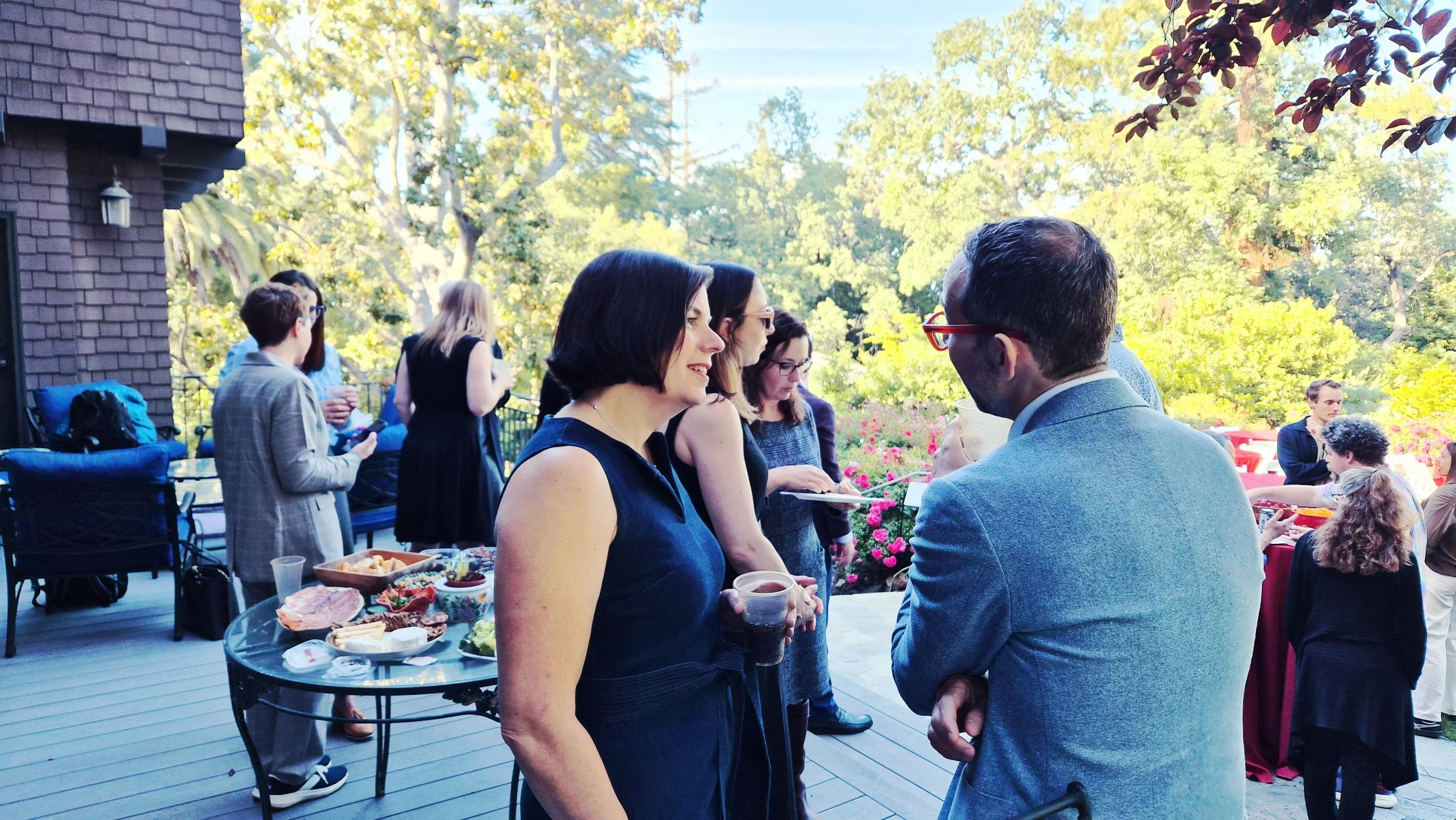
After party at Hank’s.
He paired the warning with a deliberate corrective. Quantum, he argued, is not arriving as a single machine but as a converging ecosystem—computation, simulation, sensing, imaging, and secure communication. Each pillar carries a near-term promise he wanted to name explicitly, because, in his telling, the alarmism around quantum risk is crowding out the reasons the work is being done at all. Quantum chemistry is, in his assessment, the most promising near-term application, with pharmaceutical and biotechnology firms pursuing molecular property prediction and hybrid quantum-classical screening. Quantum sensing promises diagnostics that detect disease earlier and at lower cost; quantum communication offers secure key exchange that can harden patient data against future decryption; and quantum-AI hybrids point toward more genuinely personalized medicine.
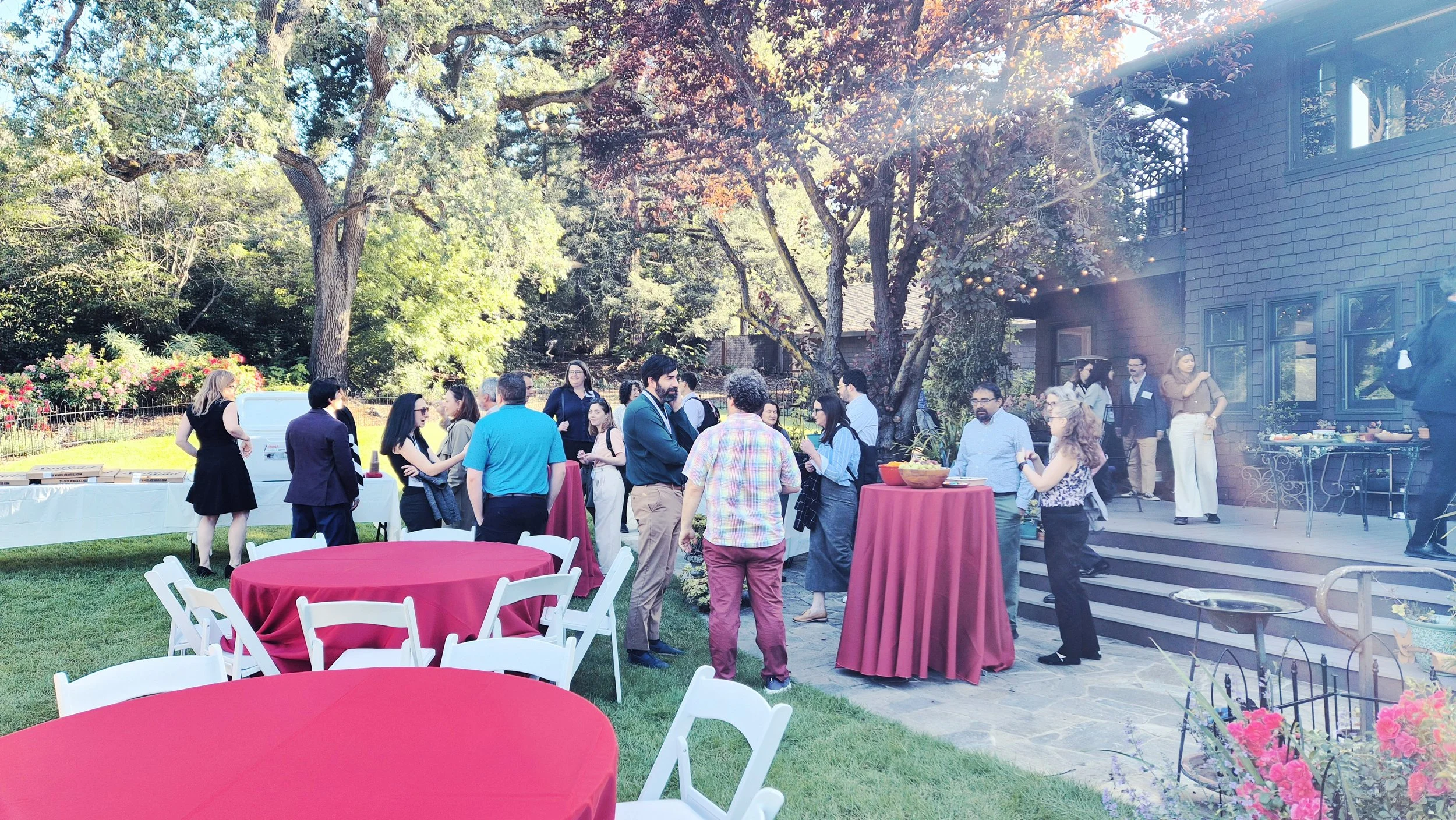
Pizza & Burrito’s.
The classical ethics, in a quantum register
The harder part of the talk turned on the four principles of biomedical ethics in their classical, medical sense—autonomy, beneficence, non-maleficence, and justice. These still orient clinical decision-making, Kop said; quantum does not replace them, but it changes what applying them requires. From that move he derived four governance problems that a serious institution cannot defer.
The first is confidentiality. Because a Shor-capable machine could break the public-key systems—RSA and elliptic-curve cryptography—that secure key exchange for electronic health records, biobanks, and genomic databases, Kop framed migration to post-quantum cryptography not as an IT upgrade but as a clinical duty, owed to patients whose most sensitive data is already being collected by parties betting on later decryption. The second is autonomy. As quantum-AI systems—the convergence of quantum computing with artificial intelligence—generate ever finer probabilistic models of individual patients, the ethical content of autonomy shifts: it comes to require data sovereignty, bounded secondary use, and a credible right not to know. The third is dual-use. The same simulators that can design therapeutics can lower the barrier to designing pathogens, and here Kop introduced his proportionality framework—the LSI test, for least trade-restrictive, security-sufficient, innovation-preserving—as a way to support tiered disclosure rather than blanket secrecy, "to fine-tune romantic openness with geopolitical realpolitik." The fourth is justice: the quantum divide, he warned, may prove steeper than the digital divide, and the open question is whether efficiency gains in trial logistics and screening reach patients or instead harden exclusion.
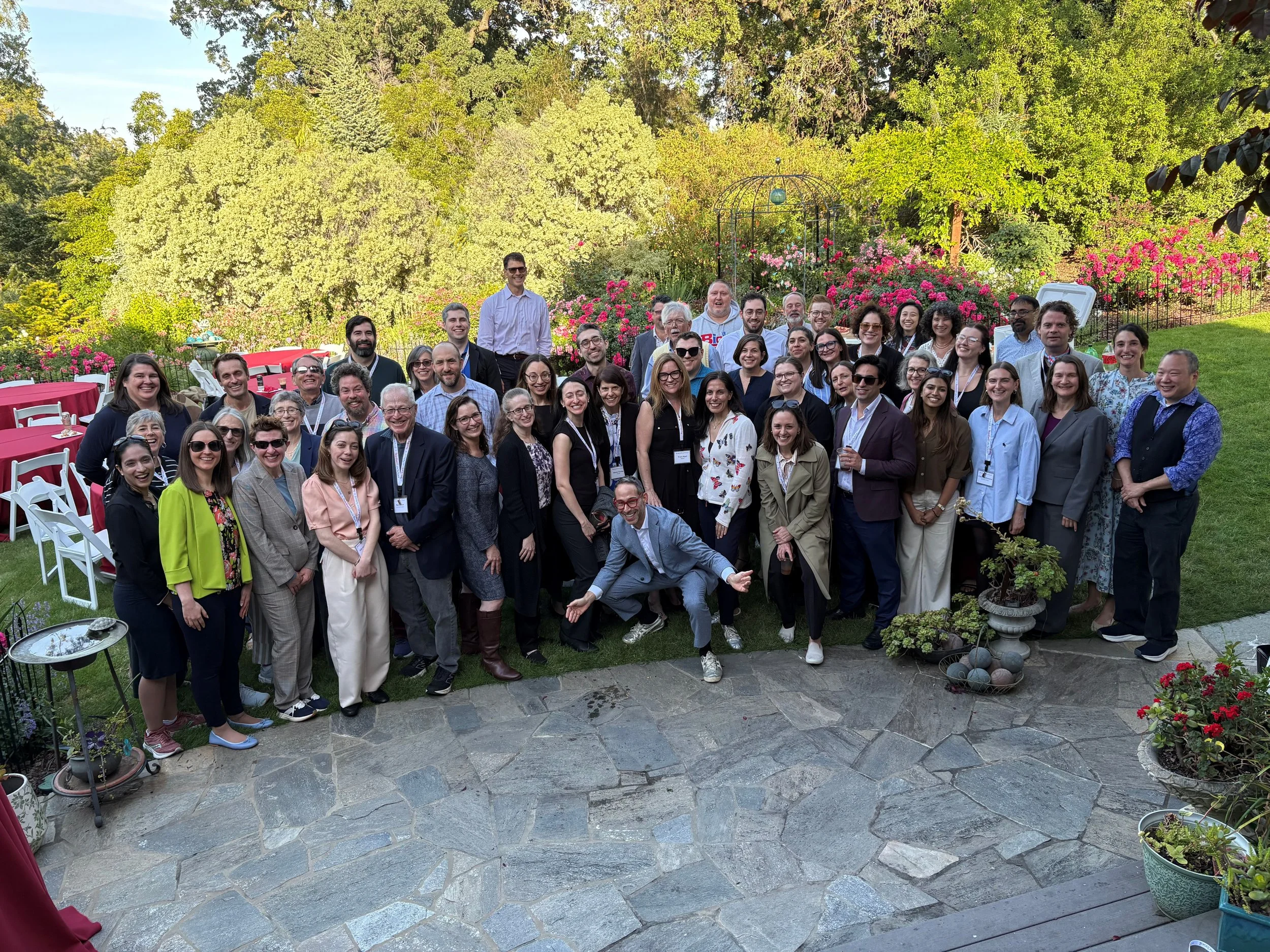
Photo credit Dr. Eleanor Greely
From the clinic to the city: the X-Ray City
Kop then widened the lens, calling quantum a matter of Chefsache—a concern for heads of government rather than a line item in research budgets. The same transitions, he argued, land in defense doctrine under the heading allied colleagues call cognitive sovereignty, a framing he connected to the cognitive-liberty work Duke's Nita Farahany has advanced against pervasive AI surveillance: in his words, they may be the same beast under two names. His most concrete illustration was civic-scale quantum sensing. Quantum gravimetric and magnetic sensors are moving from laboratory benches to infrastructure pilots, detecting subsurface structures and mass anomalies from public rights-of-way—a trajectory Kop projects toward sensing that could one day reach into the privacy of the home. He has named this prospect the X-Ray City, and told the room he had advised NATO it needs a Hippocratic Quantum posture of its own—"otherwise things will go very wrong."
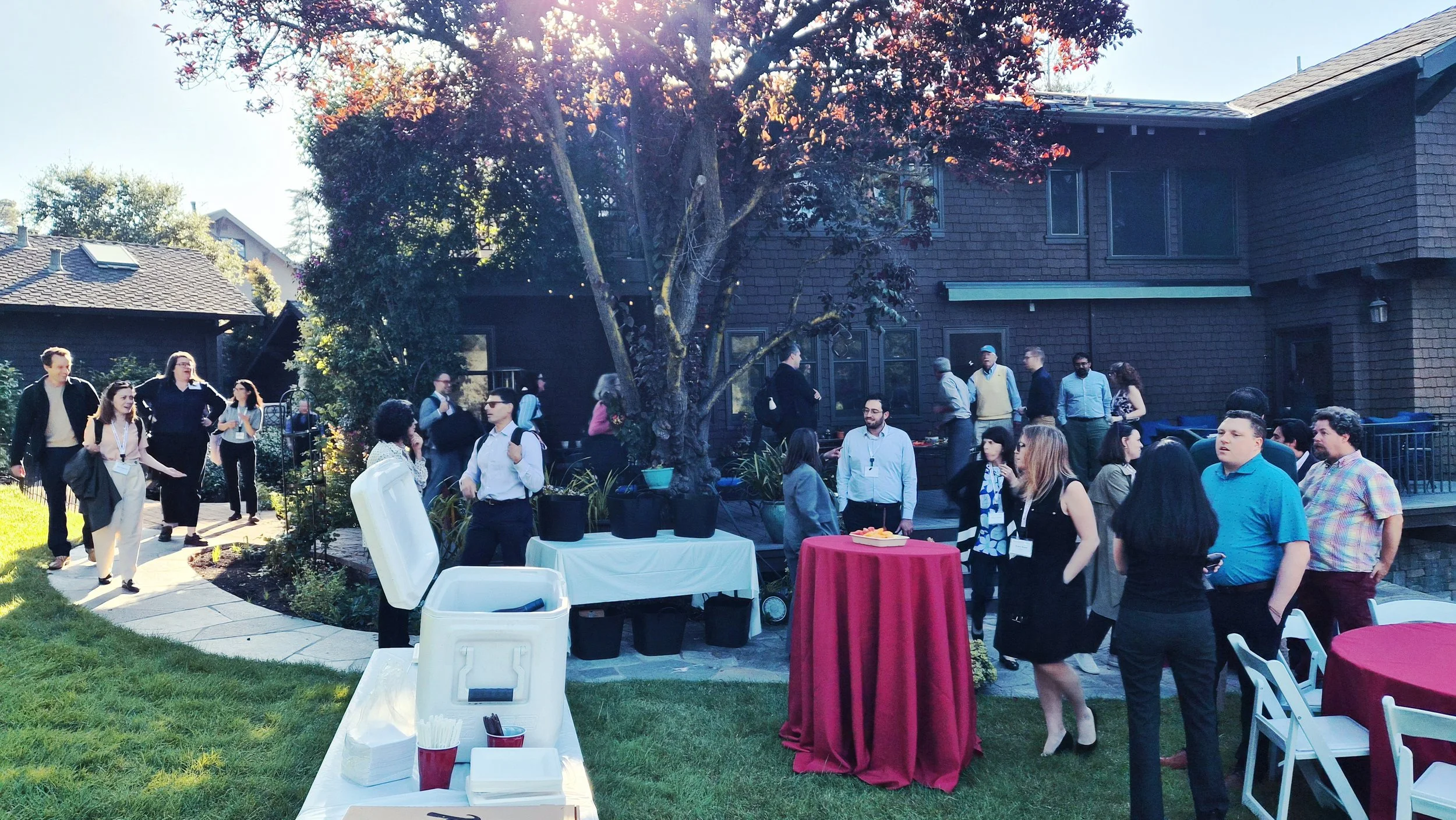
The Law & Biosciences gang.
A quantum constitution for medicine
The talk closed on a constructive note: a "quantum constitution for medicine" expressed as four standards of care—quantum-safe encryption, sovereignty over patient digital twins, human oversight in the loop, and tiered disclosure under the LSI test. Kop also struck a personal register, reflecting on how rewarding he finds it to apply the frameworks he has written about by building infrastructure and applications, work he traced back to the Stanford Quantum Incubator. Having one's feet in the mud, he suggested, sharpens the work of advising governments and companies. In his affiliations remarks he noted that he is a Senior Fellow and Principal Investigator at the Centre for International Governance Innovation (CIGI) in Waterloo, a guest professor at the U.S. Air Force Academy, and the founder of Quentir Systems, which builds agentic infrastructure for the quantum age. Stanford RQT itself, he added with a nod to Greely, is currently in migration to a new departmental home—"it pops," he said, borrowing Greely's phrase, "in and out of existence."
He reserved a specific thanks for I. Glenn Cohen, whose remarks engaged the Hippocratic Quantum piece the Petrie-Flom Center published earlier in 2026 and that The Quantum Insider covered. The session sat among the other contributions to a conference that, by design, examines biotechnology in the context of the law and weighs the law's role in shaping that impact. Kop's BioLawLaPaLooZa talk continues the argument set out in the journal volume on the law, ethics, and policy of quantum and AI in healthcare and life sciences—an annual return to a familiar room with a premise, this year, that the room had not heard before: that the past itself is not yet settled.
Last updated: June 6, 2026.