Innovation, Quantum-AI Technology & Law

Blog over Kunstmatige Intelligentie, Quantum, Deep Learning, Blockchain en Big Data Law

Blog over juridische, sociale, ethische en policy aspecten van Kunstmatige Intelligentie, Quantum Computing, Sensing & Communication, Augmented Reality en Robotica, Big Data Wetgeving en Machine Learning Regelgeving. Kennisartikelen inzake de EU AI Act, de Data Governance Act, cloud computing, algoritmes, privacy, virtual reality, blockchain, robotlaw, smart contracts, informatierecht, ICT contracten, online platforms, apps en tools. Europese regels, auteursrecht, chipsrecht, databankrechten en juridische diensten AI recht.

Berichten in Stanford RQT
Stanford University Library Creates Permanent RQT Scholarship Repository Of Selected Works

Stanford, CA, July 10, 2025 – Stanford University Library, in a significant move to advance the field of responsible quantum innovation, has established a dedicated digital scholarship repository for the Stanford Center for Responsible Quantum Technology (RQT), that had its Law School tenure from December 2023 to January 2025. This new collection, accessible via the persistent URL https://purl.stanford.edu/hp536nb5631, will preserve and showcase the influential research and scholarly output of the Center, ensuring its global accessibility for researchers, policymakers, and industry leaders.

The Stanford Center for RQT, founded by Mauritz Kop and part of the Stanford Program in Law, Science & Technology led by Mark Lemley, stands at the forefront of shaping a future where quantum advancements contribute to equitable and beneficial social goals. With a mission to foster interdisciplinary research, education, and collaboration, the Center addresses the profound societal impacts of quantum technologies, promoting competition, transparency, inclusivity, intergenerational equity, and sustainable innovation, all while safeguarding human rights and democratic values. A highlight of the Center's public engagement is its annual Stanford Responsible Quantum Technology Conference, which brings together global leaders to discuss the field's most pressing issues. The creation of this repository marks a milestone in the Center's efforts to disseminate its foundational works, and ensures their longevity.

The Stanford Library Permanent RQT Repository

The initial collection features a selection of the Center's influential publications that underscore its commitment to a holistic and forward-thinking governance approach. The showcased works include:

10 Principles for Responsible Quantum Innovation: Published in IOP Quantum Science and Technology, this seminal paper by Mauritz Kop and his team outlines a guiding framework for the ethical development of quantum technologies, emphasizing principles from safeguarding and accountability to advancing societal well-being.

Towards Responsible Quantum Technology: This foundational paper from the Harvard Berkman Klein Center for Internet & Society Research Publication Series, authored by Mauritz Kop, Mateo Aboy, Eline De Jong, Urs Gasser, Timo Minssen, I. Glenn Cohen, Mark Brongersma, Teresa Quintel, Luciano Floridi & Ray Laflamme, lays out a comprehensive vision for the responsible development and stewardship of the quantum ecosystem.

A Project-Based Approach to Responsible Quantum Innovation

In addition to its publications, the Center's work is driven by a project-based approach that tackles critical challenges at the intersection of quantum technology and society. Key projects include:

Regulating Quantum Technology: This foundational project performs a detailed study of how to sensibly regulate second-generation (2G) quantum technology. It aims to design sui generis governance frameworks that offer strategic blueprints for decision-makers, integrating risk management, resource optimization, and safety standards to ensure that the benefits of quantum are distributed equitably.

Quantum Leap: Decoding Quantum Computing Innovation: In collaboration with the University of Cambridge, this empirical project by Mateo Aboy conducts a comprehensive analysis of the patent landscape in quantum computing. By examining patenting trends, the project provides valuable, evidence-based insights to inform policy decisions related to intellectual property, innovation, and regulation in this rapidly evolving field.

Key Stanford Center for RQT Focus Areas

The Center's research and policy advocacy are concentrated on several key areas critical to the future of quantum technology:

Global Governance and Standards: Studying how technical standards, certification, and other governance mechanisms can foster the trust needed for technology uptake and responsible deployment. This includes exploring governance tipping points, geopolitics, smart regulation, dual-use, supply chains, and export controls, all within a framework that advances first-to-market innovation, reinforces human rights and safeguards democratic values.

Quantum Diplomacy and Government Advocacy: Informing policymakers, diplomats, and the judiciary about the principles of responsible quantum technology, and fostering international dialogue and strategic alliances to shape effective global governance strategies.

The establishment of this repository by the Stanford University Library not only provides a permanent home for the Center's vital scholarship but also reinforces Stanford's leadership in the global dialogue on technology governance. It serves as an essential resource for anyone seeking to understand and contribute to the responsible development of the quantum future.

Thanks to Professor Mark Lemley and to Beth Williams, Associate Dean, Robert Crown Law Library & Senior Lecturer in Law, for curating the RQT Repository.

To explore the full collection, please visit https://purl.stanford.edu/hp536nb5631.

Meer lezen
Towards an Atomic Agency for Quantum-AI

Stanford, CA May 5, 2025 — Today, Mauritz Kop published interdisciplinary research proposing “A Principled Approach to Quantum Technologies”, and the establishment of an “Atomic Agency for Quantum-AI” on the website of the European Commission. The Atomic Agency essay analyzes emerging AI and quantum technology (including their increasing complementarity and interdependence embodied in quantum-AI hybrids) regulation, export controls, and technical standards in the U.S., EU, and China, comparing legislative efforts anno 2025 to strategically balance the benefits and risks of these transformative technologies through the lens of their distinct innovation systems. The Principled Approach paper posits that quantum technology's dual use character brings with it the need to balance maximizing benefits with mitigating risks. In this spirit, the paper argues that quantum technology development should best be guided by a framework for Responsible Quantum Technology, operationalized by a set of tailored principles to optimize risk-benefit curves. Download the paper here.

Towards an Atomic Agency for Quantum-AI

The article analyzes emerging regulation, export controls, and technical standards for both quantum and AI (including their increasing complementarity and interdependence embodied in quantum-AI hybrids) in the U.S., EU, and China and offers novel conceptual frameworks to steward these technologies towards shared global benefit.

Key Takeaways:

1. Converging Need for Responsible Governance: Despite distinct innovation philosophies (market-driven in the U.S., values-based in the EU, and state-driven in China), there's a growing international consensus on the necessity for principled and responsible technology governance for both AI and quantum technologies.

2. The 'Washington Effect' vs. 'Beijing Effect': The U.S.'s security-centric policies are creating a de facto "Washington effect," potentially setting global rules for quantum law but risking premature regulation. Conversely, China's push for state-aligned standardization (e.g., via the Digital Silk Road) signals a "Beijing effect," which could export autocratic norms and fragment global interoperability, a trend exacerbated by unilateral export controls.

3. Potential U.S., EU and China Visions on a Quantum Governance Act: Given the distinct innovation ecosystems and strategic priorities of the United States, the European Union, and China, it is instructive to envision how each might hypothetically structure a dedicated legislative framework for quantum technologies. The research outlines hypothetical "Quantum Governance Acts" for each, reflecting their respective governance philosophies and innovation models, while also considering pathways towards greater international alignment based on shared values:

a. United States: Removing Barriers for U.S. Quantum Technology Act (deregulation, industrial standards-centric approach, Safeguarding through Advancing quantum technology, prioritizing market dynamism, national & economic security, and defense).

b. European Union: EU Quantum Act (harmonized regulation rooted in fundamental rights and societal benefit based on New Legislative Framework while incorporating elements from European Chips Act, renewed focus on defense via “European DARPA”).

c. China: Comprehensive Quantum Law (Safeguarding state control while Advancing state goals, blending elements of authoritarian governance with surveillance capitalism, integration of civilian and military sectors, self-reliance, exporting state norms & values through technical standards).

4. Global Challenges & Opportunities for Alignment: Faced with planetary challenges like disease, inequality and climate change, aligning on Responsible Quantum Technology (RQT) norms and standards is a critical global opportunity. The article cautions against a simplistic zero-sum game or Cold-War redux narrative for quantum competition, arguing it hinders vital international cooperation.

5. Quantum-Relativistic Innovation Theory of Everything: Philosophical thought experiment to understand innovation dynamics by drawing analogies from quantum mechanics (uncertainty, superposition at micro-level) and general relativity (context, structure at macro-level), theories about the fundamental nature of reality.

6. Smart Regulation and RQT by Design: Effective governance must move beyond mere restrictions to actively incentivize responsible behaviors, promoting "Responsible Quantum Technology (RQT) by design" through flexible instruments like Quantum Impact Assessments (QIA), RQT by design metrics, adaptive, modular legislation, & regulatory sandboxes.

7. Harmonized "Quantum Acquis Planétaire": The article advocates for a global body of Quantum Law ("Quantum Acquis Planétaire"), complemented by sector-specific practices. Such a quantum acquis would be anchored in universal ethical values and translated into foundational standards and agile legal guardrails. This requires inter-continental policymaking and strategic "recoupling" between major players like the U.S. and China, based on incentives and shared values (“what connects us” – e.g. human dignity, security, well-being).

8. An "Atomic Agency for Quantum-AI": A central proposal is the establishment of an international agency modeled after the International Atomic Energy Agency (IAEA). This body would aim to enforce a global acquis, deter a quantum arms race, ensure non-proliferation of dual-use quantum-AI technologies via safeguards implementation (inspired by nuclear governance), and potentially oversee a global UN Quantum Treaty.

9. Need for International Collaboration & Research Platforms: Realizing ambitious goals like fault-tolerant quantum centric supercomputing, and scalable topological qudits unlocking higher-dimensional quantum systems leveraging multi-level logic, requires collective global expertise and collaborative research platforms akin to CERN or ITER, challenging protectionist measures that stifle necessary cooperation. Immediate global actions should focus on leveraging quantum for the UN Sustainable Development Goals (SDGs), mitigating a 'Quantum Divide,' promoting quantum literacy, and building a skilled quantum workforce.

The research underscores the urgent need for robust global quantum-AI governance structures and calls for a shift from purely competitive dynamics towards pragmatic cooperation and the codification of a harmonized global framework.

Meer lezen
Mauritz Kop Expert at Eric Schmidt backed von Neumann Commission

Stanford, CA – Mauritz Kop, the Frm. Founding Executive Director of the Stanford Center for Responsible Quantum Technology (RQT), has accepted an invitation to serve as an expert on The von Neumann Commission. The announcement, made on February 1, 2025, positions Kop to contribute to a critical global dialogue at the intersection of quantum computing, artificial intelligence, and grand strategy. The Oxford-based, independent research commission is backed by the Eric and Wendy Schmidt Fund for Strategic Innovation and other key institutions. The von Neumann Commission’s inquiry will be multifaceted, addressing the core technical prospects for quantum acceleration, its strategic implications for the global balance of power, the risks to strategic stability, and the necessary governance frameworks to ensure responsible development. The Commission's investigation is set against the backdrop of a new technological paradigm—the convergence of quantum and AI—and is informed by the historical legacy of its namesake, the strategic vision of its sponsors, and the vital perspectives of its experts.

The Quantum-AI Convergence: A New Technological Paradigm

At the heart of The von Neumann Commission's inquiry is the powerful synergy between quantum computing and artificial intelligence. This convergence is not merely additive; it is a cross-pollination that promises to redefine the boundaries of both fields. To understand this, one must first grasp the fundamental difference between classical and quantum computation.

Classical computers, from supercomputers to smartphones, process information using bits, which can exist in one of two definite states: 0 or 1. Quantum computing, by contrast, operates on the principles of quantum mechanics. It uses qubits, which can exist in a state of superposition—representing both 0 and 1 simultaneously. This property, combined with entanglement, where the state of one qubit is instantly correlated with another regardless of distance, allows quantum computers to explore a vast computational space and perform parallel calculations on an exponential scale.

Professor Kop’s Expertise as a von Neumann Commissioner

As a Commission expert, Professor Kop will contribute a multidisciplinary perspective grounded in his extensive research on the law, ethics, societal impact, and policy of quantum and AI. Professor Kop has advised numerous governments and international organizations on their quantum technology strategies, including the United States (notably the Department of State on its quantum foreign policy, U.S. Senators on quantum governance, and as a Guest Professor at the US Air Force Academy), Canada, the United Kingdom, and The Netherlands, as well as multilateral institutions such as the World Economic Forum (WEF), UNESCO, CERN, and the OECD. He has also provided expert guidance to the European Union on landmark AI legislation, including the EU AI Act and the Data Act. His specific contributions to The von Neumann Commission will draw from his expertise in:

● Geostrategy, Democracy, and Authoritarianism: Analyzing the strategic struggle between democratic and authoritarian models of technology governance. This includes his work in Foreign Policy and the Stanford-Vienna Transatlantic Technology Forum on forming a strategic tech alliance among democratic nations and his lectures at institutions like the Hoover Institution on the impact of quantum technologies on the global balance of power.

● Comparative Regulatory and Innovation Models: Analyzing the legal and policy differences between the US, EU, and China. His scholarship, including his "Ten principles for responsible quantum technology" in IOP Quantum Science and Technology, his “Establishing a Legal-Ethical Framework for Quantum Technology” at Yale University, and foundational articles at Harvard Berkman Klein and Nature, dissects these competing models and provides a crucial framework for navigating global strategic competition.

● China’s Quantum and AI Strategy: Providing in-depth analysis of China's legal, ethical, and policy landscape for quantum technologies. This includes evaluating the country's national strategy, its approach to dual use civil-military fusion, its influence on U.S. and E.U. national and economic security through China’s Digital Silk Road Initiative, and its comparative strengths and weaknesses in the global technology race, as analyzed in his “Towards an Atomic Agency for Quantum-AI” scholarship at the European Commission’s Futurium.

● National and Economic Security: Examining the role of export controls, rare earth and critical mineral supply chain vulnerability as published at the Stanford Program on Geopolitics, Technology, and Governance at CISAC / FSI, intellectual property law as published at Berkeley and the Max Planck Institute, and cybersecurity in managing the geostrategic dimensions of quantum technology. His work in these areas, including his contributions to forums like Tel Aviv University's Cyber Week, provides critical insights into protecting strategic assets.

● Standards and Governance: Contributing to the development of robust standards, certification protocols, and performance benchmarks to ensure the safety, reliability, and ethical implementation of these powerful technologies, drawing from lessons from nuclear governance, and from his conferences and seminars at Stanford, Fordham Law, Arizona State, Copenhagen, the Center for Quantum Networks (CQN) and the Centre for International Governance Innovation (CIGI) in Waterloo.

By integrating these insights, Kop will aid the Commission in formulating a holistic understanding of the challenges pertaining to systemic rivalry and great power competition ahead.

Meer lezen
Mauritz Kop Consults UNESCO and OECD on Ethics and Quantum Technology Policy

Paris, January 9, 2025— As quantum technologies advance at a rapid pace, global institutions are turning to leading experts to help shape the ethical and policy frameworks that will govern this transformative era. Mauritz Kop, a prominent scholar in the field of quantum law and governance Founding Director of the Stanford Center for Responsible Quantum Technology, has been actively consulting with two of the world's foremost international bodies: the United Nations Educational, Scientific and Cultural Organization (UNESCO) and the Organisation for Economic Co-operation and Development (OECD). His contributions are helping to build a global consensus on the responsible development and deployment of quantum technologies.

Expert Opinions for UNESCO and its World Commission on the Ethics of Scientific Knowledge and Technology (COMEST)

UNESCO, through its World Commission on the Ethics of Scientific Knowledge and Technology (COMEST), is at the forefront of establishing global ethical norms for emerging technologies. COMEST is an advisory body composed of leading international scholars tasked with formulating ethical principles to guide decision-makers beyond purely economic considerations.

Recognizing his expertise, COMEST invited Mauritz Kop to an exclusive Expert Hearing on May 13, 2024. This session was convened to gather insights for the Commission's forthcoming landmark report on the "Ethics of the Research, Development and Deployment of Quantum Computing Technologies." Together with three other experts who each presented different perspectives, Kop was asked to present his research on Responsible Quantum Technology, quantum-ELSPI (Ethical, Legal, Societal, and Policy Implications), and bespoke governance frameworks for Quantum Information Science (QIS). His scholarship - often co-authored with RQT Fellows such as Mateo Aboy, Eline de Jong, Mark Brongersma, and Raymond Laflamme, provides the Commission with state-of-the-art analysis of the ethical and governance challenges, helping to enrich the foundation of their upcoming report.

Stanford Law’s Mauritz Kop Provides Recommendations on UNESCO Preliminary Draft: 'Ethics of Quantum Computing'

Following the request to participate in the expert hearing, Stanford Law’s Mauritz Kop was formally invited to provide written recommendations on the "Preliminary Draft Report on the Ethics of Quantum Computing" on January 9, 2025. This invitation underscores the value of his contributions to the Commission's work. While the draft itself remains confidential, its direction can be understood through its public predecessor, the "Concept note of the World Commission on the Ethics of Scientific Knowledge and Technology (COMEST) on the ethics of quantum computing," published on July 24, 2024.

The concept note lays out a comprehensive vision for the ethical governance of quantum computing. It correctly asserts that while quantum technology is still in its early stages, the time to establish ethical guardrails is now, learning from the reactive approach taken with other technologies like social media. The note emphasizes that quantum technology is not neutral; its development and use have profound social and political impacts.

Mauritz Kop Invited by OECD to Speak on Global Policy and National Strategies for Responsible Quantum Technology Development

In addition to his work with UNESCO, Mauritz Kop was invited by the OECD to contribute his expertise to its Global Forum on Technology (GFTech) event, "Future in flux? Global policy issues and national strategies for responsible quantum technology development," held in November 2023. The event was originally scheduled to take place in Tel Aviv, Israel, but was moved to a virtual format due to regional unrest.

Looking Ahead: The International Year of Quantum Science and Technology 2025

The work of UNESCO and the OECD is particularly timely, as the United Nations has officially declared 2025 the International Year of Quantum Science and Technology (IYQ 2025). This global initiative, led by UNESCO, marks the 100th anniversary of the development of modern quantum mechanics and aims to raise global awareness of the importance of quantum science and its applications.

Meer lezen
Mauritz Kop Consults U.S. Department of State on Quantum Technology and Foreign Policy Strategy

Washington D.C. – On December 12, 2024, Mauritz Kop, Founding Director of the Stanford Center for Responsible Quantum Technology (RQT) and the Stanford Quantum Incubator, was invited to consult with the U.S. Department of State on the pressing challenges and strategic opportunities presented by the quantum era. The analytic outreach event, hosted by the Bureau of Intelligence and Research’s Office of Analytic Outreach (INR/AO), provided a critical forum to discuss the integration of quantum technology considerations into U.S. foreign policy and national security strategy.

This engagement highlights the growing recognition within the U.S. government that understanding quantum technology is no longer the exclusive domain of physicists and engineers, but a crucial imperative for diplomats, intelligence analysts, and foreign policy architects.

Informing Diplomacy with Strategic Insight

The U.S. Department of State is the nation’s lead foreign affairs agency, responsible for advancing the interests and security of the American people. Within the Department, the Bureau of Intelligence and Research (INR) holds a unique mandate to provide independent, all-source intelligence and analysis to the Secretary of State and other senior policymakers. INR’s primary mission is to deliver timely, objective, and insightful assessments that inform decision-making on the full spectrum of diplomatic and foreign policy challenges. It is within this context of providing deep, substantive expertise that the Office of Analytic Outreach convenes leading external experts like Mauritz Kop to engage directly with government analysts and officials.

A Bird's-Eye View of Quantum's Strategic Landscape

While the specific details of the consultation remain confidential, the discussion drew upon Mr. Kop’s extensive research on quantum governance, which offers a strategic framework for policymakers. His analysis emphasizes several key themes crucial for navigating the complexities of the quantum age.

A central theme is the inherently dual-use character of quantum technology. This paradigm holds both immense promise and profound risk. On one hand, quantum advancements are poised to revolutionize sectors vital to human progress; quantum sensors could dramatically improve medical imaging and seismic prediction, while quantum simulation could enhance drug discovery and macroeconomic modeling. On the other hand, this same power presents formidable threats. The advent of a fault-tolerant quantum computer, or "Q-Day," could catastrophically break the classical encryption that underpins global finance, data security, and critical infrastructure, with a potential timeframe of just two to three years.

This governance model is set against a backdrop of intense geopolitical competition. Kop’s research posits the risk of a "Quantum Event Horizon"—a governance tipping point at which one technological bloc could achieve quantum supremacy and with that the keys to the world’s operating system, creating an irreversible, "winner-takes-all" advantage that could destabilize the global order. This makes it a strategic imperative for the United States and its allies to lead in building a "globally leading, values-laden Made in America quantum ecosystem."

Embedding Democratic Values into the Quantum Future

A core pillar of the responsible governance framework presented is the imperative to embed democratic values and human rights principles into the very architecture of quantum systems. Technology is never neutral; it inherently carries the values of its creators. Therefore, the U.S. and its like-minded partners have a generational opportunity to set the "rules of the road" for quantum technology through international standard-setting that prioritizes privacy, fairness, and fundamental freedoms. This involves fostering diverse, interdisciplinary research and development teams to combat inherent biases and ensure outcomes align with the principles of a free society.

Stanford RQT and the Department of State’s Bureau of Intelligence and Research

The engagement with the Department of State’s Bureau of Intelligence and Research represents a vital step in bridging the gap between the academic frontier of quantum research and the pragmatic realities of foreign policy. The work of the Stanford Center for Responsible Quantum Technology remains committed to fostering these essential conversations, ensuring that as humanity prepares to take its next great technological leap, it does so with foresight, responsibility, and a steadfast commitment to democratic values.

Meer lezen
Mauritz Kop Speaker at XPANSE 2024 Abu Dhabi: The Seminal Exponential Tech Event

Abu Dhabi, Nov. 22, 2024—Professor Mauritz Kop, the Founder and Executive Director of the Stanford Center for Responsible Quantum Technology, was invited to speak at the XPANSE 2024 forum in the captivating city of Abu Dhabi. His involvement represented a significant contribution to the global dialogue on the future of exponential technologies. Held from November 20th to 22nd, the festival-style event at the ADNEC Centre convened international experts to establish a forward-looking agenda for technology governance and development. The forum was structured as an "ecosystem-building engine" intended to guide the next phase of development for industries and societies.

XPANSE, hosted by ADQ and developed in partnership with the international think tank MATTER, brought together approximately 2,500 participants. The attendees included Nobel Prize Laureates such as Sir Roger Penrose, Steven Chu, and Anton Zeilinger, as well as industry leaders, government ministers, and scientists. The agenda covered a wide range of exponential technologies, including quantum computing, artificial general intelligence (AGI), genomics, fusion energy, and brain-machine interfaces. The initiative functions as a continuous, year-round program designed to connect scientific research with leadership, policy, and investment on a global scale. Special recognition is due to Dr. Zina Jarrahi Cinker, Chief Creator of XPANSE, for her exceptional work in organizing this seminal event.

Charting the Course for Responsible Quantum Governance

A central component of Professor Kop's participation was his role on the high-level panel, "Global Policy Frameworks for Quantum Technology." The session addressed the need for proactive governance frameworks for emerging quantum technologies, drawing lessons from the development of prior technological waves like the internet and artificial intelligence. The objective was to outline adaptive and principled regulatory structures that support innovation while ensuring societal safeguards.

Professor Kop was joined on the panel by a distinguished group of colleagues. The discussion was moderated by Fabienne Marco, Director of the Quantum Social Lab at the Technical University of Munich (TUM), and featured insights from Professor Urs Gasser, Dean of the TUM School of Social Sciences and Technology, and Dr. Hoda Al Khzaimi, Associate Vice Provost of Research Translation and Innovation at New York University Abu Dhabi. The collaboration with TUM's think tank highlighted the importance of international cooperation in this field.

Quantum Meets Fractal Geometric Art at the Intersection of Art, Infinity, and Intuition

In addition to the policy discussions, Professor Kop presented his "Quantum Meets Fractal Geometric Art" installation. This performance, held on the Main Stage in the Imaginarium’s Enchanted Forest, was designed as an immersive experience exploring the connections between mathematics, art, and physics. The installation had previously been performed at the TUM Festival of Ideas event in Munchen, Germany in November 2023 and at the Stanford RQT Conference in May 2024.

Mauritz Kop Featured Quantum Expert in The Innovator Interview

Professor Kop's perspectives were further disseminated through an interview with Jennifer Schenker of The Innovator. This conversation provided a platform to deliver clear, actionable recommendations for preparing for the quantum era to a global audience of leaders.

He outlined the broad scope of quantum technologies, including computing, sensing, networking, and quantum-AI hybrids. He linked these technologies to the United Nations' Sustainable Development Goals (SDGs), illustrating their potential to address major global challenges in areas such as medicine, carbon capture, and climate modeling.

His primary message to the corporate sector was direct: "I advise corporates to invest heavily both in quantum and quantumAI today to get ahead of the curve and to start learning about its responsible use to remain compliant." He emphasized the need for "quantum literacy" among leaders and cautioned governments against overly restrictive regulations, such as broad export controls, that could impede innovation. He advocated for "planetary thinking" and smart, pro-innovation regulation tied to established technical safety and interoperability standards.

Meer lezen
Dutch Ambassador to the US and Consul General visit Stanford Center for Responsible Quantum Technology

Stanford, CA, October 11, 2024— Today, the Stanford Center for Responsible Quantum Technology, situated within Stanford Law School, had the distinct honor of hosting a high-level delegation from the Kingdom of the Netherlands. Stanford RQT Founding Director Mauritz Kop had the pleasure of welcoming Her Excellency Birgitta Tazelaar, Ambassador of the Kingdom of the Netherlands to the United States, and the Honorable Theo Peters, Consul General of the Netherlands in San Francisco, for a series of critical discussions at the intersection of technology, governance, and international security.

The delegation, which also included Attaché for Innovation, Science and Technology Coen Damen, Senior Advisor for Innovation, Technology & Science Tyrone Pater, and Economic Affairs Associate Jasmijn Al Kenany, engaged with our Center on the most pressing challenges and opportunities presented by exponential technologies. This visit underscores the deepening transatlantic dialogue on responsible innovation and the shared commitment of the United States and the Netherlands to forging a future where technological advancement aligns with democratic values and global stability.

A Delegation of Diplomatic Experience

The breadth of the delegation’s expertise provided a rich foundation for our conversations. Ambassador Tazelaar brings three decades of diplomatic experience in political affairs, human rights, and development cooperation. Her distinguished career includes serving as Deputy Director-General for International Cooperation at the Dutch Ministry of Foreign Affairs, Director of the North Africa and Middle East Department, and as a political counselor at the Dutch Embassy in London, where her portfolio included NATO and nuclear security issues. This extensive background in navigating complex geopolitical landscapes proved invaluable to our discussions on international treaties and security frameworks for emerging technologies.

Consul General Theo Peters, who represents the Netherlands across the 13 westernmost states, has a wide-ranging background covering security policy, political affairs, and economic trade. A core part of his mission is to connect the Dutch government and its innovation ecosystem with key partners on the US West Coast, particularly in high-tech sectors. His academic credentials, including an MPA from the Harvard Kennedy School, and prior diplomatic postings in Tokyo and as Ambassador to Senegal and several other West African nations, provided a global perspective on innovation models and economic security.

Cybersecurity, strategic competition and innovation policy

The delegation's specialists brought further focus. Mr. Damen's work on innovation policies, space, and cyber, and his professional interest in how state policy can foster balanced and ecologically sound economic growth, directly informed our dialogue on national strategies. Mr. Pater, also a Tech Diplomacy Fellow at the UC Berkeley Risk & Security Lab, focuses on how like-minded countries can collaboratively stimulate research in critical areas like AI and cybersecurity to address international strategic competition and enhance research and economic security. Ms. Al Kenany, who is pursuing a Master of Science in Cyber Governance at Leiden University, contributed a vital perspective on the role of tech diplomacy in strengthening international relations and ensuring that the benefits of emerging technologies are democratized while safeguarding global security.

Meer lezen
Stanford Law’s Jin-Hee Lee, Katie Liu and Mauritz Kop visit Caltech Quantum Research Center

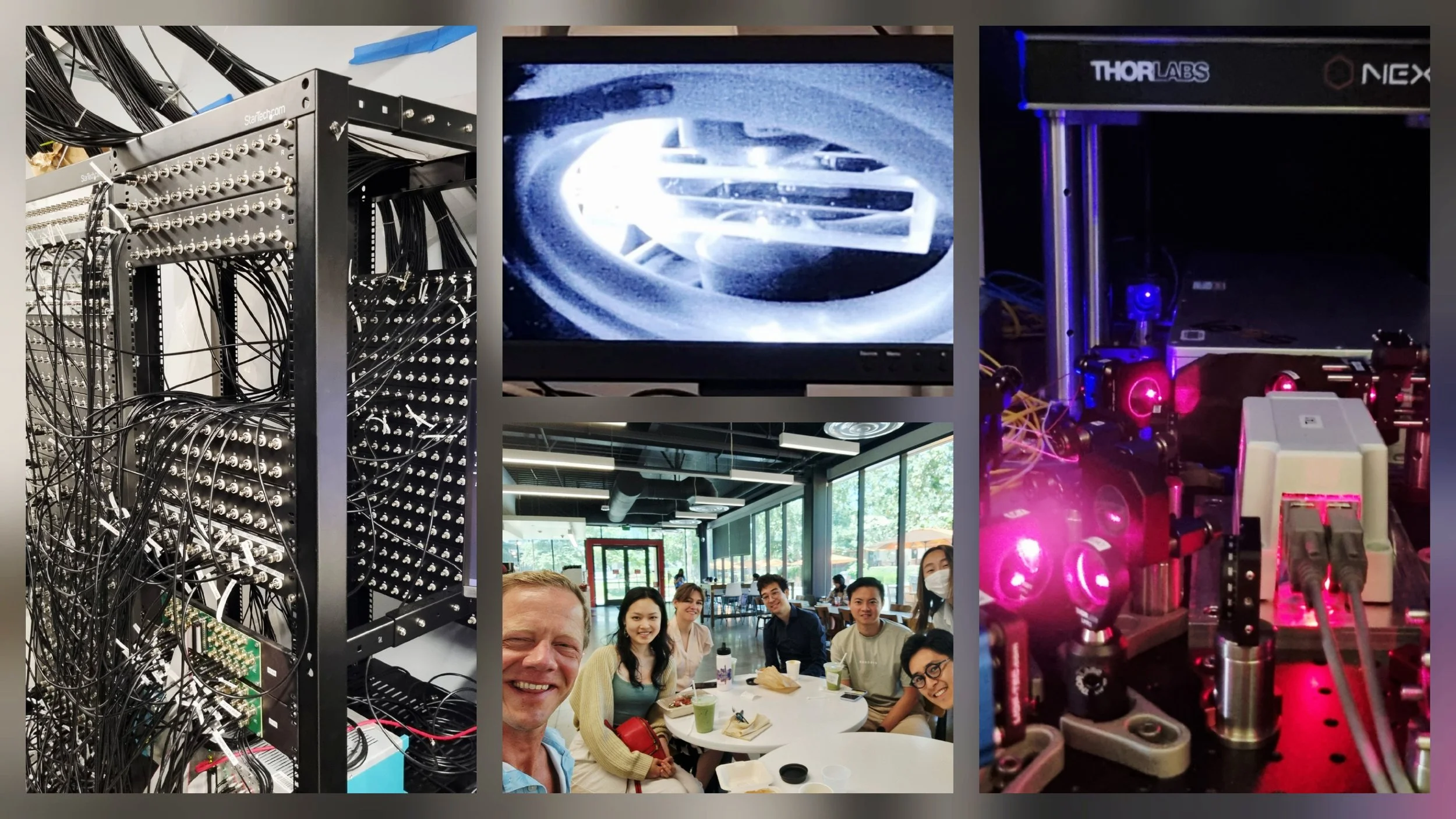
Pasadena, CA – On July 6, 2024, a team from the Stanford Center for Responsible Quantum Technology (RQT) embarked on a research field trip to the California Institute of Technology (Caltech), one of the world's preeminent hubs for quantum science research. This visit, part of an ongoing collaboration between the two world-leading institutions, was a crucial exercise in bridging the gap between the deeply technical world of quantum research and the complex legal, ethical, and societal frameworks required to govern it. The delegation, consisting of RQT Founding Director Mauritz Kop, RQT Fellow Jin-Hee Lee, and Research Assistant to the Director Katie Liu, traveled from Stanford to the heart of Southern California to engage directly with the scientists and engineers who are building the future of quantum. The visit was hosted by RQT Fellow Franz Pfanner, a PhD candidate at Caltech, and focused on the groundbreaking work being done at Caltech's Institute for Quantum Information and Matter (IQIM).

The day was dedicated to exploring the groundbreaking work being done at Caltech's Institute for Quantum Information and Matter (IQIM), a flagship research center led by Professor Manuel Endres, within the university's prestigious Division of Physics, Mathematics and Astronomy. This visit underscores the RQT Center's commitment to fostering a deeply interdisciplinary dialogue, ensuring that the development of responsible quantum governance is informed by a hands-on understanding of the technology itself.

The Epicenter of Quantum Innovation: Caltech's IQIM

Caltech stands as a global powerhouse in quantum research, and at its core is the Institute for Quantum Information and Matter (IQIM). Under the leadership of Professor Manuel Endres, IQIM is dedicated to exploring the frontiers of quantum science, from the fundamental physics of quantum information to the development of novel quantum materials and devices. The institute's work is organized around several Major Activities (MAs), each tackling a different facet of the quantum puzzle.

Bridging Quantum Theory and Society: The Stanford RQT Projects

The visit to Caltech provided a rich technical context for the work being done by the Stanford RQT team, whose projects are focused on the human and societal dimensions of this emerging technological revolution.

Jin-Hee Lee, an RQT Fellow, is pioneering research in the nascent field of Quantum Human-Computer Interaction (Q-HCI). Her project addresses a critical, yet often overlooked, aspect of the quantum future: how will humans interact with these powerful and counterintuitive machines? As quantum computers move beyond the binary logic of classical computing and into the probabilistic realm of qubits and superposition, the interfaces through which we engage with them must be completely re-imagined. Jin-Hee's work, guided by the ELSPI (Ethical, Legal, Social, and Policy Implications) framework, aims to ensure that these interfaces are not only functional but also accessible, intuitive, and ethically designed, preventing the creation of a new digital divide and keeping humanity at the center of the quantum age.

Katie Liu, a Research Assistant at the RQT Center, is focusing on the intersection of quantum technology and neuroscience. Her project, "Responsible Quantum AI in Healthcare – Neurotechnology and Beyond," explores the transformative potential of quantum AI (QAI) to enhance diagnostics and treatments for complex neurological conditions like Alzheimer's and Parkinson's disease. Using the SEA (Safeguarding, Engaging, Advancing) principles as her guide, Katie is investigating how quantum algorithms can analyze the vast datasets generated by neuroimaging and real-time brain monitoring to create personalized treatment plans. Her research also addresses the profound ethical challenges of this work, from ensuring patient data privacy through quantum-resistant encryption to mitigating the dual-use risks of advanced neurotechnology.

A Cross-pollination of Disciplines and a Moment of Reflection

Following the intellectually stimulating day at Caltech, the Stanford delegation visited The Huntington Library, Art Museum, and Botanical Gardens, taking time to reflect in the serene beauty of the Chinese Garden. The garden, with its intricate design and harmonious balance of natural and man-made elements, served as a powerful metaphor for the work ahead: building a responsible quantum future requires a similar blend of technical ingenuity, ethical foresight, and a deep appreciation for the human values we seek to preserve and enhance.

The journey to a quantum-enabled world is just beginning. But as the collaboration between institutions like Stanford and Caltech demonstrates, by working together across disciplines, we can ensure that this powerful new chapter in human history is written not with reckless abandon, but with wisdom, responsibility, and a shared commitment to the common good.

Meer lezen
Stanford RQT 2.0: Inside the Second Stanford Responsible Quantum Technology Conference at Stanford Law School, Chaired by Mauritz Kop

The second annual Stanford Responsible Quantum Technology Conference, chaired by Mauritz Kop at Stanford Law School, took a question that an inaugural event had to argue into existence and treated it instead as settled—then spent the day pressure-testing how to answer it. This is the chair's record of how the conference came together and unfolded, from the welcome address to the concluding panel on quantum geopolitics. A separate write-up summarizes the conference's core themes; the account here follows the program itself.

An address that respects the mechanics

Kop opened by recording the institutional debts behind the day and by stating the project's governing discipline: conceptualizing responsible quantum technology “without breaking the laws of physics.” The year's theme, quantum simulation—studying one quantum system by building another that obeys the same rules—anchored the framing. Because an unknown quantum state can be neither copied nor measured without disturbance, the mechanics are not ornament around the legal argument; they are its premise, shaping every downstream question about verification, security, and trust. The Center's stance, he said, is deliberately and modestly techno-optimistic: pro-innovation, calibrated to keep policymakers from lagging the science.

A program built to be argued with

The day moved from responsible-innovation foundations—the Nature Physics call, the SEA framework of safeguarding, engaging, and advancing society, and the Ten Principles for Responsible Quantum Innovation—through materials science, an industry applications panel, a healthcare and life-sciences panel, and empirical studies of the quantum patent landscape. A governance session set out a phased, FDA-style proposal for quantum technology and invited its critics to stress-test it in real time. International perspectives followed, from a global capacity-building listening tour to supply-chain criticality, a Dutch innovation strategy, and a European Commission view. Disagreement was the design, not a defect: panelists openly contested whether quantum is genuinely novel for law, whether an agency model would help or merely slow new entrants, and whether standards should lead where statutes cannot keep pace.

What a second edition signals

That a conference reached its second edition is itself a datum about a maturing field. The institutional fabric—Stanford Law School, the moderating faculty, two University of Copenhagen and Novo Nordisk Foundation research programs, and an industry sponsor—shows responsible quantum technology as an institutional achievement rather than an individual one. The chair closed where he began, on “the cusp of the second quantum revolution,” and framed the combined work as a research agenda spanning a golden triangle of academia, industry, and policy. The encryption question supplied the day's one near-consensus risk: a capable quantum computer would break widely deployed RSA, Diffie-Hellman, and elliptic-curve public-key systems, making the migration to quantum-safe methods a present task. For the field's intellectual lineage, see the underlying Nature Physics call for responsible quantum technology.

Meer lezen
Stanford Center for Law and the Biosciences: BioLawLaPaLooZa 2023-2024

For those deeply engaged in the intricate intersections of law, life sciences, and ethics, Professor Hank Greely’s annual BioLawLaPaLooza at Stanford Law School stands as an intellectual cornerstone. It is a vibrant, informal, yet deeply substantive gathering that brings together leading scholars to test new ideas, debate emerging challenges, and build the collaborative bridges essential for navigating our complex technological future. As a speaker and the photographer for the 2023 and 2024 editions, Stanford Center for Responsible Quantum Technologie Founder Mauritz Kop had the distinct pleasure of documenting and participating in these vital conversations. This post offers a reflection on and tribute to these remarkable events, which serve as a testament to the foresight and community-building spirit of Stanford’s Center for Law and the Biosciences.

The Center for Law and the Biosciences (CLB): A Foundation for Interdisciplinary Dialogue

Before delving into the events themselves, it is essential to understand the institution that makes them possible. The Stanford Center for Law and the Biosciences (CLB), under the direction of Hank Greely, has long been a preeminent academic hub for exploring the legal and ethical quandaries posed by advances in the life sciences. Alongside the Petrie-Flom Center for Health Law Policy, Biotechnology, and Bioethics at Harvard University, directed by Professor I. Glenn Cohen, the CLB stands as one of the world's leading institutions in this domain. The Center's mission is to foster interdisciplinary research, educate the next generation of leaders in law and science, and inform public policy on topics ranging from genetics and neuroscience to reproductive technologies and AI in healthcare.

The CLB's history is marked by influential scholarship, a distinguished roster of fellows and faculty, and a commitment to public engagement. Its fellowship program has proven to be a successful launchpad, with former fellows frequently securing positions as professors and becoming influential scholars in their own right. Its publications consistently shape academic discourse and provide critical guidance to policymakers. BioLawLaPaLooza is the embodiment of the Center’s mission, creating an environment where complex ideas can be presented and scrutinized in a collegial, fast-paced format. The event’s structure—short, sharp presentations followed by engaged discussion—ensures a breadth and depth of intellectual exchange that is both rare and invaluable.

The Journal of Law and the Biosciences: A Premier Scholarly Venue

Further extending the intellectual ecosystem of which the CLB is a part is the Journal of Law and the Biosciences (JLB). As the first peer-reviewed academic journal focused on the intersection of law and the life sciences, JLB serves as the premier venue for scholarship in this field. It is a co-publication of Duke University, Harvard University Law School, and Stanford University, published by Oxford University Press. The journal's leadership reflects the collaborative and interdisciplinary spirit of the field, with Editors-in-Chief Professor Nita Farahany (Duke), Professor I. Glenn Cohen (Harvard), and Professor Hank Greely (Stanford). Many of the scholars who present their nascent ideas at BioLawLaPaLooza are also contributors to and readers of the journal, highlighting the symbiotic relationship between the conference and the formal academic literature. https://academic.oup.com/jlb

Meer lezen
Mauritz Kop Keynote Speaker at Quantum Governance Workshop at Arizona State University's Sandra Day O'Connor College of Law

Phoenix, Arizona—On May 15, 2024, the Center for Law, Science & Innovation at Arizona State University's Sandra Day O'Connor College of Law hosted a timely Workshop on Quantum Governance, bringing together a diverse group of experts to chart a course for the responsible development of quantum technologies. Mauritz Kop, Founding Director of the Stanford Center for Responsible Quantum Technology, delivered the keynote address, setting the tone for a day of critical and forward-looking discussions.

Hosted at ASU's Beus Center for Law and Society in beautiful Phoenix, the workshop provided an ideal academic setting for this crucial conversation. ASU's Sandra Day O'Connor College of Law is renowned for its focus on the intersection of law, science, and innovation, making it a natural hub for exploring thecomplex governance challenges presented by quantum's second revolution.

Kop's Keynote: Towards Responsible Quantum Technology Governance

In his keynote address, Mauritz Kop presented a comprehensive vision for establishing robust governance frameworks before quantum technology becomes widely integrated into society. He argued that the world must proactively prevent the missteps seen in the governance of previous transformative technologies like artificial intelligence, genetics, and nuclear power.

Kop's talk, "Towards Responsible Quantum Technology Governance," articulated the profound dual-use nature of the field. He detailed the immense potential benefits, from enhancing medical imaging and accelerating drug discovery to mitigating climate change and improving macroeconomic policy-making. Simultaneously, he outlined the significant risks, including the "Q-Day" threat to global cybersecurity, the potential for a new quantum arms race, and the dangers of misuse by authoritarian regimes for mass surveillance.

Learning from AI, Biosciences, and Nanotech

A core theme of the workshop, championed by host Professor Gary Marchant, was the importance of drawing lessons from the governance of prior technological waves. Professor Marchant, a leading scholar in the governance of emerging technologies, and other speakers presented valuable analyses of the successes and failures in regulating fields like biotechnology, nanotechnology, and AI.

A Synergy of Interdisciplinary Expertise

The workshop's strength lay in its rich diversity of speakers. The agenda featured experts from law, computer science, government, and industry, ensuring a holistic and multifaceted discussion. Presentations from Kaniah Konkoly-Thege of Quantinuum on regulatory developments, Jeffery Atik of Loyola Law School on antitrust implications, Royal "Aubrey" Davis of the United States Air Force Academy on historical approaches to transformative technologies, and Megan Wagner & Sarah Wastek from Sandra Day O’Connor College of Law on Governance Lessons from Nanotechnology, among others, created a vibrant intellectual exchange. This collaborative environment is essential for developing governance solutions that are not only technically sound but also legally robust and ethically grounded.

A Lasting Contribution: The Workshop Paper

A significant outcome of this collaborative event is the group-authored paper, "Learning From Emerging Technology Governance for Guiding Quantum Technology," which is available on SSRN here: https://papers.ssrn.com/sol3/papers.cfm?abstract_id=4923230. The paper synthesizes the insights and discussions from the workshop, providing a comprehensive roadmap for policymakers, industry leaders, and researchers. It serves as a durable and influential contribution to the global dialogue on quantum governance, outlining actionable strategies for fostering innovation while ensuring safety, equity, and accountability.

Meer lezen