Innovation, Quantum-AI Technology & Law

Blog over Kunstmatige Intelligentie, Quantum, Deep Learning, Blockchain en Big Data Law

Blog over juridische, sociale, ethische en policy aspecten van Kunstmatige Intelligentie, Quantum Computing, Sensing & Communication, Augmented Reality en Robotica, Big Data Wetgeving en Machine Learning Regelgeving. Kennisartikelen inzake de EU AI Act, de Data Governance Act, cloud computing, algoritmes, privacy, virtual reality, blockchain, robotlaw, smart contracts, informatierecht, ICT contracten, online platforms, apps en tools. Europese regels, auteursrecht, chipsrecht, databankrechten en juridische diensten AI recht.

Berichten in Quantum Computing
2nd Annual Stanford Responsible Quantum Technology Conference: Summary of Core Themes and Selected Highlights

The 2nd annual Stanford Responsible Quantum Technology Conference convened by the Stanford Center for Responsible Quantum Technology and expertly orchestrated by its Executive Director Mauritz Kop, provided a broad overview of the latest developments in quantum technology, with a focus on quantum simulation. It brought together a diverse and interdisciplinary group of experts from the US and Europe – united in their interest in responsible development and use of second-generation quantum technologies – to discuss innovations, challenges, and future directions in this emerging space. The conference included both in-depth presentations and far-ranging panel discussions, with artistic and musical performances interspersed as alternative spaces of approximation and exploration.

The following write-up by Constanze Albrecht does not aim to offer a comprehensive overview of the wealth of perspectives and insights shared at the conference. Instead, it introduces some of the conference’s core themes by summarizing some of the anchor presentations and is intended as an invitation to readers to dive deeper into the conference materials and videos posted online.

Technological Advancements and Market Dynamics

One of the standout presentations was “Project Quantum Leap: Quantum Computing Innovation—Patenting Trends Innovation & Policy Implications” by Mateo Aboy. This presentation offered an in-depth empirical study of the intellectual property landscape in quantum computing. He emphasized the necessity of evidence-based IP studies to inform policy and innovation governance in this rapidly evolving field. Aboy revealed significant growth in quantum computing patents over the past two decades, particularly noting an uptick since 2014, with patents mainly focuses on physical realizations, quantum circuits, error correction, and quantum algorithms. This surge reflects the increased involvement of diverse entities, including universities, startups, and established corporations.

The presentation further highlighted the critical role of international harmonization in patent laws and the importance of public disclosures in advancing technology. Mateo Aboy also explored the state-of-the-art applications of quantum computing in healthcare, emphasizing its potential to revolutionize both fundamental and clinical research despite being in its early stages. He concluded with a call for a balanced regulatory approach that promotes technological advancement while safeguarding against potential risks, underscoring the need for proactive policy measures.

Quantum Use Cases in Healthcare and Life Sciences

In this context, a fascinating panel discussion moderated by Hank Greely offered a deep dive into the applications and use cases of quantum technology in the health and life sciences. Mateo Aboy, Glenn Cohen, Timo Minssen and Victoria Ward examined the transformative potential of quantum computing, sensing, and simulation in enhancing diagnostic tools, personalizing treatment plans, and accelerating drug discovery processes. The discussions also addressed market dynamics, highlighting the competitive landscape and the strategic positioning of key players in the quantum technology market. The panelists underscored the importance of fostering a robust innovation ecosystem that supports the growth of startups and encourages collaboration between academia, industry, and government bodies.

Providing insight into the technical aspects of quantum technology innovation, Mark Brongersma, Professor in the Department of Materials Science and Engineering at Stanford University, presented cutting-edge research at the intersection of materials science and quantum technology. His presentation focused on developing and analyzing nanostructured materials for nanoscale electronic and photonic devices. Key research topics included nanophotonics, which enhances light manipulation at the subwavelength scale, and microcavity resonators, which confine light to boost light-matter interactions. This pioneering work paves the way for future innovations that could revolutionize current sensing and simulation technologies.

Meer lezen
Mauritz Kop Reviews Der Derian’s Project Q: War, Peace and Quantum Mechanics

Stanford University, April 1, 2024—In an era defined by rapid technological acceleration, the quantum revolution looms as perhaps the most profound and least understood transformation on the horizon. It is a domain where the esoteric principles of physics—superposition, entanglement, and uncertainty—are migrating from theoretical blackboards to the geopolitical chessboard. It is this critical, and often unsettling, intersection of science, society, and security that James Der Derian’s consequential new documentary, Project Q: War, Peace and Quantum Mechanics, masterfully explores. Having been graciously invited by the film’s producers at Bullfrog Films to review this important work as the Founding Director of the Stanford Center for Responsible Quantum Technology, Mauritz Kop found it to be an essential primer for what may well be the defining technological challenge of the 21st century.

The film serves as a crucial vehicle for fostering what Mauritz Kop calls ‘quantum literacy’—a foundational understanding of not just the science, but the societal, ethical, and political ramifications of quantum technologies, and their inherent dual-use nature. Der Derian, a distinguished scholar of international relations and director of the Centre for International Security Studies at the University of Sydney, is uniquely positioned to guide this inquiry. He eschews a purely technical exposition, instead weaving a narrative that brings together a diverse chorus of voices: leading physicists, philosophers, national security experts, artists, and historians. This multidisciplinary approach is the film’s greatest strength, transforming a subject that could easily be arcane and inaccessible into a deeply human and urgent conversation.

A Summary of the Film: The Quantum Conundrum

Project Q dives headfirst into the rapidly advancing world of quantum science, highlighting the massive investments by governments, corporations, and universities while probing the unanswered questions about humankind's quantum future. The documentary skillfully unpacks the foundational elements of quantum mechanics for a lay audience. It introduces concepts like complementarity, Niels Bohr’s principle that objects can exhibit contradictory properties, such as being both a wave and a particle, but not simultaneously. It visualizes superposition through the famous Schrödinger's cat analogy, where a particle—or a cat in a box—can exist in multiple states at once until the moment it is observed.

Project Q in Sydney: A Conclave for the Quantum Age

The documentary is inextricably linked to the real-world initiative from which it takes its name. Project Q, based at the University of Sydney, is an ambitious undertaking to bridge the gap between the scientists building the quantum future and the humanists, policymakers, and public who will inhabit it. A ‘quantum risk lab’'. The project’s home is the Q Station in Sydney, a former quarantine station with a history of isolating and managing existential threats. This setting serves as a poignant backdrop, a physical manifestation of the need to grapple with the potentially world-altering implications of quantum technology before they arrive unchecked.

A Must-Watch Call for Quantum Literacy

Project Q is a documentary of profound importance and timeliness. It is a wake-up call, an invitation to a global conversation that has been largely confined to laboratories and classified government briefings. Der Derian has crafted a film that is both intellectually rigorous and deeply accessible, challenging its audience to think critically about the path we are on. By exploring both the risks and benefits of quantum innovation, the film offers a vital multidisciplinary perspective on how this emerging suite of technologies might reshape global peace, security, and politics.

Meer lezen
Mauritz Kop and Mark Lemley Host High-Level EU Cybersecurity Delegation at Stanford Law

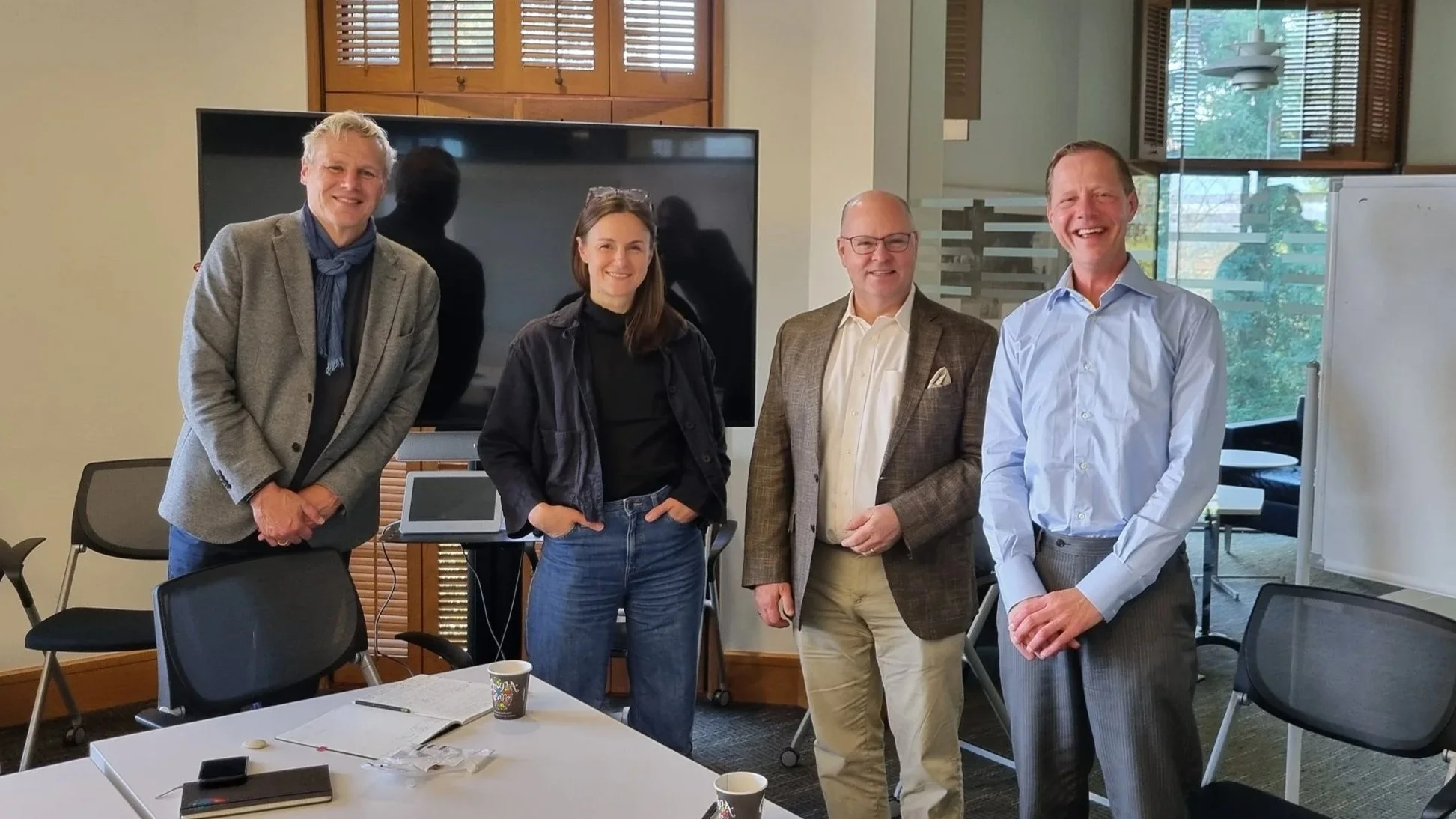
Stanford, CA – On February 26, 2024, the Stanford Center for Responsible Quantum Technology (RQT), a leading interdisciplinary hub operating under the aegis of the Stanford Program in Law, Science & Technology, had the distinct honor of hosting a high-level cybersecurity delegation from the European Commission. The meeting, led by the Center’s Founding Director, Mauritz Kop, and Professor Mark A. Lemley, Director of the Stanford Program in Law, Science & Technology, underscored the growing importance of transatlantic dialogue in shaping the future of digital security and responsible innovation in the quantum age.

The Stanford Center for RQT is dedicated to steering the development and application of quantum technologies toward outcomes that are not only innovative but also equitable, transparent, and beneficial for society at large. Its mission is to proactively address the complex ethical, legal, societal, policy and interoperability implications of quantum advancements, fostering a global ecosystem grounded in democratic values and human rights. The Center was officially inaugurated on December 6, 2023, by His Excellency Mark Rutte, then Prime Minister of the Netherlands and the current Secretary General of NATO, a testament to the geopolitical significance of its work. This recent meeting with the EU delegation builds on that foundation, reinforcing the Center’s role as a crucial bridge between Silicon Valley’s technological frontier and the world’s leading policymakers.

The dialogue centered on some of the most pressing challenges and opportunities at the intersection of quantum technology and cybersecurity, including building global capacity for responsible innovation and aligning EU and US national security strategies.

The EU Cybersecurity Delegation at Stanford RQT

The European Commission’s Cybersecurity Delegation was led by Gerard de Graaf, the Senior Envoy for Digital to the U.S. and Head of the European Union Office in San Francisco. A veteran of the European Commission with a distinguished career spanning several key digital policy areas, Mr. de Graaf is at the forefront of the EU’s efforts to promote a human-centric, ethical, and secure digital transition. His role involves strengthening transatlantic cooperation on digital regulation, from data governance and AI to cybersecurity and platform accountability. Mr. de Graaf, who was also present at the Center’s inauguration, has been a pivotal figure in shaping the EU’s landmark digital policies, including the General Data Protection Regulation (GDPR) and the Digital Services Act (DSA). His leadership in the San Francisco office is instrumental in fostering dialogue between European regulators and the heart of the global tech industry.

Accompanying Mr. de Graaf were Joanna Smolinska, Deputy Head of the EU Office in San Francisco and a key figure in transatlantic tech diplomacy, and Ilse Rooze, a Seconded National Expert at the EU Office who brings deep expertise in digital policy and international relations.

Representing Stanford were Mauritz Kop and Professor Mark A. Lemley. Mr. Kop is a pioneering scholar in the governance of emerging technologies, with a focus on quantum, AI, and intellectual property. As the Founding Director of the RQT Center, his work is dedicated to creating robust legal and ethical frameworks to ensure that transformative technologies are developed and deployed responsibly. Professor Lemley is the William H. Neukom Professor of Law at Stanford Law School and one of the world's most cited scholars in intellectual property and technology law. His extensive work on innovation, competition, and the digital economy provides a critical legal and economic lens through which to view the challenges of the quantum era.

The Quantum Cybersecurity Challenge: Preparing for Q-Day

A central theme of the discussion was the looming threat that fault-tolerant quantum computers pose to global cybersecurity. The immense processing power of these future machines will render much of the world’s current cryptographic infrastructure obsolete. This critical juncture, often referred to as “Q-Day” or the “Quantum Apocalypse,” is the moment when a quantum computer will be capable of breaking widely used encryption standards like RSA and ECC, which protect everything from financial transactions and government communications to personal data and critical infrastructure.

The implications of Q-Day are profound. Malicious actors could potentially decrypt vast archives of stolen encrypted data—a scenario known as "harvest now, decrypt later." This retroactive decryption capability poses a severe threat to long-term data security, national security, and economic stability.

In his opening remarks, Mauritz Kop emphasized the urgency of a proactive, coordinated global response. The conversation explored the transition to Post-Quantum Cryptography (PQC), a new generation of cryptographic algorithms designed to be resistant to attacks from both classical and quantum computers. The U.S. National Institute of Standards and Technology (NIST) is in the final stages of standardizing a suite of PQC algorithms, a process closely watched by governments and industries worldwide. The delegation discussed the immense logistical, technical, and financial challenges of migrating global IT systems to these new technical standards—a process that is expected to take more than a decade and require unprecedented public-private collaboration.

The discussion also touched upon other quantum security technologies, such as Quantum Key Distribution (QKD), which uses the principles of quantum mechanics to create secure communication channels. While PQC focuses on developing new mathematical problems that are hard for quantum computers to solve, QKD offers a physics-based approach to security. The participants explored how these different technologies could complement each other in a future-proof security architecture.

Meer lezen
Princeton University’s Liechtenstein Institute on Self-Determination’s visits Stanford Center for Responsible Quantum Technology

On Wednesday, January 22, 2024, the Stanford Center for Responsible Quantum Technology (RQT) had the distinct pleasure of hosting a delegation from Princeton University’s Liechtenstein Institute on Self-Determination (LISD) for a dynamic discussion on transatlantic technology policy at Stanford Law School. The event was marked by great energy and a profound exchange of ideas, reflecting the shared commitment of both institutions to navigating the complex intersection of emerging technology, global governance, and societal values.

Princeton LISD leadership and their talented International Policy Associates at Stanford RQT

As the host of the meeting, Professor Mauritz Kop had the opportunity to welcome the LISD leadership and their talented International Policy Associates. He provided an overview of the mission of the Stanford RQT, explaining our framework for ensuring that quantum technologies are developed and integrated into society in a manner that is safe, ethical, and equitable. This introduction served as a foundation for a rich and meaningful conversation, where the Princeton fellows posed insightful questions. The discussion traversed a wide spectrum of pressing topics, including the challenges of regulating the suite of quantum technologies, the discovery of quantum use cases in healthcare, the complexities of export controls and quantum materials supply chains, and the crucial interface between AI and quantum computing. Furthermore, we explored the application of universal democratic values and culturally sensitive ethics to these new domains, comparing the innovation systems of the US, EU, and China, and considering the potential for technology to drive both scarcity and abundance on a planetary scale.

Freeman Spogli Institute for International Studies (FSI) and Stanford Graduate School of Business (GSB)

The engagement at the RQT was a cornerstone of the LISD delegation's broader visit to Northern California, which included several high-level meetings across Stanford University. The group’s thank-you message noted their "incredibly enriching visit" and the comprehensive nature of their discussions. Their agenda also included conversations with preeminent scholars Professor Francis Fukuyama and Professor Michael McFaul at the Freeman Spogli Institute for International Studies (FSI), and a meeting with Dean Jon Levin of the Stanford Graduate School of Business (GSB). According to the delegation, these dialogues covered a range of vital geopolitical issues, from the war in Ukraine and a possible attack on Taiwan to Stanford's pivotal role in innovation, highlighting the "multifaceted impact of technology on democracy." The visit also provided an opportunity for the delegation to connect with Princeton alumni in the region.

Collaborating on global challenges and opportunities presented by quantum technologies

The esteemed LISD delegation was led by its senior leadership, including Sophie Meunier, the Acting Director of LISD and a Senior Research Scholar at the Princeton School of Public and International Affairs; Nadia Crisan, the Executive Director of LISD; Jonathan Fredman, a Non-Resident Fellow and former senior leader at the Central Intelligence Agency; and Jana-Alessa Peper, the Institute Assistant who coordinates the IPA program. They were accompanied by the LISD’s International Policy Associates, a cohort of students pursuing careers in foreign policy and international business, who brought a diverse array of academic and professional interests to the discussion.

The dialogue reinforced the critical importance of building bridges between institutions and disciplines. The exchange of perspectives between Stanford’s technology and policy experts and Princeton’s specialists in international affairs and self-determination created a unique and valuable synergy. We extend our sincere thanks to the entire LISD delegation for a stimulating and productive session that has undoubtedly planted the seeds for future collaboration in addressing the global governance challenges and opportunities presented by quantum and other advanced technologies.

Meer lezen
Mauritz Kop Fellow at Inter-CeBIL Harvard Cambridge Copenhagen

Harvard-Cambridge-Copenhagen, Sept 15, 2023 — Mauritz Kop has accepted a position as an Inter-CeBIL Fellow at the prestigious Novo Nordisk Foundation Copenhagen-Cambridge-Harvard Inter-CeBIL Programme for International Collaborative Bioscience Innovation & Law. In this role, Kop will focus his research on Advanced Medical Computing, Artificial Intelligence (AI) and Quantum Technologies within the life sciences ecosystem.

About the Inter-CeBIL Programme

The Inter-CeBIL Programme is a world-leading research hub dedicated to identifying and tackling the most significant legal and regulatory barriers to health and life science innovation. The initiative fosters robust knowledge networks to provide tailored legal and regulatory support to patients, researchers, businesses, and incubators, with the ultimate goal of ensuring that health and life science innovations can safely and effectively reach patients and markets.

This international collaboration brings together top-tier academic institutions to drive progress in healthcare and biotechnology. The program is a joint effort between the Centre for Advanced Studies in Bioscience Innovation Law (CeBIL) at the University of Copenhagen, the Petrie-Flom Center for Health Law Policy, Biotechnology, and Bioethics at Harvard Law School, and the University of Cambridge, among other key partners. The program is led by a distinguished team, including Professor Timo Minssen as the Founding Director of CeBIL at the University of Copenhagen, Professor I. Glenn Cohen who leads Harvard Law School’s contribution, and Professor Mateo Aboy who leads the Cambridge part.

Key Research Areas

The Inter-CeBIL Programme centers its research on three key "grand challenges":

1. Advanced Medical Computing: Focusing on Artificial Intelligence (AI) and Quantum Technologies (QT).

2. Pandemic Preparedness & Anti-Microbial Resistance (AMR).

3. Sustainable Innovation & Biosolutions: Encompassing eco-systems, drug R&D, drug regulation, and data infrastructures.

Focus on Key Area 1: Advanced Medical Computing, AI & Quantum Technology

This key research area addresses the increasingly critical role of advanced computing in the life sciences and medical sectors. Algorithms are becoming fundamental building blocks in a wide range of medical devices, digital health technologies (DHTs), and drug discovery tools (DDTs). The use of advanced computing, including AI/ML and quantum computing (QC), holds immense potential benefits for the life sciences, drug discovery, and medical sectors. These advancements also raise significant legal, ethical, governance, and regulatory issues that the program aims to address.

In his capacity as an Inter-CeBIL Fellow, Mauritz Kop will contribute his deep expertise in quantum-AI, its governance, and its legal-ethical implications to this key research area, helping to navigate the complex challenges and opportunities presented by these cutting-edge technologies.

Meer lezen
CQ Researcher Interviews Mauritz Kop on Regulating Artificial Intelligence and Quantum Computing

In late 2022, journalist Sarah Glazer interviewed Mauritz Kop—Founder of the Stanford Center for Responsible Quantum Technology (Stanford RQT)—for a CQ Researcher report, The Future of Artificial Intelligence — Can it be successfully regulated?, published under the lineage of Congressional Quarterly. Her questions ranged across the whole governance agenda: the regulatory gaps for artificial intelligence in the United States and Europe, the reach of the EU AI Act, the timing and skepticism around quantum computing, China and defense, and whether a machine could ever be sentient. Kop's written responses offer a compact statement of his position just before the field's law caught up with its technology.

The diagnosis: rules without teeth

Kop's opening line to Glazer was unsparing: "On both sides of the Atlantic, AI regulation is virtually nonexistent at the moment." The EU Artificial Intelligence Act, he explained, would change that—and not only in Europe. Because it is a Regulation rather than a Directive, it binds all Member States directly; and through the Brussels effect it sets a de facto global standard, exporting a risk-tiered, conformity-and-certification approach to AI well beyond the EU's borders.

Quantum is not "twenty years away"

The interview's sharpest thread was Kop's rebuttal to the familiar claim that quantum computing is perpetually two decades off. The framing, he argued, confuses engineering milestones with physical reality. Adversaries can harvest encrypted data now and decrypt it later once a capable machine exists, so the migration clock is already running. The physics is unforgiving: because qubits exploit superposition and entanglement, a quantum register explores an exponentially large state space, and an algorithm like Shor's turns that into the ability to break the assumptions behind today's public-key encryption. The argument echoes the warning in the Foreign Policy op-ed that drew Glazer to him in the first place.

Govern the systems we have

On machine sentience, Kop kept capability and consciousness apart: quantum effects make hard computations tractable, but they do not manufacture an inner life, and nothing in the physics confers rights on a model. The serious work is to govern the AI and quantum systems already in deployment—an interdisciplinary, standards-first program Kop has carried into venues from the U.S. Senate to his scholar profile. Read in 2026, after the EU AI Act's adoption and NIST's finalization of its first three post-quantum cryptography standards, the 2022 conversation looks less like commentary than like an early reading of developments now settled in law.

Meer lezen
Why Quantum Computing Is Even More Dangerous Than Artificial Intelligence (Foreign Policy)

Washington DC, August 21, 2022. Foreign Policy just published an article about regulating quantum technology authored by Vivek Wadhwa and Mauritz Kop. https://foreignpolicy.com/2022/08/21/quantum-computing-artificial-intelligence-ai-technology-regulation/

United States and other democratic nations must prepare for tomorrow's quantum era today

To avoid the ethical problems that went so horribly wrong with AI and machine learning, democratic nations need to institute controls that both correspond to the predicted power of the emerging suite of second generation quantum technologies, and respect & reinforce democratic values, human rights, and fundamental freedoms. In fact, the quantum community itself has issued a call for action to immediately address these matters. We argue that governments must urgently begin to think about regulation, standards, and responsible use—and learn from the way countries handled or mishandled other revolutionary technologies, including AI, nanotechnology, biotechnology, semiconductors, and nuclear fission. Benefits and increased quantum driven prosperity should be equitably shared among members of society, and risks equally distributed. The United States and other democratic nations must not make the same mistake they made with AI—and prepare for tomorrow's quantum era today.

Meer lezen
Mauritz Kop calls for a Quantum Governance Act at the University of Copenhagen, Faculty of Law

Much enjoyed giving a lecture titled ‘Quantum-ELSPI: A Call for a Quantum Governance Act’ on Thursday June 9, 2022 at the University of Copenhagen, Faculty of Law. This was an internal CeBiL event that took place before The Quantum Future symposium, organized by the Royal Danish Academy of Sciences and its newly established Committee for Quantum Information and Quantum Computing, together with the Niels Bohr Institute’s Quantum Life Centre.

EU Quantum Governance Act

With its own Copenhagen interpretation of quantum mechanics in which physical phenomena must be observed and measured to exist, the University of Copenhagen, Faculty of Law was the perfect place to propose an outline for a novel Quantum Governance Act on a European level, fostering open innovation while putting targeted, technology and industry specific risk based controls in place. The EU Quantum Act should jointly optimize advancing quantum technology (investment and innovation) with safeguaring quantum technology, society and humankind (guardrails, standards, values, IP protection and national security). For example, it could contain a product safety regime as found in the EU AI Act, combined with pro-innovation mechanisms as found in the US CHIPS Act. In addition, I connected regulating quantum to regulating general purpose technologies (GPT) like artificial intelligence (AI), but also to nanotechnology, biotechnology, semiconductors, and last not least to managing dual use fissionable materials such as nuclear isotopes and nuclear weapons, utilizing export and intellectual property controls.

The Law of Quantum: Quantum Regulatory Frameworks

The Quantum & Law lecture gave an overview of work done over the past 3 years on quantum regulatory frameworks, incentive and rewards systems, competition law, beyond intellectual property innovation law, ethics, national security policy, standardization, technology impact assessment, benchmarking and certification published or forthcoming in high impact journals at both sides of the Atlantic. My talk ended with discussing the latest research findings pertaining to the Law of Quantum, and Quantum-ELSPI academic disciplines. Thanks to the participants for their inspiring questions and comments!

Panel Debate about the Quantum Future at the Royal Danish Academy of Sciences

The brilliant lectures on atoms, photons, qubits, the nature of quantum information, the history of quantum physics, and current research into quantum computer paradigms -including combatting decoherence on both software and hardware levels- at The Quantum Future symposium where highly enjoyable. This fascinating program ended with a panel debate on how quantum technology will change our society, at the beautiful building of the Royal Danish Academy of Sciences, in attendance of fellow jurists Nicholson Price II, Louise C. Druedahl, Marcelo Corrales Compagnucci, and Agnieszka Radziwon.

Surfing the Waves of the Second Quantum Revolution

The panel debate at the Academy -superbly moderated by Nanna Bonde Thylstrup- gave a true, almost symptomatic picture of the various stakeholders' viewpoints and positions. But we are learning to speak each other's language better and better, a crucial and exciting step when it comes to balancing the societal impact of our mystical family of quantum technologies. Surfing the waves of the second quantum revolution requires building bridges between disciplines, beyond traditional research silos. Bringing together the humanities, social and natural sciences to spur sustainable innovation driven by a golden triangle of academia, government and industry is essential.

Thank you to Professor Timo Minssen and his team at CeBiL for the kind invite. https://jura.ku.dk/cebil/

Meer lezen
Mauritz Kop joins Expert Panel on Quantum Technologies of the Council of Canadian Academies (CCA)

Mauritz Kop joins the multidisciplinary Expert Panel on Quantum Technologies of the Council of Canadian Academies (CCA) over 2022-2023, chaired by Professor Raymond Laflamme. In November 2023, The Expert Panel on the Responsible Adoption of Quantum Technologies published their final report titled Quantum Potential. https://cca-reports.ca/reports/quantum-technologies/

The Council of Canadian Academies (CCA) Investigates Future Impact of Quantum Technologies

As Chair, Dr. Raymond Laflamme will lead a multidisciplinary group with expertise in quantum technologies, economics, innovation, ethics, and legal and regulatory frameworks. The Panel will answer the following question:

In light of current trends affecting the evolution of quantum technologies, what opportunities and challenges do these present in Canada?

The Quantum Potential Report

Quantum technologies are poised to play a major role in Canada’s future, from its national security to its economic standing. While Canada is among the global leaders in quantum research, it nevertheless faces challenges in the adoption of these technologies as they approach market readiness. Quantum Potential, a new expert panel report from the Council of Canadian Academies (CCA), outlines a responsible approach to quantum-technology adoption — a critical step toward ensuring Canada’s global competitiveness in the decades ahead.

Quantum Computing, Sensing, and Communications

Quantum Potential considers quantum computing, sensing, and communications, three categories of quantum technology at varying levels of maturity. While these technologies may strengthen digital infrastructure, improve data security, and optimize processes across a range of economic sectors, they also pose significant risks, such as misuse by malicious actors. Risks associated with quantum technologies span ethical, legal, social, and policy realms; without sufficient consideration, they may compromise public trust in quantum technologies, limit research funding, and stifle innovation.

The Commercialization Potential of Quantum Technologies in Canada

Quantum Potential explores the commercialization potential of quantum technologies, articulates Canada’s position within the global quantum value chain, and examines those conditions and policy levers that might promote their responsible adoption. https://cca-reports.ca/reports/quantum-technologies/

Quantum technologies offer opportunities to harness the properties of quantum mechanics for a breadth of applications, many of them novel. Though many quantum technologies are several years away from reaching market, it is believed that they have the potential to revolutionize many industries as they reach widespread commercial availability. Domestic industries will need to adopt these technologies if they wish to remain globally competitive, as will governments hoping to ensure national and economic security, public safety, and the integrity of critical infrastructure. To date, Canada has made noteworthy investments in the research and development of quantum technologies but has focused less on mechanisms to stimulate their diffusion and adoption.

Ethical, Legal, Social, and Policy Implications (Quantum-ELSPI)

The adoption of quantum technologies also carries significant ethical, legal, social, and policy implications. These include potential threats to data security and digital infrastructure, anticompetitive pressures by market-dominant firms, mass surveillance and privacy loss, regulatory uncertainty, inequitable access to technology, and social challenges related to employment and public trust in science. However, there are many strategies that could help address these challenges and stimulate the responsible adoption of quantum technologies. These include public-private co-operation, pro-competition oversight and policies, industry-led initiatives, and the creation of a diverse quantum workforce. In order to maximize the benefits of quantum technologies while mitigating potential risks, responsible approaches to adoption should use state-sanctioned and self-regulating measures – including quantum impact assessments, soft-law mechanisms, and consultations with stakeholders – to anticipate the effects of technological change.

Thanks to the sponsors National Research Council Canada and Innovation; Science and Economic Development Canada for facilitating this Report.

Meer lezen
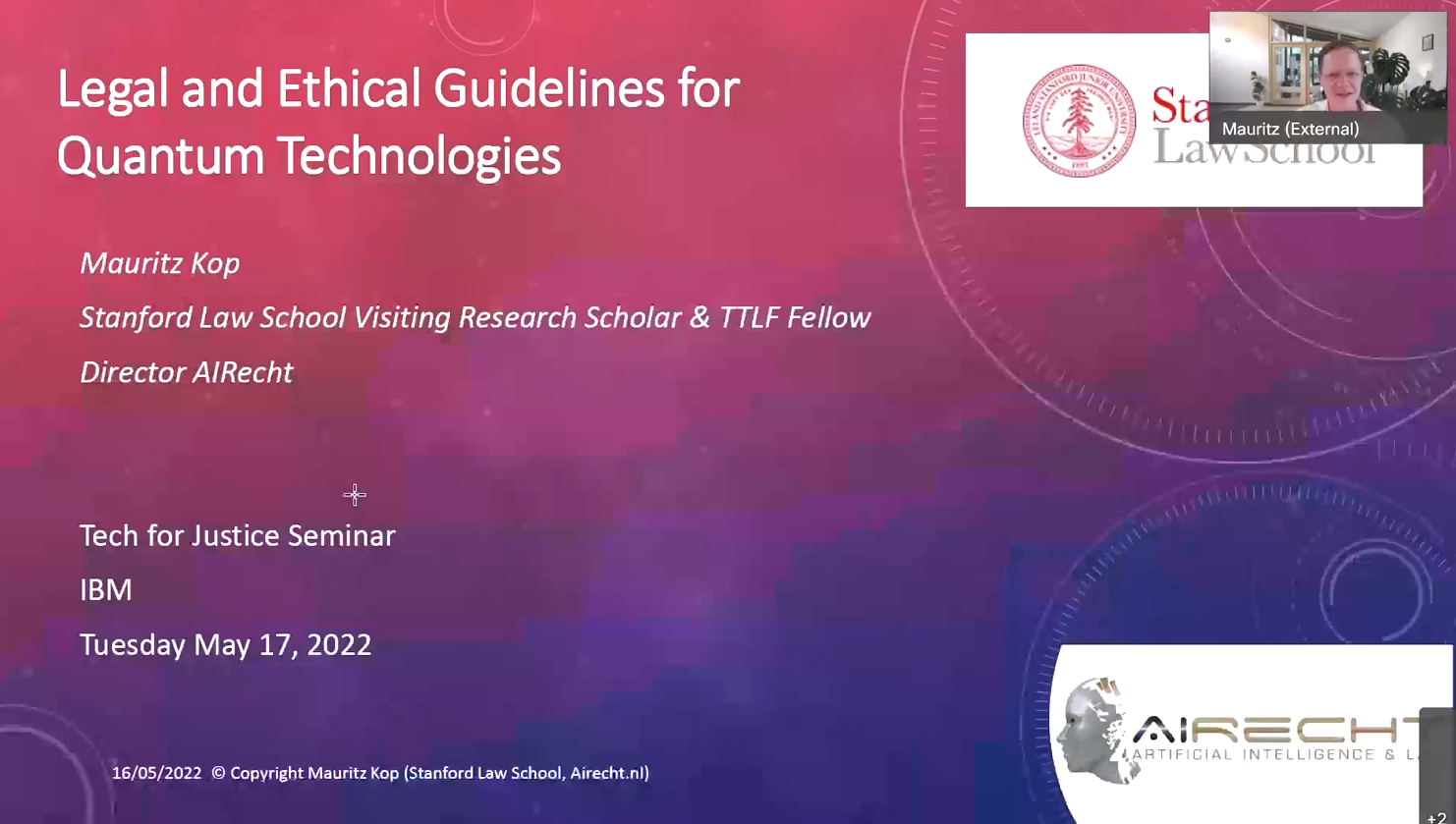
IBM Invites Mauritz Kop for Lecture on Quantum Ethics

New York, May 17, 2022—The development of quantum technology represents a significant advance in computational capability, with the potential to reshape industries, accelerate scientific discovery, and address complex problems. As with other transformative technologies, its power introduces a range of responsibilities. The relevant questions are not only about the technical capabilities of quantum mechanics, but also about the appropriate uses of the technology.

Reflecting this, IBM, a leading company in the quantum field, convened a seminar on May 17, 2022, for its New York and San Francisco teams to focus on the legal and ethical dimensions of this emerging field. The invited speaker for the event was Mauritz Kop, a visiting scholar at Stanford Law School, who presented his work on establishing a governance framework for quantum technologies to an audience of researchers, engineers, and policymakers.

The event was part of IBM's Tech for Justice initiative, a cross-divisional program dedicated to using technology to address systemic biases and advance social equity. Situating the conversation about quantum ethics within this framework indicates an understanding that principles of fairness, accountability, and transparency should be integrated into new technologies from an early stage.

The session was hosted by Dr. Aminat Adebiyi, a Research Staff Member, Experimentalist, and Maker at IBM, and moderated by Dr. Mira Wolf-Bauwens. Kop's collaboration with Wolf-Bauwens includes their shared work on the World Economic Forum's foundational principles for quantum computing, a project that highlights the role of multi-stakeholder cooperation in this area.

The Quantum Vanguard: IBM's Technological Position

To understand the context of the ethical discussion, it is useful to consider the technological landscape. IBM Quantum is one of the leading organizations in quantum computing and has achieved notable milestones in the field. Central to its strategy is the development of universal fault-tolerant quantum computers based on superconducting transmon qubits. This approach, which involves creating and manipulating quantum states in circuits cooled to cryogenic temperatures, has enabled IBM to build increasingly powerful and stable quantum processors.

Charting a Course for Responsible Quantum Development: A Summary of the Lecture

The material presented in the lecture builds upon a body of foundational research by Kop. His work in the Yale Journal of Law & Technology first proposed a comprehensive legal-ethical framework and a set of ten guiding principles for quantum technology. In the Stanford Law School Transatlantic Technology Law Forum, he explored the crucial roles of intellectual property and standardization in fostering sustainable innovation. Furthermore, in Physics World, published by the Institute of Physics, he articulated the necessity of a dedicated field of "quantum ethics," urging the physics community to engage directly with the social and moral implications of their work. Lastly, together with Luciano Floridi at Oxford, Kop conceptualized the Quantum-ELSPI framework as the ethical, legal, social, and policy implications of the suite of quantum technologies. The lecture for IBM synthesized and advanced these core themes.

Kop's lecture, "Legal and Ethical Guidelines for Quantum Technologies," was structured around the thesis that there is a timely opportunity to establish governance for quantum technology. In contrast to the development of the internet or artificial intelligence, where regulation often followed widespread adoption, it is possible to proactively embed democratic values and human rights principles into the architecture of quantum systems.

Interactive Discussion and Call to Action

The lecture was followed by an engaging Q&A session that highlighted the deep commitment of the IBM technical community to responsible innovation. The questions posed by participants explored the practical challenges and nuances of implementing ethical frameworks. Key themes of the discussion included the tangible impact of tech regulation to date, the specific processes needed to assess quantum's potential societal effects, and the distinct yet complementary roles of government and private enterprise in setting and adhering to standards.

Participants were keen to understand how a framework could effectively infuse 'humanism' into every aspect of technology development and how regulation could be used proactively to shape an emerging field for the better. The dialogue also addressed the most significant challenges facing quantum regulation specifically and the strategies required to overcome them.

Meer lezen
World Economic Forum Quantum Computing Ethics & Governance Principles

During 2021, Mauritz Kop helped design the World Economic Forum Quantum Governance Principles. In January 2022, the World Economic Forum released its accompanying Quantum Computing Governance Principles Insight Report. The report and principles were developed as part of a co-design process over the course of 2021 with a diverse set of global quantum stakeholders from industry, academia and government.

Governance Principles for the Responsible Design and Adoption of Quantum Computing

In 2022, our multidisciplinary WEF expert group published the first set of governance principles for the responsible design and adoption of quantum computing technology. A global multi stakeholder initiative to create an ethical framework enabling the responsible design and adoption of quantum computing. Quantum computing, though at its early stages, will help provide very significant advances in our computing capabilities and will have a considerable impact on improving the state of the world in the coming years. It could have a revolutionary impact on human well-being, national security, and global society, along with potential commercial applications across industries.

The Quantum Computing Ethics project is part of the World Economic Forum’s Shaping the Future of Technology Governance: Artificial Intelligence and Machine Learning Platform.

10 Guiding Principles for Quantum Computing published at Yale

The Principles build in part on the prior 10 Guiding Principles for Quantum Computing published March 30, 2021 in the Yale Journal of Law & Technology in my article titled: Establishing a Legal-Ethical Framework for Quantum Technology.

There, I argue that the unique physical characteristics of quantum mechanics demand universal guiding principles of responsible, human-centered quantum technology. To this end, the article proposes ten guiding principles for the development and application of quantum technology. These ground rules aim to put controls in place and integrate our common democratic norms, standards and values into the design of our future hi-tech systems as much as possible

Law and ethics frequently interrelate. Ethical standards for quantum should however be a supplementation to legal measures, and not a replacement. Ethics alone can never be enough when regulating high-risk technologies like dual use quantum tech and quantum artificial intelligence. To make sure all groups of society benefit from quantum and AI we have to put controls and guardrails in place that address identified risks and incentivise sustainable innovation.

Meer lezen
Mauritz Kop Consults Senator Mark Warner on AI & Quantum Technology Policy

Washington D.C., January 4, 2022—As the United States Congress grapples with the complex challenges of regulating artificial intelligence and quantum technology, leading policymakers are seeking expert guidance to inform a robust and forward-thinking national strategy. On January 4, 2022, Mauritz Kop, a distinguished scholar in the field of technology law and governance, was consulted by the legal team of U.S. Senator Mark Warner (D-VA) to provide strategic insights on both AI and quantum technology policy.

This consultation highlights the growing recognition in Washington of the need for deep, interdisciplinary expertise to navigate the geopolitical, economic, and security dimensions of these transformative technologies. Senator Warner's team reached out to Kop based on his influential scholarship, including his extensive work at Stanford on the EU AI Act and the need for a strategic democratic tech alliance, his advisory role for the European Commission led by Ursula von der Leyen on the AI Act and Data Act, and his foundational article in the Yale Journal of Law & Technology proposing a comprehensive legal-ethical framework for quantum technology.

Senator Mark Warner: A Leader on Technology and National Security

Senator Mark Warner's engagement on these issues is both significant and timely. As the Chairman of the Senate Select Committee on Intelligence, he is at the forefront of addressing the national security implications of emerging technologies. His work involves overseeing the U.S. Intelligence Community and ensuring it is equipped to handle the threats and opportunities of the 21st century, where technological competition with nations like China is a central concern.

The Senate Select Committee on Intelligence has a broad mandate that includes analyzing intelligence on the technological capabilities of foreign powers and assessing the vulnerabilities of U.S. critical infrastructure. Senator Warner has been a vocal proponent of developing a national strategy for AI and quantum to maintain the United States' competitive edge and to ensure that these technologies are developed and deployed in a manner consistent with democratic values. This consultation with Mauritz Kop reflects the Senator's commitment to drawing on leading academic research to shape sound, bipartisan policy.

AI Policy: A Transatlantic, Risk-Based Approach that Lets Innovation Breathe

A key focus of the consultation was Kop's analysis of the European Union's AI Act. His Stanford publications argue for a balanced, pro-innovation regulatory model that can serve as a blueprint for international cooperation. Good governance and sensible legislation should incentivize desired behavior and simultaneously create breathing room for sustainable, beneficial innovation to flourish.

Quantum Governance: Establishing a Legal-Ethical Framework

The discussion also delved into the governance of quantum technology, drawing on Kop's seminal work in the Yale Journal of Law & Technology. Recognizing that quantum is rapidly moving from the theoretical to the practical, he stressed the urgency of establishing a legal-ethical framework before the technology is widely deployed and locked-in.

The consultation with Senator Warner's office represents a critical intersection of academic scholarship and high-level policymaking. As the United States charts its course in the era of AI and quantum, the insights provided by experts like Mauritz Kop are invaluable in ensuring that the nation's strategy is not only competitive but also responsible, ethical, and firmly rooted in democratic principles.

Meer lezen