
Innovation, Quantum-AI Technology & Law

Blog over Kunstmatige Intelligentie, Quantum, Deep Learning, Blockchain en Big Data Law

Blog over juridische, sociale, ethische en policy aspecten van Kunstmatige Intelligentie, Quantum Computing, Sensing & Communication, Augmented Reality en Robotica, Big Data Wetgeving en Machine Learning Regelgeving. Kennisartikelen inzake de EU AI Act, de Data Governance Act, cloud computing, algoritmes, privacy, virtual reality, blockchain, robotlaw, smart contracts, informatierecht, ICT contracten, online platforms, apps en tools. Europese regels, auteursrecht, chipsrecht, databankrechten en juridische diensten AI recht.

Council of Canadian Academies Publishes Quantum Potential Report

The Council of Canadian Academies has released Quantum Potential, the report of an independent expert panel on the responsible adoption of quantum technologies in Canada. Chaired by physicist Raymond Laflamme, the thirteen-member panel included Mauritz Kop—one panel member among the thirteen, whose listed expertise covered the ethical, legal, and policy dimensions—on a question Canada's federal departments had put to the academies: how to turn quantum research strength into broad, responsible adoption.

A national academy weighs in on quantum

Commissioned by Innovation, Science and Economic Development Canada and the National Research Council of Canada, the assessment treats quantum technology as an economic opportunity inseparable from its governance. The panel's reach across physics, economics, and law reflects a recurring premise of quantum policy: the hard questions—data security, market power, regulatory uncertainty, public trust—sit at the seams between disciplines, and the report frames quantum capabilities as advancing ahead of the institutions meant to steer them.

Promise and the adoption gap

The economics are striking. Quantum technologies, the report finds, may account for up to 3% of Canada's GDP by 2045, with quantum computing making the most significant contribution; the sectors most likely to be transformed range from defense and finance to chemistry and materials science. Yet the panel is candid about structural weakness: Canada's quantum expertise is clustered rather than diffused, rival countries are pulling ahead on research output, and there are few programs to encourage end-user adoption. The challenge, in short, is not only invention but diffusion—and anticipating the outcomes of technological change before they arrive.

Responsible adoption, two-handed

The report's normative center is its prescription for responsible adoption: a deliberately two-handed mix of state-sanctioned and self-regulating measures, reaching for anticipatory instruments—quantum impact assessments, soft-law mechanisms, and stakeholder consultation—rather than waiting for harms to crystallize. That posture echoes a recurring theme in the responsible-quantum literature, where governance is framed as a graduated toolbox calibrated to a technology whose risks are still taking shape. The convergence is not an endorsement of any one framework, but it helps explain why the panel drew on members working at the intersection of quantum science and law and policy.

Why it carries weight

National academies do not legislate; their authority is the authority of independent expert synthesis offered to governments deciding how to act. Quantum Potential functions as exactly that—structured evidence and options for Canadian policymakers as the country set its quantum course. Kop's engagement with Canadian and allied quantum governance is of a piece with his wider advisory work, which later included his 2024 consultations with the U.S. Department of State on quantum technology and foreign-policy strategy. For readers tracing how responsible-quantum thinking moves from scholarship into national policy, the report—and the broader body of work catalogued on the Mauritz Kop profile—is a useful waypoint: a moment when an independent panel told a government, in plain terms, that getting both the state-sanctioned and the self-regulating instruments in place early is the practical work of responsible quantum adoption.

Meer lezen

Gasthoogleraar Mauritz Kop in het Financieel Dagblad: AI-chatbots, media-archieven en een Buma/Stemra voor nieuws

Toen Nederlandse en Europese uitgevers hun websites begonnen af te schermen voor AI-chatbots, vroeg Het Financieel Dagblad jurist en gasthoogleraar Mauritz Kop (Stanford) om duiding. In het stuk van redacteur Sandra Olsthoorn (september 2023) schetste hij niet alleen het probleem — AI-modellen die nieuwsarchieven leegtrekken — maar ook een concrete uitweg.

Blokkeren is geen oplossing

Afschermen werkt nauwelijks en heeft een gevaarlijke bijwerking, betoogde Kop: zonder betrouwbare journalistiek worden chatbots gevoed met materiaal uit onbetrouwbare hoeken, met een groter risico op desinformatie en complottheorieën — volgens hem een bedreiging voor de democratie. De kwaliteit van de bronnen waarop AI leunt, is dus een publiek belang, geen privékwestie van de sector.

Een Buma/Stemra voor nieuws

Kops voorstel: een collectief licentiemodel naar het voorbeeld van Buma/Stemra, waarbij mediabedrijven hun artikelen tegen een faire vergoeding beschikbaar stellen aan AI-ontwikkelaars. Te hoog en techbedrijven betalen niet; te laag en er blijft geen geld voor kwaliteitsjournalistiek. Collectief beheer verlaagt bovendien de transactiekosten van het onderhandelen.

Liever Europees, liever samen

Zijn voorkeur ligt bij een initiatief vanuit de Europese Commissie, dat — net als de privacywetgeving — kan overwaaien naar de VS. Boven alles geldt: samen tot afspraken komen is beter dan eindeloze rechtszaken. Deze samenvatting laat zien waarom uitgevers, mediabedrijven en AI-ontwikkelaars nú een licentie- en auteursrechtstrategie nodig hebben.

Meer lezen
Mauritz Kop Judge at 6th Annual Junior Faculty Forum for Law and STEM at Stanford

On October 27, 2023, Stanford Law School hosted the 6th Annual Junior Faculty Forum for Law and STEM, a premier event organized and hosted by Professor Mark Lemley that convenes the next generation of leading legal scholars to present and refine their cutting-edge research. The forum, which rotates between Stanford, the University of Pennsylvania, and Northwestern University, provides a vital platform for interdisciplinary dialogue on the complex legal challenges posed by rapid scientific and technological advancement. Mauritz Kop, a recognized expert in technology law and governance, had the honor of serving as a judge and commentator, contributing to the rigorous intellectual exchange that defines the event.

The forum's mission is to foster the development of early-career academics by providing a supportive yet critical environment for them to receive feedback from senior scholars in their fields. Over two days, junior faculty presented works-in-progress on a diverse array of topics, from the metaverse and quantum computing to medical device regulation and genome governance, showcasing the breadth and depth of contemporary law and STEM scholarship.

The Call for Papers: Fostering Interdisciplinary Law & Technology Scholarship

The selection of presenters for the forum is a rigorous process, initiated by a formal Call for Papers issued by the organizing universities: Northwestern, the University of Pennsylvania, and Stanford Law School. The call invites junior faculty from any discipline to submit papers on any topic related to the intersection of law and STEM. The goal is to promote interdisciplinary research that explores how developments in STEM are affecting law and vice versa, with a preference for papers that strongly integrate these two fields.

A Rich Tapestry of Emerging Legal Questions

The agenda for the 2023 forum was a testament to the pressing legal and ethical questions emerging from the frontiers of science and technology. The papers presented offered a glimpse into the future of legal scholarship and the complex societal issues that lawmakers, judges, and regulators will face in the coming years.

Among the thought-provoking works discussed were:

  1. "Taxing the Metaverse" by Christine Kim (Cardozo School of Law): This paper tackles the novel challenge of how to apply principles of taxation to the burgeoning virtual economy. Kim argues that economic activity within the metaverse satisfies traditional definitions of income and that failing to tax it would create a new kind of tax haven. The paper explores how the metaverse could serve as a laboratory for modernizing the tax system, potentially overcoming the traditional realization requirement.

  2. "Regulating Medical Device Innovation" by George Horvath (University of Akron School of Law): Horvath reframes the debate around medical device safety, moving beyond the narrow concept of "predicate creep" in the 510(k) clearance process to a broader analysis of "device creep." He makes the counterintuitive argument that properly structured safety regulations can stimulate, rather than stifle, innovation by building a more robust clinical knowledge base.

  3. "Who Owns Children's DNA?" by Nila Bala (UC Davis School of Law): This article addresses the critical and underexplored issue of parental control over children's genetic information. Bala argues that parental consent is an insufficient safeguard against the collection and use of a child's DNA by law enforcement, particularly in the context of direct-to-consumer genetic testing. She proposes moving from a framework of parents-as-owners to parents-as-fiduciaries, drawing on property law principles to protect the child's long-term interests.

  4. "Gene Stewards: Rethinking Genome Governance" by Shelly Simana (Stanford Law School): Simana confronts the exploitative practices of entities that collect and use human genetic material. She proposes a new statutory category of "Gene Stewards," which would impose quasi-fiduciary duties of loyalty and care on these powerful public and private entities, ensuring they act as responsible stewards of this sensitive information.

Reviewing "Privacy in the Quantum Age"

As part of his role, Mauritz Kop, alongside Professor Christopher Yoo of the University of Pennsylvania, served as a commentator for the paper "Privacy in the Quantum Age" by Anat Lior (Yale Law School). Lior's paper addresses the profound privacy implications of quantum computing, particularly its potential to break current encryption standards.

In his review, Kop commended Lior for her courage in tackling such a complex and deeply interdisciplinary subject. He emphasized the need for legal scholars entering this domain to achieve a high level of "quantum literacy" to engage credibly with both the technology's promise and its perils. He offered several pieces of constructive feedback aimed at strengthening the paper's impact and scholarly contribution.

Meer lezen
SandboxAQ Invites Mauritz Kop to Give RQT Lecture and Workshop

On October 25, 2023, SandboxAQ hosted Mauritz Kop, visiting ‘quantum and law’ scholar at Stanford University, for a lecture and interactive workshop focused on the principles of Responsible Quantum Technology (RQT). The opportunity to engage with a leading enterprise at the intersection of artificial intelligence and quantum science was both timely and imperative. The dialogue that unfolded underscored the critical importance of embedding ethical, legal, and societal considerations into the fabric of quantum innovation from its outset.

Appreciation was extended to the SandboxAQ team for organizing this important event, particularly Marianna Bonanome, PhD, Head of External Education Programs; Kayla Quinnies, PhD, Residency Program Manager; Nina Bindel; Amro Imam, and Vice-President Fernando Dominguez Pinuaga. Their commitment to fostering a culture of responsible development is a testament to the company's forward-thinking leadership.

The SandboxAQ Mission: An Intersection of AI and Quantum

To fully appreciate the context of the discussion, it is useful to understand the unique position SandboxAQ occupies in the technology landscape. The company, which began as an independent research group within Alphabet Inc. and officially launched as a standalone company in 2022, is built on the convergence of AI and quantum technologies, an area they term 'AQ'. This strategic focus allows them to develop commercially viable, enterprise-scale solutions today, without dependency on the eventual arrival of fault-tolerant quantum computers.

Led by CEO Jack D. Hidary, SandboxAQ directs its efforts toward solving complex challenges across several key domains:

Simulation & Optimization: Accelerating the discovery of new medicines and materials by simulating molecular interactions, with applications in life sciences, chemicals, and finance.

Quantum Security: Providing solutions for the transition to post-quantum cryptography (PQC), a critical undertaking for protecting sensitive, long-lifespan data from the future threat of cryptanalytically relevant quantum computers. The company emphasizes that "Store Now, Decrypt Later" attacks are an immediate concern, necessitating urgent action.

Quantum Sensing: Leveraging the inherent sensitivity of quantum systems to develop novel sensors for applications in medical imaging, navigation, and material science.

A cornerstone of the company's ethos is its Education (EDU) division. With a charter "To educate the world on AQ so any person or institution can participate in and develop technology to impact the world in positive ways," the EDU team focuses on growing the AQ market, building a diverse talent pipeline, and instilling a culture of ethical and responsible innovation. This commitment to education and responsibility provided a fertile ground for the dialogue on the governance of quantum technologies.

Laying the Foundation: From Quantum-ELSPI to Responsible Quantum Technology

The central theme of the lecture was the proactive governance of quantum technology. The potential for this suite of technologies to be transformative—impacting everything from global security and economic stability to fundamental scientific research—demands a departure from the reactive regulatory postures that have characterized previous technological waves.

The starting point was the concept of Quantum-ELSPI, which refers to the interconnected Ethical, Legal, Socio-economic, and Policy Implications of quantum technologies. This framework serves two purposes: normatively, it acts as a metaparadigm for guiding development; descriptively, it establishes a broad, interdisciplinary research agenda. By examining the successes and failures in the governance of AI, nanotechnology, nuclear, and biotechnology, valuable lessons can be derived for the quantum era.

From this foundation, the concept of Responsible Quantum Technology (RQT) was introduced. This is a comprehensive framework developed by a transatlantic, interdisciplinary team of scholars from institutions including Stanford, Harvard, Oxford, and Cambridge, led by Stanford Law School’s Mauritz Kop. RQT integrates Quantum-ELSPI considerations with the established dimensions of Responsible Research and Innovation (RRI): anticipation, inclusion, reflection, and responsiveness. Its objective is to ensure that quantum research and innovation efforts are aligned with societal needs and enhance planetary welfare, deliberately steering development toward beneficial outcomes while the technology is still malleable.

Meer lezen
Mauritz Kop Speaks at CNAS Quantum Roundtable on Research Security, Technology Theft, and Intellectual Property Rights

Washington, D.C. – On October 11, 2023, the Center for a New American Security (CNAS) convened a timely, off-the-record roundtable discussion to address one of the most pressing national security challenges of our time: safeguarding American leadership in quantum technology. The event, titled "Quantum Roundtable: Research Security, Technology Theft, and Intellectual Property Rights," brought together a select group of leading experts from government, industry, and academia. Among the distinguished speakers was Mauritz Kop, Fellow and Visiting Scholar in Quantum and Law at Stanford University and later the Founding Director of the Stanford Center for Responsible Quantum Technology (RQT), and Chair of the annual Stanford RQT Conference.

The roundtable served as a critical forum for in-depth dialogue on formulating a robust U.S. strategy to protect its quantum ecosystem from intellectual property theft and illicit technology transfer, particularly in the context of strategic competition with nations like China. Quantum technology governance global expert Mauritz Kop was invited to provide his unique perspective, rooted in a holistic framework for responsible innovation, to help navigate the complex interface of intellectual property and national security.

The Center for a New American Security: Shaping the National Security Debate

The Center for a New American Security is a prominent, bipartisan non-profit organization that develops strong, pragmatic, and principled national security and defense policies. CNAS engages policymakers, experts, and the public with innovative, fact-based research, ideas, and analysis to shape and elevate the national security debate. Its Technology and National Security Program, led by Senior Fellow and Director Vivek Chilukuri, focuses on the complex challenges and opportunities presented by emerging technologies, aiming to ensure the United States maintains its technological leadership while upholding democratic values. This roundtable was a key component of the program's project on U.S. quantum strategy and its intersection with U.S.-China economic relations, reflecting CNAS’s commitment to proactive and forward-thinking policy development.

A High-Stakes Convening of Quantum Leaders

The roundtable's agenda was designed to facilitate a candid and substantive discussion among key stakeholders. The session was opened by CNAS Executive Vice President and Director of Studies, Dr. Paul Scharre, and Program Director Vivek Chilukuri, who set the stage by outlining the critical importance of the topic.

The main discussion featured two expert speakers:

Mauritz Kop, who brought a comprehensive legal, ethical, and policy perspective from his work at Stanford. His research focuses on developing governance frameworks for emerging technologies, integrating intellectual property, antitrust law, distributive justice, and national security strategy.

Dr. Elliott Mason, a Registered Patent Agent at Young Basile and a leader within the Quantum Economic Development Consortium (QED-C). Dr. Mason provided deep technical and practical insights from the front lines of quantum patenting and the development of industry standards.

Conclusion: A Principled Approach to Quantum Technology Governance

Mauritz Kop concluded his remarks by emphasizing the profound dilemmas and trade-offs inherent in governing quantum technology. The pendulum swings between open and closed innovation, and between mitigating risks and maximizing benefits, require a sophisticated, evidence-based, and adaptive approach.

His participation in the CNAS roundtable provided a crucial, principled voice, advocating for a strategy that is not merely defensive but forward-looking. By grounding the discussion in the RQT framework, he made a compelling case that true security lies in advancing a thriving, competitive, and responsible quantum ecosystem—one that leads the world in innovation while being firmly anchored in democratic values and a commitment to the planetary good. The event highlighted the essential role of deep, interdisciplinary dialogue in shaping a quantum future that is both secure and beneficial for all humankind.

Meer lezen
Mauritz Kop Fellow at Inter-CeBIL Harvard Cambridge Copenhagen

Harvard-Cambridge-Copenhagen, Sept 15, 2023 — Mauritz Kop has accepted a position as an Inter-CeBIL Fellow at the prestigious Novo Nordisk Foundation Copenhagen-Cambridge-Harvard Inter-CeBIL Programme for International Collaborative Bioscience Innovation & Law. In this role, Kop will focus his research on Advanced Medical Computing, Artificial Intelligence (AI) and Quantum Technologies within the life sciences ecosystem.

About the Inter-CeBIL Programme

The Inter-CeBIL Programme is a world-leading research hub dedicated to identifying and tackling the most significant legal and regulatory barriers to health and life science innovation. The initiative fosters robust knowledge networks to provide tailored legal and regulatory support to patients, researchers, businesses, and incubators, with the ultimate goal of ensuring that health and life science innovations can safely and effectively reach patients and markets.

This international collaboration brings together top-tier academic institutions to drive progress in healthcare and biotechnology. The program is a joint effort between the Centre for Advanced Studies in Bioscience Innovation Law (CeBIL) at the University of Copenhagen, the Petrie-Flom Center for Health Law Policy, Biotechnology, and Bioethics at Harvard Law School, and the University of Cambridge, among other key partners. The program is led by a distinguished team, including Professor Timo Minssen as the Founding Director of CeBIL at the University of Copenhagen, Professor I. Glenn Cohen who leads Harvard Law School’s contribution, and Professor Mateo Aboy who leads the Cambridge part.

Key Research Areas

The Inter-CeBIL Programme centers its research on three key "grand challenges":

1. Advanced Medical Computing: Focusing on Artificial Intelligence (AI) and Quantum Technologies (QT).

2. Pandemic Preparedness & Anti-Microbial Resistance (AMR).

3. Sustainable Innovation & Biosolutions: Encompassing eco-systems, drug R&D, drug regulation, and data infrastructures.

Focus on Key Area 1: Advanced Medical Computing, AI & Quantum Technology

This key research area addresses the increasingly critical role of advanced computing in the life sciences and medical sectors. Algorithms are becoming fundamental building blocks in a wide range of medical devices, digital health technologies (DHTs), and drug discovery tools (DDTs). The use of advanced computing, including AI/ML and quantum computing (QC), holds immense potential benefits for the life sciences, drug discovery, and medical sectors. These advancements also raise significant legal, ethical, governance, and regulatory issues that the program aims to address.

In his capacity as an Inter-CeBIL Fellow, Mauritz Kop will contribute his deep expertise in quantum-AI, its governance, and its legal-ethical implications to this key research area, helping to navigate the complex challenges and opportunities presented by these cutting-edge technologies.

Meer lezen
Stanford Responsible Quantum Technology Conference 2023

Stanford, CA – May 22, 2023 – The 21st century is undeniably the Quantum Age, and on May 22, 2023, Stanford University hosted the inaugural Stanford Responsible Quantum Technology Conference at the iconic Paul Brest Hall, Stanford Law School. This landmark annual event, themed "Quantum-ELSPI" for its first iteration, brought together the global quantum community to explore the multifaceted ethical, legal, socio-economic, and policy implications (ELSPI) of this transformative field.

The conference was designed as a unique confluence of quantum physics, law, and art, aiming to discuss informed suggestions on how to balance maximizing the benefits and mitigating the risks of applied quantum technology. It covered state-of-the-art quantum computing, sensing, simulation, communication, materials, and quantum-classical hybrids, all within diverse multidisciplinary settings and taking a pro-innovation stance.

A Day of Interdisciplinary Exploration and Artistic Inspiration

The day was marked by deeply interdisciplinary presentations and an elegant intellectual atmosphere, uniquely punctuated by live musical interludes featuring works by Mozart, Schönberg, and Chopin, and opera arias by Handel, Liszt, and Gounod. Attendees also witnessed interactive quantum physics experiments, including demonstrations of quantum sensing and interferometry, designed to make the counter-intuitive quantum world more accessible.

The program began with Opening Remarks by Mauritz Kop of Stanford University, AIRecht.nl, and Daiki. This set the stage for a day of profound discussions.

What Responsible Quantum Technology & Innovation Entails

As attendees experienced, the conference provided an illuminating platform for discussing the state-of-the-art in quantum science, governance tipping points, risk-benefit analyses, intellectual property, societal impact assessments, and the myriad exciting novel use cases being developed. The discussions on what Responsible Quantum Technology & Innovation truly entails in diverse, multidisciplinary, and intergenerational settings were a highlight for all participants.

Mauritz Kop offered closing remarks, and the day concluded with a reception, further fostering the sense of community and shared purpose.

Deep gratitude was extended to all the speakers, moderators, musicians (Ireh Kim, Jin-Hee Catherine Lee, Zoe Logan Schramm, Katie Liu, Daniel Changxiao Sun, and Mauritz Kop), and physicists (Franz Inthisone Pfanner, Daniel Changxiao Sun) who contributed to the success of this inaugural event. Special thanks were also conveyed to Professor Mark Lemley and the team at Stanford Law School for making this memorable conference a reality.

The Stanford Responsible Quantum Technology Conference has set a high bar for future discussions, and the quantum community eagerly anticipates Stanford RQT 2.0.

Meer lezen
Mauritz Kop Interviewed by Al Jazeera on Responsible Quantum AI Computing at Stanford University

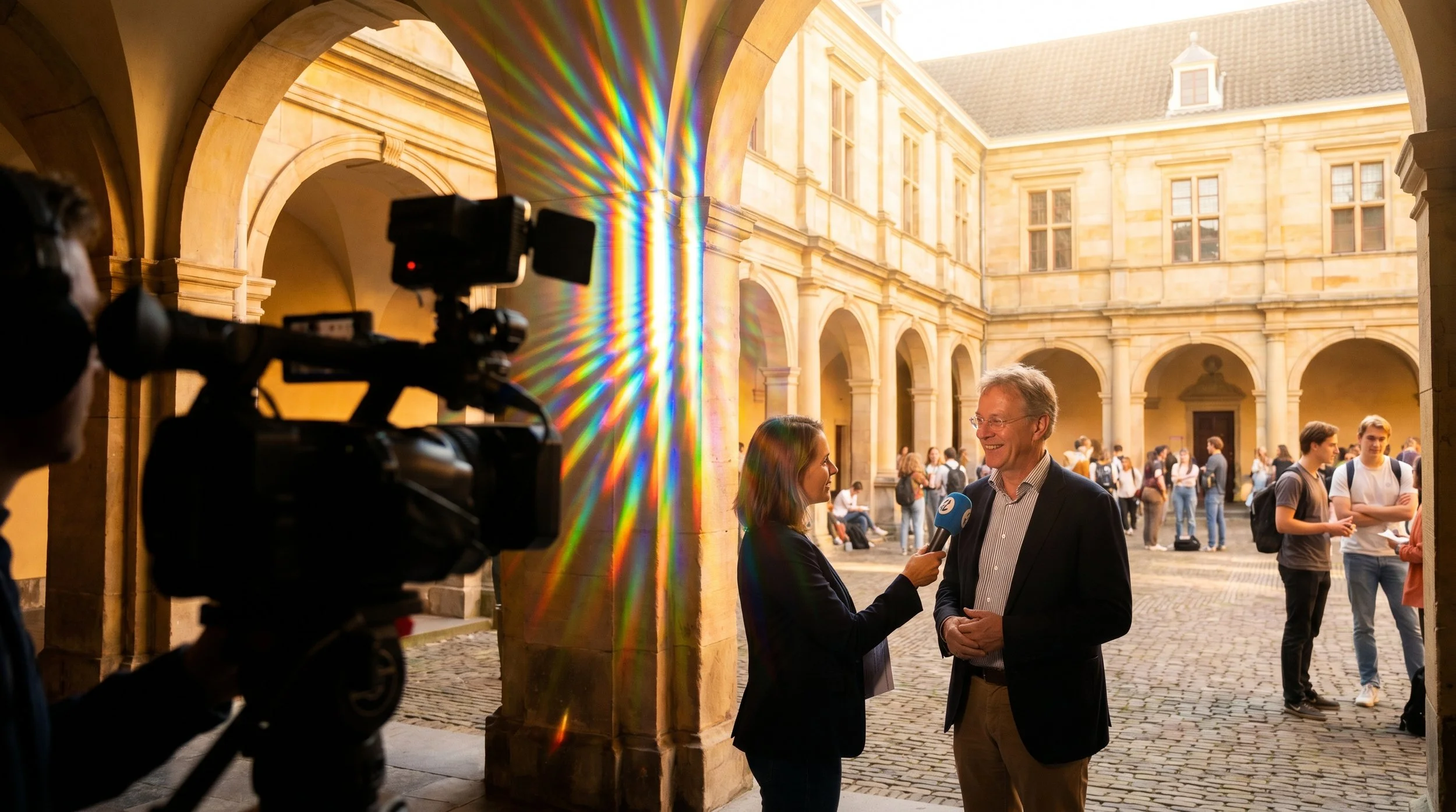
Al Jazeera English featured an interview with Mauritz Kop on responsible quantum computing and quantum artificial intelligence (QAI) at Stanford University, woven into a report from a Silicon Valley summit looking for computing's next breakthrough. Speaking in the spring of 2023, as a Transatlantic Technology Law Forum Fellow at Stanford Law School working on responsible quantum technology, Kop set out three themes that have anchored his work ever since: the societal benefits and risks of quantum computing, the need for guardrails for QAI, and his legal-futurist scenario of a Quantum Event Horizon.

Quantum technology arrives in public view

The interview's setting—an industry expo rather than a lecture hall—signaled how far quantum technology had already traveled from theory toward commerce. Kop's role in the segment was to translate that momentum into a governance question: what legal and policy architecture should accompany machines that exploit superposition and entanglement to do what classical computers cannot? The benefits, from quantum simulation in drug and materials discovery to advances in sensing, are real; so is the risk that fault-tolerant quantum computing could eventually undermine the public-key cryptography securing global infrastructure absent migration to post-quantum schemes. In quantum technology, the same capability that delivers the promise also carries the threat—which is why Kop argues the two cannot be governed as separate concerns.

Building the guardrails early

Kop's case for guardrails turns on timing. Quantum computing and artificial intelligence are each transformative; their convergence could compress the timelines on which human oversight depends. The remedy he advocates is to install safeguards at the design stage—through technical standards, impact assessment as a design instrument, and international coordination—rather than retrofitting them after deployment, when the cost of correction climbs. The Quantum Event Horizon names what those guardrails are meant to prevent: a threshold past which a quantum-AI system can no longer be brought back under meaningful human control. The concept is a design imperative, not a forecast—if such a point is even conceivable, the controls must precede it.

From research program to public conversation

What makes the Al Jazeera interview notable in hindsight is its moment. In the spring of 2023 the case for responsible quantum technology still had to be made to a general audience; the Stanford Center for Responsible Quantum Technology that Kop would found and direct was only then taking shape, with its inaugural conference held that year. Coverage on an international network helped carry the argument beyond the academy toward the citizens, regulators, and technologists whose decisions will determine whether quantum's next revolution is also a responsible one. The same conviction animates Kop's later policy writing, including his consultations with U.S. lawmakers on AI and quantum technology policy, and his profile of scholarship at the intersection of law, quantum technology, and AI.

Meer lezen
Fortune Publication: How to Prevent Quantum-A.I. Hybrids from Taking Over the World

Palo Alto, May 16, 2023—We are delighted to share our new Fortune piece titled "How to prevent quantum-A.I. hybrids from taking over the world," that showcases our Stanford-led research on Responsible Quantum Technology! The 21st century is rapidly becoming the Quantum Age. While the full realization of general-purpose quantum computers is still on the horizon, the emergence of hybrid systems that combine quantum phenomena with classical hardware is already a reality, making its way into both domestic and international markets. This convergence of quantum technology and artificial intelligence (AI) promises to unlock unprecedented advancements across various fields, but it also presents a host of complex geopolitical and grand strategy challenges that demand our immediate attention. As we stand on the precipice of this technological revolution, it is imperative that we proceed with a strong sense of responsibility, ensuring that these powerful tools are developed and deployed in a manner that aligns with our most cherished societal values.

Critical Quantum Insights for a Business Audience

The article, "How to prevent quantum-A.I. hybrids from taking over the world," published in Fortune on May 16, 2023, delves into the profound implications of this technological convergence, offering critical quantum insights for a business audience. It highlights the stark contrast between the development of quantum technology (QT) in liberal democracies, where adherence to fundamental human rights and democratic values is paramount, and its potential applications in autocratic regimes that may wield it for more nefarious purposes. The piece underscores the existential importance of international collaboration, not only on pressing global issues like climate change and inequality but also in the race for technological dominance, where the preservation of freedom and democratic principles hangs in the balance. As quantum-AI hybrids become increasingly prevalent, the authors argue that business and government leaders must engage with experts and the public to establish robust ethical standards, accountability mechanisms, and responsible technology frameworks to actively foster a competitive, values-based quantum-AI ecosystem.

In 2022, Kop & Wadhwa wrote a Foreign Policy paper titled ‘Why Quantum Computing Is Even More Dangerous Than Artificial Intelligence’, see: https://airecht.nl/blog/2022/why-quantum-computing-is-even-more-dangerous-than-artificial-intelligence-foreign-policy

The Dawn of the Quantum-AI Era: Navigating Opportunities and Risks

At the heart of this discourse is the recognition that any major technological advance inevitably raises critical questions of justice, benefit, and risk. The sheer scale and rapid pace of QT-enabled advancements, coupled with their counterintuitive nature, make these considerations all the more urgent. The potential applications are vast and transformative, ranging from quantum chemistry and drug design to logistical optimization and clean energy. However, the threats are equally significant, with the most widely understood being the imminent danger that quantum computing poses to our current cybersecurity infrastructure and data privacy.

In response to these challenges, a global conversation is underway among stakeholders to find a delicate balance between harnessing the benefits of QT and mitigating its risks. Many are turning to the established principles of Responsible Research and Innovation (RRI), which emphasize the importance of responsiveness, inclusivity, reflexivity, and anticipation. RRI posits that scientific and technological breakthroughs should be guided not only by scientific brilliance and economic incentives but also by social norms, ethical values, environmental sustainability, and public engagement. This approach encourages the integration of societal concerns throughout the entire innovation lifecycle, from the initial stages of research and development to the eventual distribution and use of new technologies.

A Framework for Responsible Quantum Innovation: The RQT Approach

Building upon this foundation, a Stanford-led interdisciplinary research group, comprising scholars from law, data science, theoretical physics, philosophy, ethics, social sciences, materials science, and innovation policy, has conceptualized a novel framework known as Responsible Quantum Technology (RQT). This framework is designed to proactively steward the development of QT toward equitable outcomes, mitigate potential risks, and foster an interdisciplinary approach to research and development. RQT embeds the key principles of RRI alongside a comprehensive consideration of the ethical, legal, socio-economic, and policy implications, collectively referred to as Quantum-ELSPI. The ultimate goal of RQT is to ensure that research and innovation efforts are aligned with societal expectations and contribute to the enhancement of planetary welfare.

Meer lezen
Quantum Technology Impact Assessment (EU AI Alliance, European Commission)

Brussels, 20 April 2023—The emergence of powerful new capabilities in large AI models, such as Generative Adversarial Networks (GANs), underscores the critical need to continuously improve and update technology impact assessment tools, ensuring they keep pace with rapid technological development. As defined in recent scholarship, technology impact assessment is the systematic process of monitoring and determining the unintended, indirect, or delayed societal impacts of a future technological innovation. Crucially, it is also about capitalizing on opportunities and enabling responsible innovation from the outset.

An article by Stanford Law’s Mauritz Kop on this topic is also featured on the European Commission's Futurium website.

Shaping the Quantum Innovation Process

Quantum Impact Assessments (QIAs) are emerging as vital practical tools to facilitate the responsible adoption of quantum technologies. There are several related approaches to this assessment: (1) interactive QIA, which seeks to influence and shape the innovation process; (2) constructive QIA, where social issues guide the design of the technology from its earliest stages; and (3) real-time QIA, which connects scientific R&D with social sciences and policy from the start, before a technology becomes locked-in.

Often taking the form of codes of conduct, best practices, roadmaps, and physics de-risking tools, QIA instruments can be used by governments, industry, and academia. These soft law toolsallow stakeholders to explore how current technological developments affect the world we live in and to proactively shape the innovation process toward beneficial, societally robust outcomes.

Exploratory Quantum Technology Assessment

Implementing interdisciplinary, expert-based QIAs can help raise awareness about the ethical, legal, socio-economic, and policy (ELSPI) dimensions of quantum technology, including quantum-classical hybrid systems. For instance, QIAs cultivate a deeper understanding of the potential dual-use character of quantum technology, where beneficial applications (such as quantum sensing for medical diagnostics) can exist alongside potentially harmful ones (such as the same sensors being used for autocratic surveillance).

Building on the foundational work of the 2018 AI Impact Assessment developed by ECP | Platform voor de InformatieSamenleving chaired by Prof. Kees Stuurman, this work presents a prototype of a QIA instrument: the Exploratory Quantum Technology Assessment (EQTA). This pioneering initiative was made possible through a collaboration between the Dutch Ministry of Economic Affairs & Climate Policy, Quantum Delta NL (QDNL), and ECP. The EQTA will be presented by Eline de Jong and Mauritz Kop at the inaugural Stanford Responsible Quantum Technology Conference in May 2023.

Guidance for Responsible Quantum Technology Implementation

The EQTA provides a comprehensive, practical step-by-step plan that encourages stakeholders to initiate a dialogue to clarify which ethical, legal, and social aspects are important in the creation and application of quantum systems and their interaction with classical technologies. This structured approach helps make the use of quantum technology—as well as the data and algorithms that power it—more transparent and accountable from an early stage.

Looking forward, establishing a risk-based legal-ethical framework in combination with standardization, certification, technology impact assessment, and life-cycle auditing of quantum-driven systems is crucial to stewarding society towards responsible quantum innovation. Mauritz Kop’s research group has written more on this framework in their seminal article Towards Responsible Quantum Technology (Harvard).

Meer lezen
Towards Responsible Quantum Technology published by Harvard Berkman Klein Center for Internet & Society

Boston, MA, March 21, 2023—In a landmark contribution to the global dialogue on technology governance, the Harvard Berkman Klein Center for Internet & Society has published the foundational article, "Towards Responsible Quantum Technology." This significant work, the result of a deeply interdisciplinary and transatlantic collaboration, lays out a comprehensive conceptual framework for steering the development of quantum technologies (QT) in a direction that is safe, ethical, and aligned with democratic values.

The manuscript, which was also published in the Hastings Science & Technology Law Journal by the University of California, College of the Law, San Francisco, and in the University of Cambridge repository -with preprints at Stanford Law, ArxiV and the European Commission’s Futurium website- represents a concerted effort to get ahead of the regulatory curve. It argues for a proactive, principled approach to governance while the technology is still malleable, learning from the often-reactive postures taken with previous technological waves like AI and the internet.

A Transatlantic Constellation of Scholars

The paper is authored by a distinguished group of international scholars led by Mauritz Kop, Visiting ‘Quantum & Law’ Scholar at Stanford and the imminent Founding Director of the Stanford Center for Responsible Quantum Technology. The team represents a formidable convergence of expertise from the world's leading academic institutions, including Stanford, Harvard, Oxford, Yale, Cambridge, the University of Waterloo, and the Universities of Munich, Amsterdam, Maastricht, and Copenhagen.

This collaboration brought together leading lights in law, data science, theoretical quantum physics, philosophy and ethics, socioeconomics, materials science and engineering, and innovation policy. The author group includes Mateo Aboy, Eline De Jong, Urs Gasser, I. Glenn Cohen, Timo Minssen, Teresa Quintel, Mark Brongersma, Luciano Floridi, and Raymond Laflamme, whose collective insights provide a holistic and robust foundation for the proposed framework.

The RQT Framework: Integrating Quantum-ELSPI and RRI

At the heart of the paper is the conceptual framework for Responsible Quantum Technology (RQT). This framework is designed to systematically integrate considerations of the Ethical, Legal, Social, and Policy Implications (ELSPI) of quantum technologies directly into the research and development lifecycle.

The RQT framework is built upon the established dimensions of Responsible Research and Innovation (RRI)—anticipation, inclusion, reflection, and responsiveness. By merging these two approaches, Quantum-ELSPI and RRI, the authors have created a powerful tool for ensuring that the development of quantum is not driven solely by technical or commercial imperatives, but by a deep and abiding commitment to societal well-being.

Operationalizing Responsible Quantum Technology: The 10 Principles and Future Regulation

The "Towards Responsible Quantum Technology" paper is the first in a series of studies designed to build a comprehensive governance architecture. It lays the conceptual groundwork that is further operationalized in a subsequent study led by Kop, the "10 Principles for Responsible Quantum Innovation." This second paper translates the high-level SEA framework into concrete, actionable principles for real-world application.

Ultimately, the RQT framework is intended to inform the emergent regulatory landscape for quantum technology. The authors provide an outlook on how regulatory interventions can be designed and contextualized to be effective without stifling innovation. By tailoring governance to the exceptional nature of quantum, the goal is to reduce the risk of unintended, counterproductive policy effects and to foster a thriving, responsible, and values-based quantum ecosystem. The paper concludes with a call to action for the research community and other stakeholders to build upon this foundational work, to further develop the guiding principles, and to translate them into the best practices that will define the quantum future.

Meer lezen
Stanford Light Opera Company: Johann Strauss’ Die Fledermaus

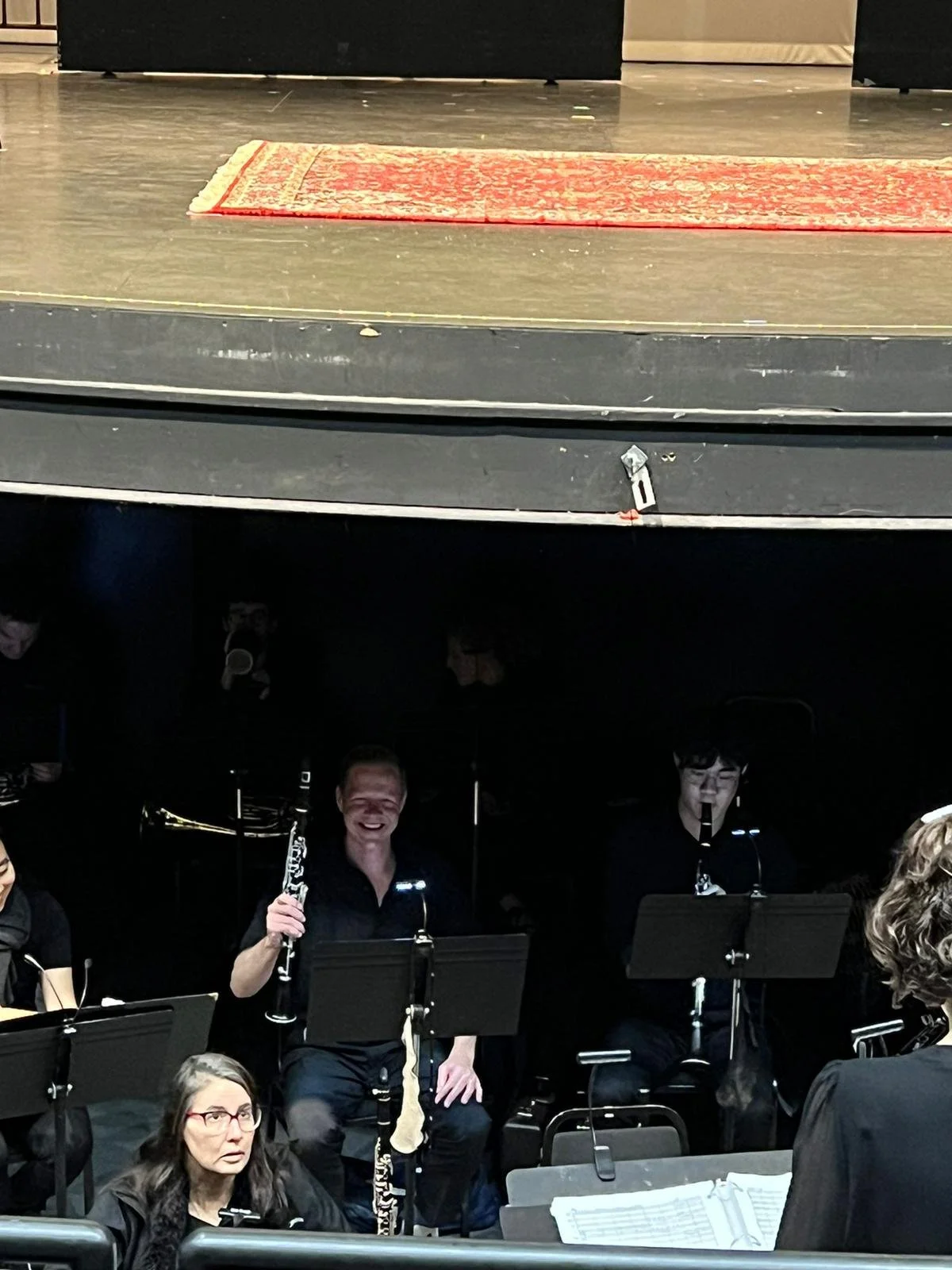
In February 2023, Stanford law scholar Mauritz Kop stepped off the page and into the orchestra pit, joining the Stanford Light Opera Company (SLOCo) for its winter production of Johann Strauss II's Die Fledermaus. He played clarinet—A and B-flat—substage with the company's orchestra across four performances at Dinkelspiel Auditorium. For a researcher whose work increasingly concerns the rights of performers and composers in the age of artificial intelligence, the view from below the stage was more than a hobby; it was a vantage point.

A student company's feminist Strauss

SLOCo's staging, directed by Nicolle Hendzel '23 in an English translation by Marcie Stapp, reimagined a ballroom farce as a deliberately feminist work, placing the characters who orchestrate the plot's great prank—and who hold power within it—in the hands of its women. The company is a student-run organization with roots in the Stanford Savoyards, a Gilbert and Sullivan society founded in 1973 and rebranded as SLOCo in 2016. The operetta itself dates to 1874, when it premiered at the Theater an der Wien in Vienna; nearly a century and a half later, a student orchestra gave it a contemporary edge.

Where music meets the law of AI

Kop is a Stanford Law School fellow and a practicing classical musician on piano and clarinet, and the two roles inform one another. His scholarship on copyright, authorship, and the public domain carries the weight of someone who has sat among the performers the law is meant to protect. That sensibility runs through his analysis of cloned voices and machine-generated compositions, where familiar copyright questions—who is the author, who is paid, and what enters the public domain—have been made newly pressing by generative systems. A scholar who has taught music law at the Royal Conservatoire in The Hague has good reason to keep one foot in live performance.

Why the arts belong in technology-law writing

Technology law has a tendency to treat the arts as something to be regulated rather than understood. An evening in a student orchestra reverses that order. The discipline of a rehearsed part delivered in real time, the collective labor of an ensemble, and the precarious economics of a production staged for love rather than profit are precisely what the law of music exists to serve. As AI begins to imitate the performer's craft at scale, the argument for a creator-aware approach to authorship and remuneration only sharpens—an argument that runs throughout Kop's scholarship on responsible technology across law, music, and policy. The clarinet, on this telling, is not a distraction from the research—it is a reminder of whom the research is for.

Meer lezen