Innovation, Quantum-AI Technology & Law

Blog over Kunstmatige Intelligentie, Quantum, Deep Learning, Blockchain en Big Data Law

Blog over juridische, sociale, ethische en policy aspecten van Kunstmatige Intelligentie, Quantum Computing, Sensing & Communication, Augmented Reality en Robotica, Big Data Wetgeving en Machine Learning Regelgeving. Kennisartikelen inzake de EU AI Act, de Data Governance Act, cloud computing, algoritmes, privacy, virtual reality, blockchain, robotlaw, smart contracts, informatierecht, ICT contracten, online platforms, apps en tools. Europese regels, auteursrecht, chipsrecht, databankrechten en juridische diensten AI recht.

Mauritz Kop and Mark Lemley Host High-Level EU Cybersecurity Delegation at Stanford Law

Stanford, CA – On February 26, 2024, the Stanford Center for Responsible Quantum Technology (RQT), a leading interdisciplinary hub operating under the aegis of the Stanford Program in Law, Science & Technology, had the distinct honor of hosting a high-level cybersecurity delegation from the European Commission. The meeting, led by the Center’s Founding Director, Mauritz Kop, and Professor Mark A. Lemley, Director of the Stanford Program in Law, Science & Technology, underscored the growing importance of transatlantic dialogue in shaping the future of digital security and responsible innovation in the quantum age.

The Stanford Center for RQT is dedicated to steering the development and application of quantum technologies toward outcomes that are not only innovative but also equitable, transparent, and beneficial for society at large. Its mission is to proactively address the complex ethical, legal, societal, policy and interoperability implications of quantum advancements, fostering a global ecosystem grounded in democratic values and human rights. The Center was officially inaugurated on December 6, 2023, by His Excellency Mark Rutte, then Prime Minister of the Netherlands and the current Secretary General of NATO, a testament to the geopolitical significance of its work. This recent meeting with the EU delegation builds on that foundation, reinforcing the Center’s role as a crucial bridge between Silicon Valley’s technological frontier and the world’s leading policymakers.

The dialogue centered on some of the most pressing challenges and opportunities at the intersection of quantum technology and cybersecurity, including building global capacity for responsible innovation and aligning EU and US national security strategies.

The EU Cybersecurity Delegation at Stanford RQT

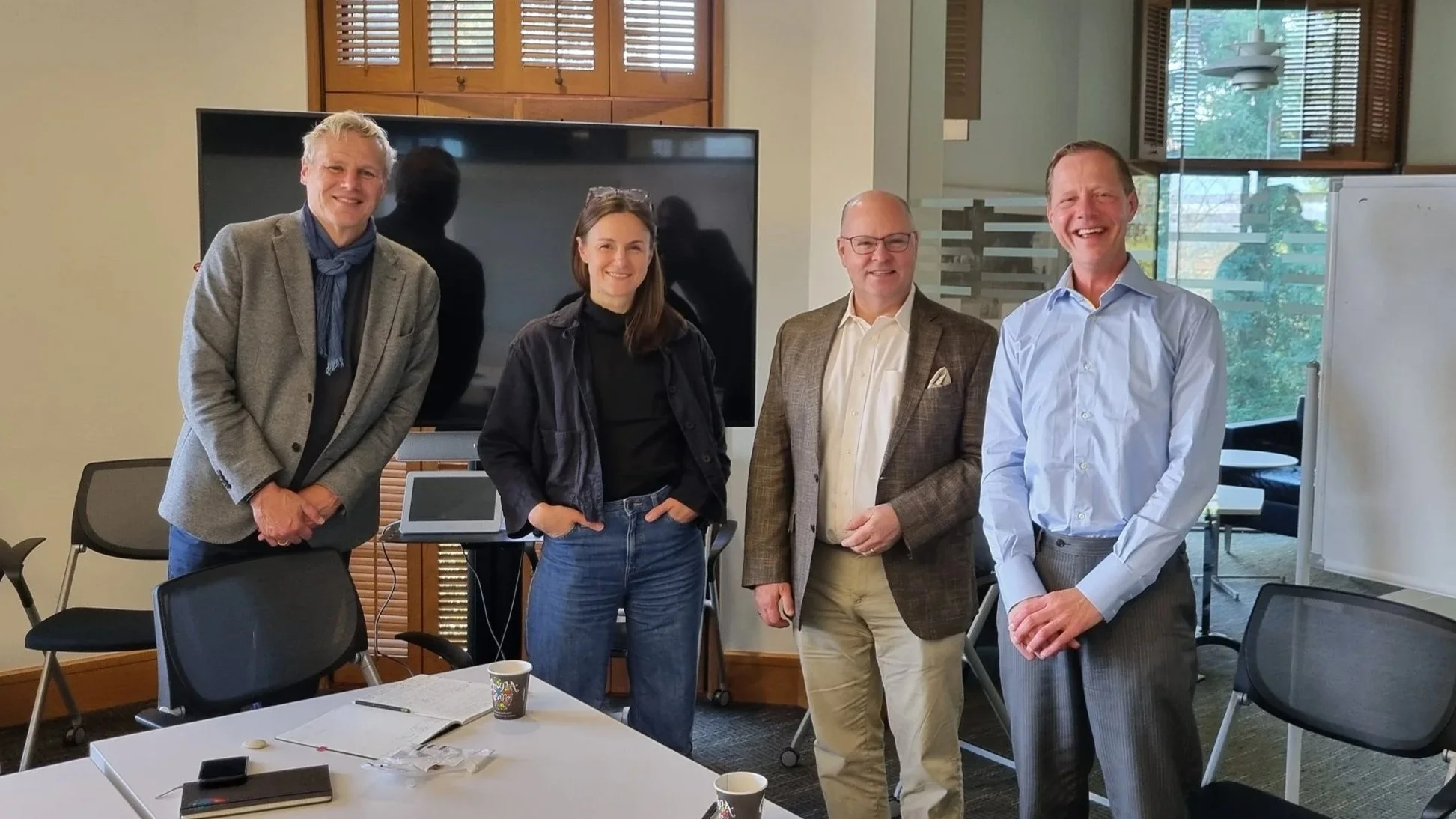
The European Commission’s Cybersecurity Delegation was led by Gerard de Graaf, the Senior Envoy for Digital to the U.S. and Head of the European Union Office in San Francisco. A veteran of the European Commission with a distinguished career spanning several key digital policy areas, Mr. de Graaf is at the forefront of the EU’s efforts to promote a human-centric, ethical, and secure digital transition. His role involves strengthening transatlantic cooperation on digital regulation, from data governance and AI to cybersecurity and platform accountability. Mr. de Graaf, who was also present at the Center’s inauguration, has been a pivotal figure in shaping the EU’s landmark digital policies, including the General Data Protection Regulation (GDPR) and the Digital Services Act (DSA). His leadership in the San Francisco office is instrumental in fostering dialogue between European regulators and the heart of the global tech industry.

Accompanying Mr. de Graaf were Joanna Smolinska, Deputy Head of the EU Office in San Francisco and a key figure in transatlantic tech diplomacy, and Ilse Rooze, a Seconded National Expert at the EU Office who brings deep expertise in digital policy and international relations.

Representing Stanford were Mauritz Kop and Professor Mark A. Lemley. Mr. Kop is a pioneering scholar in the governance of emerging technologies, with a focus on quantum, AI, and intellectual property. As the Founding Director of the RQT Center, his work is dedicated to creating robust legal and ethical frameworks to ensure that transformative technologies are developed and deployed responsibly. Professor Lemley is the William H. Neukom Professor of Law at Stanford Law School and one of the world's most cited scholars in intellectual property and technology law. His extensive work on innovation, competition, and the digital economy provides a critical legal and economic lens through which to view the challenges of the quantum era.

The Quantum Cybersecurity Challenge: Preparing for Q-Day

A central theme of the discussion was the looming threat that fault-tolerant quantum computers pose to global cybersecurity. The immense processing power of these future machines will render much of the world’s current cryptographic infrastructure obsolete. This critical juncture, often referred to as “Q-Day” or the “Quantum Apocalypse,” is the moment when a quantum computer will be capable of breaking widely used encryption standards like RSA and ECC, which protect everything from financial transactions and government communications to personal data and critical infrastructure.

The implications of Q-Day are profound. Malicious actors could potentially decrypt vast archives of stolen encrypted data—a scenario known as "harvest now, decrypt later." This retroactive decryption capability poses a severe threat to long-term data security, national security, and economic stability.

In his opening remarks, Mauritz Kop emphasized the urgency of a proactive, coordinated global response. The conversation explored the transition to Post-Quantum Cryptography (PQC), a new generation of cryptographic algorithms designed to be resistant to attacks from both classical and quantum computers. The U.S. National Institute of Standards and Technology (NIST) is in the final stages of standardizing a suite of PQC algorithms, a process closely watched by governments and industries worldwide. The delegation discussed the immense logistical, technical, and financial challenges of migrating global IT systems to these new technical standards—a process that is expected to take more than a decade and require unprecedented public-private collaboration.

The discussion also touched upon other quantum security technologies, such as Quantum Key Distribution (QKD), which uses the principles of quantum mechanics to create secure communication channels. While PQC focuses on developing new mathematical problems that are hard for quantum computers to solve, QKD offers a physics-based approach to security. The participants explored how these different technologies could complement each other in a future-proof security architecture.

Meer lezen
Princeton University’s Liechtenstein Institute on Self-Determination’s visits Stanford Center for Responsible Quantum Technology

On Wednesday, January 22, 2024, the Stanford Center for Responsible Quantum Technology (RQT) had the distinct pleasure of hosting a delegation from Princeton University’s Liechtenstein Institute on Self-Determination (LISD) for a dynamic discussion on transatlantic technology policy at Stanford Law School. The event was marked by great energy and a profound exchange of ideas, reflecting the shared commitment of both institutions to navigating the complex intersection of emerging technology, global governance, and societal values.

Princeton LISD leadership and their talented International Policy Associates at Stanford RQT

As the host of the meeting, Professor Mauritz Kop had the opportunity to welcome the LISD leadership and their talented International Policy Associates. He provided an overview of the mission of the Stanford RQT, explaining our framework for ensuring that quantum technologies are developed and integrated into society in a manner that is safe, ethical, and equitable. This introduction served as a foundation for a rich and meaningful conversation, where the Princeton fellows posed insightful questions. The discussion traversed a wide spectrum of pressing topics, including the challenges of regulating the suite of quantum technologies, the discovery of quantum use cases in healthcare, the complexities of export controls and quantum materials supply chains, and the crucial interface between AI and quantum computing. Furthermore, we explored the application of universal democratic values and culturally sensitive ethics to these new domains, comparing the innovation systems of the US, EU, and China, and considering the potential for technology to drive both scarcity and abundance on a planetary scale.

Freeman Spogli Institute for International Studies (FSI) and Stanford Graduate School of Business (GSB)

The engagement at the RQT was a cornerstone of the LISD delegation's broader visit to Northern California, which included several high-level meetings across Stanford University. The group’s thank-you message noted their "incredibly enriching visit" and the comprehensive nature of their discussions. Their agenda also included conversations with preeminent scholars Professor Francis Fukuyama and Professor Michael McFaul at the Freeman Spogli Institute for International Studies (FSI), and a meeting with Dean Jon Levin of the Stanford Graduate School of Business (GSB). According to the delegation, these dialogues covered a range of vital geopolitical issues, from the war in Ukraine and a possible attack on Taiwan to Stanford's pivotal role in innovation, highlighting the "multifaceted impact of technology on democracy." The visit also provided an opportunity for the delegation to connect with Princeton alumni in the region.

Collaborating on global challenges and opportunities presented by quantum technologies

The esteemed LISD delegation was led by its senior leadership, including Sophie Meunier, the Acting Director of LISD and a Senior Research Scholar at the Princeton School of Public and International Affairs; Nadia Crisan, the Executive Director of LISD; Jonathan Fredman, a Non-Resident Fellow and former senior leader at the Central Intelligence Agency; and Jana-Alessa Peper, the Institute Assistant who coordinates the IPA program. They were accompanied by the LISD’s International Policy Associates, a cohort of students pursuing careers in foreign policy and international business, who brought a diverse array of academic and professional interests to the discussion.

The dialogue reinforced the critical importance of building bridges between institutions and disciplines. The exchange of perspectives between Stanford’s technology and policy experts and Princeton’s specialists in international affairs and self-determination created a unique and valuable synergy. We extend our sincere thanks to the entire LISD delegation for a stimulating and productive session that has undoubtedly planted the seeds for future collaboration in addressing the global governance challenges and opportunities presented by quantum and other advanced technologies.

Meer lezen
Stanford University Launches Stanford Center for Responsible Quantum Technology

Stanford, CA – December 6, 2023 – Stanford University today announced the launch of the Stanford Center for Responsible Quantum Technology (RQT), a pioneering initiative dedicated to addressing the profound ethical, legal, social, and policy implications of the rapidly advancing field of quantum technologies, including quantum artificial intelligence (QAI). The Center, part of the Stanford Program in Law, Science & Technology (LST) at Stanford Law School (SLS), is believed to be the first academic center of its kind.

Dutch Network for Academics in the USA Semicon, Geopolitics and Shared Values Event

The announcement was made during a distinguished Dutch Network for Academics in the USA event focused on semicon, geopolitics and shared democratic values, presented by the Stanford Institute for Economic Policy Research (SIEPR). The occasion was graced by the presence of outgoing Netherlands Prime Minister Mark Rutte, Nobel Prize winner and Stanford School of Business Professor Guido Imbens, Stephen Harris Professor of Materials Science and Engineering Mark Brongersma, and William H. Neukom Professor of Law Mark Lemley, who is also the Director of the LST program and serves as the faculty leader of the new Quantum Institute.

Mauritz Kop Founding Director of the Stanford Center for Responsible Quantum Technology

Mauritz Kop, who founded and directs the Center and began his tenure as a Transatlantic Technology Law Forum Fellow at Stanford Law School in 2019, highlighted the critical juncture at which the Center is being established. "Quantum technologies—especially in the areas of encryption, computing, and sensors—were rapidly evolving from hypothetical ideas to commercial realities," Kop observed. "Here, I determined, was where the most interesting–and pressing–questions of law and policy lay. Put simply, quantum technology involves the smallest particles in the universe but has the potential to create some of the world’s biggest technological quandaries and opportunities."

Stanford University Library RQT Scholarship Repository of Selected Works: https://purl.stanford.edu/hp536nb5631

Meer lezen
Mauritz Kop and Urs Gasser at the TUM Festival of Ideas: A Live Quantum-Art Demonstration (November 2023)

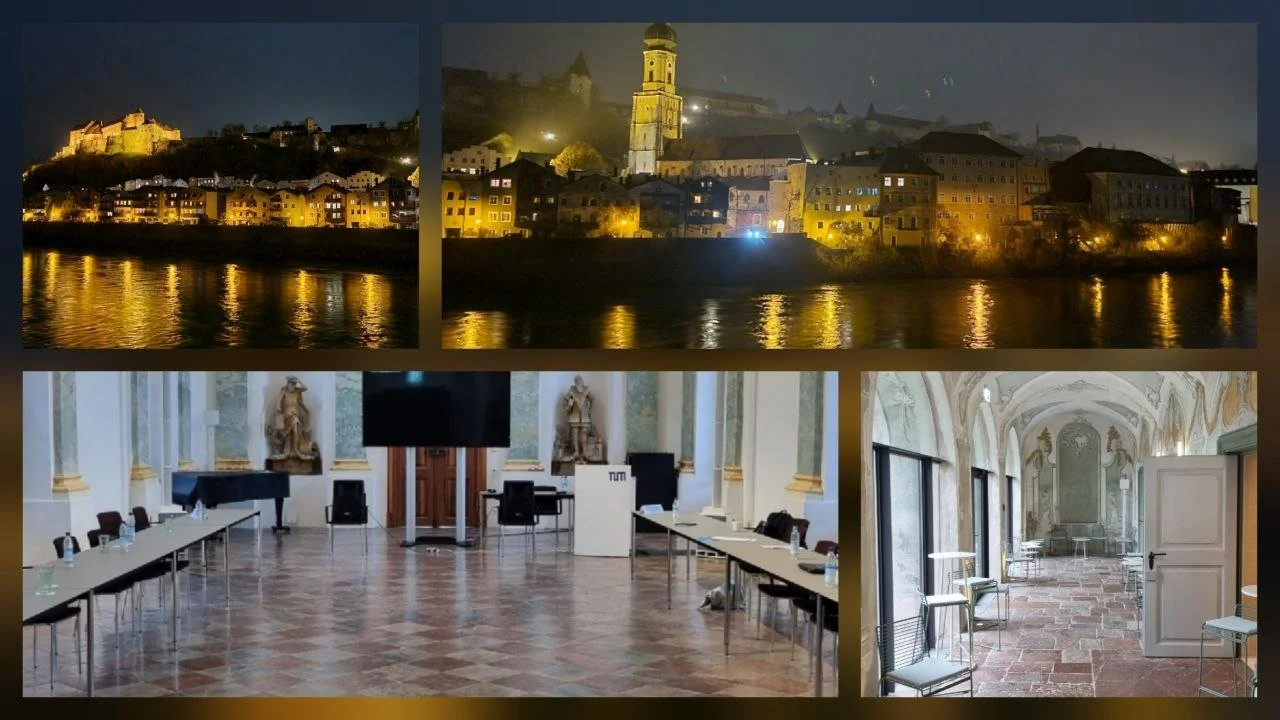
In November 2023, the inaugural Festival of Ideas gathered scholars, technologists, and policymakers at the Technical University of Munich and its historic Science & Study Center at Raitenhaslach Monastery to ask how society should design a new "operating system" for an age of artificial intelligence and quantum computing. I took part as a Stanford Center for Responsible Quantum Technology participant, alongside Professor Urs Gasser of TUM.

Quantum governance on the agenda

Quantum technology ran through the program rather than sitting at its edge. A closing use-case session on responsible technology—focused on quantum, AI, and immersive tools—was moderated by Urs Gasser, Rector of TUM's Hochschule für Politik. It was the same collaboration that soon produced the Nature Physics call for responsible quantum technology that Gasser, Eline de Jong, and I co-authored, making the Festival an early working session for that line of scholarship.

A live demonstration of quantum intuition

My contribution went beyond a conventional talk. I gave a live demonstration using my own photo, video, and music as input to a real-time, beat-synced audiovisual system inspired by fractal geometry, with a generative-AI element in the loop. Fractal patterns recur in nature—and have been observed in quantum materials—so inviting the audience to become the input data made an abstract idea tangible: that art can foster the quantum intuition an interdisciplinary, double-educated quantum workforce will need.

From Abu Dhabi to a Munich grand piano

The Munich demonstration was one public instance of a format I have also performed in Abu Dhabi, on exponential-technology stages of the kind I later addressed as a speaker at XPANSE 2024. As a working musician, I added an unscripted piano interlude on the venue's grand piano—of a piece with the Festival's argument that creativity is a method, and that the most durable guardrails for fast-moving technology are designed where law, ethics, science, and art are allowed to meet.

Meer lezen
Council of Canadian Academies Publishes Quantum Potential Report

The Council of Canadian Academies has released Quantum Potential, the report of an independent expert panel on the responsible adoption of quantum technologies in Canada. Chaired by physicist Raymond Laflamme, the thirteen-member panel included Mauritz Kop—one panel member among the thirteen, whose listed expertise covered the ethical, legal, and policy dimensions—on a question Canada's federal departments had put to the academies: how to turn quantum research strength into broad, responsible adoption.

A national academy weighs in on quantum

Commissioned by Innovation, Science and Economic Development Canada and the National Research Council of Canada, the assessment treats quantum technology as an economic opportunity inseparable from its governance. The panel's reach across physics, economics, and law reflects a recurring premise of quantum policy: the hard questions—data security, market power, regulatory uncertainty, public trust—sit at the seams between disciplines, and the report frames quantum capabilities as advancing ahead of the institutions meant to steer them.

Promise and the adoption gap

The economics are striking. Quantum technologies, the report finds, may account for up to 3% of Canada's GDP by 2045, with quantum computing making the most significant contribution; the sectors most likely to be transformed range from defense and finance to chemistry and materials science. Yet the panel is candid about structural weakness: Canada's quantum expertise is clustered rather than diffused, rival countries are pulling ahead on research output, and there are few programs to encourage end-user adoption. The challenge, in short, is not only invention but diffusion—and anticipating the outcomes of technological change before they arrive.

Responsible adoption, two-handed

The report's normative center is its prescription for responsible adoption: a deliberately two-handed mix of state-sanctioned and self-regulating measures, reaching for anticipatory instruments—quantum impact assessments, soft-law mechanisms, and stakeholder consultation—rather than waiting for harms to crystallize. That posture echoes a recurring theme in the responsible-quantum literature, where governance is framed as a graduated toolbox calibrated to a technology whose risks are still taking shape. The convergence is not an endorsement of any one framework, but it helps explain why the panel drew on members working at the intersection of quantum science and law and policy.

Why it carries weight

National academies do not legislate; their authority is the authority of independent expert synthesis offered to governments deciding how to act. Quantum Potential functions as exactly that—structured evidence and options for Canadian policymakers as the country set its quantum course. Kop's engagement with Canadian and allied quantum governance is of a piece with his wider advisory work, which later included his 2024 consultations with the U.S. Department of State on quantum technology and foreign-policy strategy. For readers tracing how responsible-quantum thinking moves from scholarship into national policy, the report—and the broader body of work catalogued on the Mauritz Kop profile—is a useful waypoint: a moment when an independent panel told a government, in plain terms, that getting both the state-sanctioned and the self-regulating instruments in place early is the practical work of responsible quantum adoption.

Meer lezen
Gasthoogleraar Mauritz Kop in het Financieel Dagblad: AI-chatbots, media-archieven en een Buma/Stemra voor nieuws

Toen Nederlandse en Europese uitgevers hun websites begonnen af te schermen voor AI-chatbots, vroeg Het Financieel Dagblad jurist en gasthoogleraar Mauritz Kop (Stanford) om duiding. In het stuk van redacteur Sandra Olsthoorn (september 2023) schetste hij niet alleen het probleem — AI-modellen die nieuwsarchieven leegtrekken — maar ook een concrete uitweg.

Blokkeren is geen oplossing

Afschermen werkt nauwelijks en heeft een gevaarlijke bijwerking, betoogde Kop: zonder betrouwbare journalistiek worden chatbots gevoed met materiaal uit onbetrouwbare hoeken, met een groter risico op desinformatie en complottheorieën — volgens hem een bedreiging voor de democratie. De kwaliteit van de bronnen waarop AI leunt, is dus een publiek belang, geen privékwestie van de sector.

Een Buma/Stemra voor nieuws

Kops voorstel: een collectief licentiemodel naar het voorbeeld van Buma/Stemra, waarbij mediabedrijven hun artikelen tegen een faire vergoeding beschikbaar stellen aan AI-ontwikkelaars. Te hoog en techbedrijven betalen niet; te laag en er blijft geen geld voor kwaliteitsjournalistiek. Collectief beheer verlaagt bovendien de transactiekosten van het onderhandelen.

Liever Europees, liever samen

Zijn voorkeur ligt bij een initiatief vanuit de Europese Commissie, dat — net als de privacywetgeving — kan overwaaien naar de VS. Boven alles geldt: samen tot afspraken komen is beter dan eindeloze rechtszaken. Deze samenvatting laat zien waarom uitgevers, mediabedrijven en AI-ontwikkelaars nú een licentie- en auteursrechtstrategie nodig hebben.

Meer lezen
Mauritz Kop Judge at 6th Annual Junior Faculty Forum for Law and STEM at Stanford

On October 27, 2023, Stanford Law School hosted the 6th Annual Junior Faculty Forum for Law and STEM, a premier event organized and hosted by Professor Mark Lemley that convenes the next generation of leading legal scholars to present and refine their cutting-edge research. The forum, which rotates between Stanford, the University of Pennsylvania, and Northwestern University, provides a vital platform for interdisciplinary dialogue on the complex legal challenges posed by rapid scientific and technological advancement. Mauritz Kop, a recognized expert in technology law and governance, had the honor of serving as a judge and commentator, contributing to the rigorous intellectual exchange that defines the event.

The forum's mission is to foster the development of early-career academics by providing a supportive yet critical environment for them to receive feedback from senior scholars in their fields. Over two days, junior faculty presented works-in-progress on a diverse array of topics, from the metaverse and quantum computing to medical device regulation and genome governance, showcasing the breadth and depth of contemporary law and STEM scholarship.

The Call for Papers: Fostering Interdisciplinary Law & Technology Scholarship

The selection of presenters for the forum is a rigorous process, initiated by a formal Call for Papers issued by the organizing universities: Northwestern, the University of Pennsylvania, and Stanford Law School. The call invites junior faculty from any discipline to submit papers on any topic related to the intersection of law and STEM. The goal is to promote interdisciplinary research that explores how developments in STEM are affecting law and vice versa, with a preference for papers that strongly integrate these two fields.

A Rich Tapestry of Emerging Legal Questions

The agenda for the 2023 forum was a testament to the pressing legal and ethical questions emerging from the frontiers of science and technology. The papers presented offered a glimpse into the future of legal scholarship and the complex societal issues that lawmakers, judges, and regulators will face in the coming years.

Among the thought-provoking works discussed were:

  1. "Taxing the Metaverse" by Christine Kim (Cardozo School of Law): This paper tackles the novel challenge of how to apply principles of taxation to the burgeoning virtual economy. Kim argues that economic activity within the metaverse satisfies traditional definitions of income and that failing to tax it would create a new kind of tax haven. The paper explores how the metaverse could serve as a laboratory for modernizing the tax system, potentially overcoming the traditional realization requirement.

  2. "Regulating Medical Device Innovation" by George Horvath (University of Akron School of Law): Horvath reframes the debate around medical device safety, moving beyond the narrow concept of "predicate creep" in the 510(k) clearance process to a broader analysis of "device creep." He makes the counterintuitive argument that properly structured safety regulations can stimulate, rather than stifle, innovation by building a more robust clinical knowledge base.

  3. "Who Owns Children's DNA?" by Nila Bala (UC Davis School of Law): This article addresses the critical and underexplored issue of parental control over children's genetic information. Bala argues that parental consent is an insufficient safeguard against the collection and use of a child's DNA by law enforcement, particularly in the context of direct-to-consumer genetic testing. She proposes moving from a framework of parents-as-owners to parents-as-fiduciaries, drawing on property law principles to protect the child's long-term interests.

  4. "Gene Stewards: Rethinking Genome Governance" by Shelly Simana (Stanford Law School): Simana confronts the exploitative practices of entities that collect and use human genetic material. She proposes a new statutory category of "Gene Stewards," which would impose quasi-fiduciary duties of loyalty and care on these powerful public and private entities, ensuring they act as responsible stewards of this sensitive information.

Reviewing "Privacy in the Quantum Age"

As part of his role, Mauritz Kop, alongside Professor Christopher Yoo of the University of Pennsylvania, served as a commentator for the paper "Privacy in the Quantum Age" by Anat Lior (Yale Law School). Lior's paper addresses the profound privacy implications of quantum computing, particularly its potential to break current encryption standards.

In his review, Kop commended Lior for her courage in tackling such a complex and deeply interdisciplinary subject. He emphasized the need for legal scholars entering this domain to achieve a high level of "quantum literacy" to engage credibly with both the technology's promise and its perils. He offered several pieces of constructive feedback aimed at strengthening the paper's impact and scholarly contribution.

Meer lezen
SandboxAQ Invites Mauritz Kop to Give RQT Lecture and Workshop

On October 25, 2023, SandboxAQ hosted Mauritz Kop, visiting ‘quantum and law’ scholar at Stanford University, for a lecture and interactive workshop focused on the principles of Responsible Quantum Technology (RQT). The opportunity to engage with a leading enterprise at the intersection of artificial intelligence and quantum science was both timely and imperative. The dialogue that unfolded underscored the critical importance of embedding ethical, legal, and societal considerations into the fabric of quantum innovation from its outset.

Appreciation was extended to the SandboxAQ team for organizing this important event, particularly Marianna Bonanome, PhD, Head of External Education Programs; Kayla Quinnies, PhD, Residency Program Manager; Nina Bindel; Amro Imam, and Vice-President Fernando Dominguez Pinuaga. Their commitment to fostering a culture of responsible development is a testament to the company's forward-thinking leadership.

The SandboxAQ Mission: An Intersection of AI and Quantum

To fully appreciate the context of the discussion, it is useful to understand the unique position SandboxAQ occupies in the technology landscape. The company, which began as an independent research group within Alphabet Inc. and officially launched as a standalone company in 2022, is built on the convergence of AI and quantum technologies, an area they term 'AQ'. This strategic focus allows them to develop commercially viable, enterprise-scale solutions today, without dependency on the eventual arrival of fault-tolerant quantum computers.

Led by CEO Jack D. Hidary, SandboxAQ directs its efforts toward solving complex challenges across several key domains:

Simulation & Optimization: Accelerating the discovery of new medicines and materials by simulating molecular interactions, with applications in life sciences, chemicals, and finance.

Quantum Security: Providing solutions for the transition to post-quantum cryptography (PQC), a critical undertaking for protecting sensitive, long-lifespan data from the future threat of cryptanalytically relevant quantum computers. The company emphasizes that "Store Now, Decrypt Later" attacks are an immediate concern, necessitating urgent action.

Quantum Sensing: Leveraging the inherent sensitivity of quantum systems to develop novel sensors for applications in medical imaging, navigation, and material science.

A cornerstone of the company's ethos is its Education (EDU) division. With a charter "To educate the world on AQ so any person or institution can participate in and develop technology to impact the world in positive ways," the EDU team focuses on growing the AQ market, building a diverse talent pipeline, and instilling a culture of ethical and responsible innovation. This commitment to education and responsibility provided a fertile ground for the dialogue on the governance of quantum technologies.

Laying the Foundation: From Quantum-ELSPI to Responsible Quantum Technology

The central theme of the lecture was the proactive governance of quantum technology. The potential for this suite of technologies to be transformative—impacting everything from global security and economic stability to fundamental scientific research—demands a departure from the reactive regulatory postures that have characterized previous technological waves.

The starting point was the concept of Quantum-ELSPI, which refers to the interconnected Ethical, Legal, Socio-economic, and Policy Implications of quantum technologies. This framework serves two purposes: normatively, it acts as a metaparadigm for guiding development; descriptively, it establishes a broad, interdisciplinary research agenda. By examining the successes and failures in the governance of AI, nanotechnology, nuclear, and biotechnology, valuable lessons can be derived for the quantum era.

From this foundation, the concept of Responsible Quantum Technology (RQT) was introduced. This is a comprehensive framework developed by a transatlantic, interdisciplinary team of scholars from institutions including Stanford, Harvard, Oxford, and Cambridge, led by Stanford Law School’s Mauritz Kop. RQT integrates Quantum-ELSPI considerations with the established dimensions of Responsible Research and Innovation (RRI): anticipation, inclusion, reflection, and responsiveness. Its objective is to ensure that quantum research and innovation efforts are aligned with societal needs and enhance planetary welfare, deliberately steering development toward beneficial outcomes while the technology is still malleable.

Meer lezen
Mauritz Kop Speaks at CNAS Quantum Roundtable on Research Security, Technology Theft, and Intellectual Property Rights

Washington, D.C. – On October 11, 2023, the Center for a New American Security (CNAS) convened a timely, off-the-record roundtable discussion to address one of the most pressing national security challenges of our time: safeguarding American leadership in quantum technology. The event, titled "Quantum Roundtable: Research Security, Technology Theft, and Intellectual Property Rights," brought together a select group of leading experts from government, industry, and academia. Among the distinguished speakers was Mauritz Kop, Fellow and Visiting Scholar in Quantum and Law at Stanford University and later the Founding Director of the Stanford Center for Responsible Quantum Technology (RQT), and Chair of the annual Stanford RQT Conference.

The roundtable served as a critical forum for in-depth dialogue on formulating a robust U.S. strategy to protect its quantum ecosystem from intellectual property theft and illicit technology transfer, particularly in the context of strategic competition with nations like China. Quantum technology governance global expert Mauritz Kop was invited to provide his unique perspective, rooted in a holistic framework for responsible innovation, to help navigate the complex interface of intellectual property and national security.

The Center for a New American Security: Shaping the National Security Debate

The Center for a New American Security is a prominent, bipartisan non-profit organization that develops strong, pragmatic, and principled national security and defense policies. CNAS engages policymakers, experts, and the public with innovative, fact-based research, ideas, and analysis to shape and elevate the national security debate. Its Technology and National Security Program, led by Senior Fellow and Director Vivek Chilukuri, focuses on the complex challenges and opportunities presented by emerging technologies, aiming to ensure the United States maintains its technological leadership while upholding democratic values. This roundtable was a key component of the program's project on U.S. quantum strategy and its intersection with U.S.-China economic relations, reflecting CNAS’s commitment to proactive and forward-thinking policy development.

A High-Stakes Convening of Quantum Leaders

The roundtable's agenda was designed to facilitate a candid and substantive discussion among key stakeholders. The session was opened by CNAS Executive Vice President and Director of Studies, Dr. Paul Scharre, and Program Director Vivek Chilukuri, who set the stage by outlining the critical importance of the topic.

The main discussion featured two expert speakers:

Mauritz Kop, who brought a comprehensive legal, ethical, and policy perspective from his work at Stanford. His research focuses on developing governance frameworks for emerging technologies, integrating intellectual property, antitrust law, distributive justice, and national security strategy.

Dr. Elliott Mason, a Registered Patent Agent at Young Basile and a leader within the Quantum Economic Development Consortium (QED-C). Dr. Mason provided deep technical and practical insights from the front lines of quantum patenting and the development of industry standards.

Conclusion: A Principled Approach to Quantum Technology Governance

Mauritz Kop concluded his remarks by emphasizing the profound dilemmas and trade-offs inherent in governing quantum technology. The pendulum swings between open and closed innovation, and between mitigating risks and maximizing benefits, require a sophisticated, evidence-based, and adaptive approach.

His participation in the CNAS roundtable provided a crucial, principled voice, advocating for a strategy that is not merely defensive but forward-looking. By grounding the discussion in the RQT framework, he made a compelling case that true security lies in advancing a thriving, competitive, and responsible quantum ecosystem—one that leads the world in innovation while being firmly anchored in democratic values and a commitment to the planetary good. The event highlighted the essential role of deep, interdisciplinary dialogue in shaping a quantum future that is both secure and beneficial for all humankind.

Meer lezen
Mauritz Kop Fellow at Inter-CeBIL Harvard Cambridge Copenhagen

Harvard-Cambridge-Copenhagen, Sept 15, 2023 — Mauritz Kop has accepted a position as an Inter-CeBIL Fellow at the prestigious Novo Nordisk Foundation Copenhagen-Cambridge-Harvard Inter-CeBIL Programme for International Collaborative Bioscience Innovation & Law. In this role, Kop will focus his research on Advanced Medical Computing, Artificial Intelligence (AI) and Quantum Technologies within the life sciences ecosystem.

About the Inter-CeBIL Programme

The Inter-CeBIL Programme is a world-leading research hub dedicated to identifying and tackling the most significant legal and regulatory barriers to health and life science innovation. The initiative fosters robust knowledge networks to provide tailored legal and regulatory support to patients, researchers, businesses, and incubators, with the ultimate goal of ensuring that health and life science innovations can safely and effectively reach patients and markets.

This international collaboration brings together top-tier academic institutions to drive progress in healthcare and biotechnology. The program is a joint effort between the Centre for Advanced Studies in Bioscience Innovation Law (CeBIL) at the University of Copenhagen, the Petrie-Flom Center for Health Law Policy, Biotechnology, and Bioethics at Harvard Law School, and the University of Cambridge, among other key partners. The program is led by a distinguished team, including Professor Timo Minssen as the Founding Director of CeBIL at the University of Copenhagen, Professor I. Glenn Cohen who leads Harvard Law School’s contribution, and Professor Mateo Aboy who leads the Cambridge part.

Key Research Areas

The Inter-CeBIL Programme centers its research on three key "grand challenges":

1. Advanced Medical Computing: Focusing on Artificial Intelligence (AI) and Quantum Technologies (QT).

2. Pandemic Preparedness & Anti-Microbial Resistance (AMR).

3. Sustainable Innovation & Biosolutions: Encompassing eco-systems, drug R&D, drug regulation, and data infrastructures.

Focus on Key Area 1: Advanced Medical Computing, AI & Quantum Technology

This key research area addresses the increasingly critical role of advanced computing in the life sciences and medical sectors. Algorithms are becoming fundamental building blocks in a wide range of medical devices, digital health technologies (DHTs), and drug discovery tools (DDTs). The use of advanced computing, including AI/ML and quantum computing (QC), holds immense potential benefits for the life sciences, drug discovery, and medical sectors. These advancements also raise significant legal, ethical, governance, and regulatory issues that the program aims to address.

In his capacity as an Inter-CeBIL Fellow, Mauritz Kop will contribute his deep expertise in quantum-AI, its governance, and its legal-ethical implications to this key research area, helping to navigate the complex challenges and opportunities presented by these cutting-edge technologies.

Meer lezen
Stanford Responsible Quantum Technology Conference 2023

Stanford, CA – May 22, 2023 – The 21st century is undeniably the Quantum Age, and on May 22, 2023, Stanford University hosted the inaugural Stanford Responsible Quantum Technology Conference at the iconic Paul Brest Hall, Stanford Law School. This landmark annual event, themed "Quantum-ELSPI" for its first iteration, brought together the global quantum community to explore the multifaceted ethical, legal, socio-economic, and policy implications (ELSPI) of this transformative field.

The conference was designed as a unique confluence of quantum physics, law, and art, aiming to discuss informed suggestions on how to balance maximizing the benefits and mitigating the risks of applied quantum technology. It covered state-of-the-art quantum computing, sensing, simulation, communication, materials, and quantum-classical hybrids, all within diverse multidisciplinary settings and taking a pro-innovation stance.

A Day of Interdisciplinary Exploration and Artistic Inspiration

The day was marked by deeply interdisciplinary presentations and an elegant intellectual atmosphere, uniquely punctuated by live musical interludes featuring works by Mozart, Schönberg, and Chopin, and opera arias by Handel, Liszt, and Gounod. Attendees also witnessed interactive quantum physics experiments, including demonstrations of quantum sensing and interferometry, designed to make the counter-intuitive quantum world more accessible.

The program began with Opening Remarks by Mauritz Kop of Stanford University, AIRecht.nl, and Daiki. This set the stage for a day of profound discussions.

What Responsible Quantum Technology & Innovation Entails

As attendees experienced, the conference provided an illuminating platform for discussing the state-of-the-art in quantum science, governance tipping points, risk-benefit analyses, intellectual property, societal impact assessments, and the myriad exciting novel use cases being developed. The discussions on what Responsible Quantum Technology & Innovation truly entails in diverse, multidisciplinary, and intergenerational settings were a highlight for all participants.

Mauritz Kop offered closing remarks, and the day concluded with a reception, further fostering the sense of community and shared purpose.

Deep gratitude was extended to all the speakers, moderators, musicians (Ireh Kim, Jin-Hee Catherine Lee, Zoe Logan Schramm, Katie Liu, Daniel Changxiao Sun, and Mauritz Kop), and physicists (Franz Inthisone Pfanner, Daniel Changxiao Sun) who contributed to the success of this inaugural event. Special thanks were also conveyed to Professor Mark Lemley and the team at Stanford Law School for making this memorable conference a reality.

The Stanford Responsible Quantum Technology Conference has set a high bar for future discussions, and the quantum community eagerly anticipates Stanford RQT 2.0.

Meer lezen
Mauritz Kop Interviewed by Al Jazeera on Responsible Quantum AI Computing at Stanford University

Al Jazeera English featured an interview with Mauritz Kop on responsible quantum computing and quantum artificial intelligence (QAI) at Stanford University, woven into a report from a Silicon Valley summit looking for computing's next breakthrough. Speaking in the spring of 2023, as a Transatlantic Technology Law Forum Fellow at Stanford Law School working on responsible quantum technology, Kop set out three themes that have anchored his work ever since: the societal benefits and risks of quantum computing, the need for guardrails for QAI, and his legal-futurist scenario of a Quantum Event Horizon.

Quantum technology arrives in public view

The interview's setting—an industry expo rather than a lecture hall—signaled how far quantum technology had already traveled from theory toward commerce. Kop's role in the segment was to translate that momentum into a governance question: what legal and policy architecture should accompany machines that exploit superposition and entanglement to do what classical computers cannot? The benefits, from quantum simulation in drug and materials discovery to advances in sensing, are real; so is the risk that fault-tolerant quantum computing could eventually undermine the public-key cryptography securing global infrastructure absent migration to post-quantum schemes. In quantum technology, the same capability that delivers the promise also carries the threat—which is why Kop argues the two cannot be governed as separate concerns.

Building the guardrails early

Kop's case for guardrails turns on timing. Quantum computing and artificial intelligence are each transformative; their convergence could compress the timelines on which human oversight depends. The remedy he advocates is to install safeguards at the design stage—through technical standards, impact assessment as a design instrument, and international coordination—rather than retrofitting them after deployment, when the cost of correction climbs. The Quantum Event Horizon names what those guardrails are meant to prevent: a threshold past which a quantum-AI system can no longer be brought back under meaningful human control. The concept is a design imperative, not a forecast—if such a point is even conceivable, the controls must precede it.

From research program to public conversation

What makes the Al Jazeera interview notable in hindsight is its moment. In the spring of 2023 the case for responsible quantum technology still had to be made to a general audience; the Stanford Center for Responsible Quantum Technology that Kop would found and direct was only then taking shape, with its inaugural conference held that year. Coverage on an international network helped carry the argument beyond the academy toward the citizens, regulators, and technologists whose decisions will determine whether quantum's next revolution is also a responsible one. The same conviction animates Kop's later policy writing, including his consultations with U.S. lawmakers on AI and quantum technology policy, and his profile of scholarship at the intersection of law, quantum technology, and AI.

Meer lezen