Innovation, Quantum-AI Technology & Law

Blog over Kunstmatige Intelligentie, Quantum, Deep Learning, Blockchain en Big Data Law

Blog over juridische, sociale, ethische en policy aspecten van Kunstmatige Intelligentie, Quantum Computing, Sensing & Communication, Augmented Reality en Robotica, Big Data Wetgeving en Machine Learning Regelgeving. Kennisartikelen inzake de EU AI Act, de Data Governance Act, cloud computing, algoritmes, privacy, virtual reality, blockchain, robotlaw, smart contracts, informatierecht, ICT contracten, online platforms, apps en tools. Europese regels, auteursrecht, chipsrecht, databankrechten en juridische diensten AI recht.

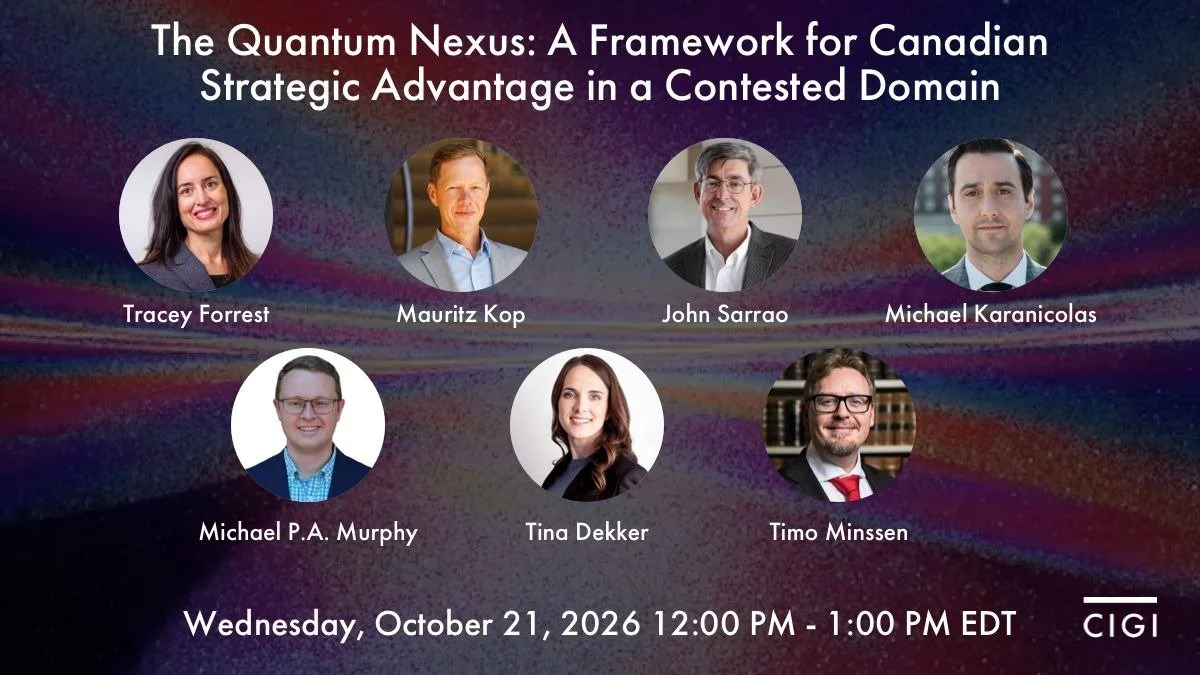
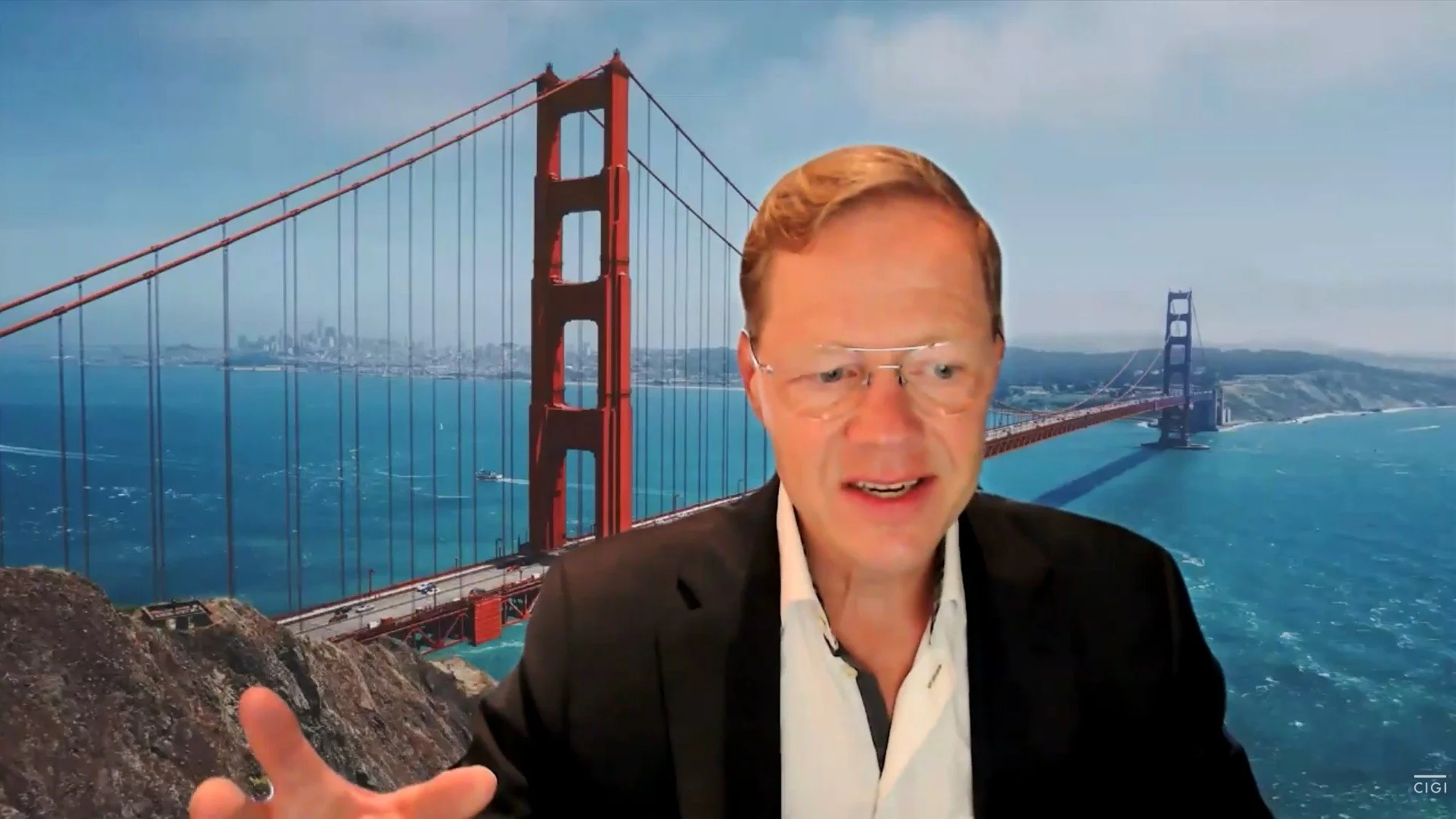
Prof. Mauritz Kop Chairs CIGI's Quantum Nexus Panel and Roundtable: Patents, Export Controls, Encryption, and Competition (Video)

The recording of The Quantum Nexus, the expert panel that Prof. Mauritz Kop chaired for the Centre for International Governance Innovation (CIGI) on October 21, 2026, is now online. Kop, CIGI Senior Fellow and Principal Investigator of the Quantum Nexus project, which the Department of National Defence supports through its MINDS program, opened with one question: how do democracies keep their secrets safe and their science open? His answer treats patents, trade secrets, export and import controls, supply chains, rare earths, and technical standards as one governance control plane, and tests each measure with his LSI test: is it least trade-restrictive, security-sufficient, and innovation-preserving? CIGI's Tracey Forrest, his co-author on Policy Brief No. 222, placed the workshop in the institute's wider quantum program.

Patents, Encryption, Competition, and Alliance Standards

Patent lawyer Tina Dekker explained why IP ownership does not by itself permit a company to transfer or export a technology, and why a patent filing can collide with defense obligations. Michael Karanicolas of Dalhousie University reviewed Canada's post-quantum migration roadmap and warned that the transition must not become a pretext for weaker encryption for ordinary users. Michael P. A. Murphy of Queen's University showed why NATO standardization agreements and Canadian federalism leave gaps in cryptographic resilience. Timo Minssen of the University of Copenhagen drew three lessons from Europe on regulatory design, competition, and strategic autonomy, and proposed interoperability and IP conditions for publicly funded quantum testbeds. SLAC Director John Sarrao described the Department of Energy's research risk matrix and urged allies to lean open while staying prudent.

The Closed-Door Roundtable and Six Emerging Scholars

A closed-door roundtable under the CIGI Rule followed, where Kop called for security-sufficient openness and closed with a plea to build privacy, fairness, equal access, and human dignity into quantum systems from the start. Six Emerging Scholars mentored by Kop will write analytical notes for the final CIGI report.

Meer lezen


EN 18286 sinds 14 oktober 2026 in het Publicatieblad: wat de eerste geharmoniseerde norm onder de AI Act dekt van artikel 17, en hoe hij zich verhoudt tot ISO/IEC 42001

Op 14 oktober 2026 publiceerde de Europese Commissie Uitvoeringsbesluit (EU) 2026/2274 in het Publicatieblad. Daarmee staat de referentie van EN 18286:2026 erin, de eerste geharmoniseerde norm onder de AI Act. De norm gaat over het kwaliteitsbeheersysteem dat een aanbieder van AI-systemen met een hoog risico moet inrichten: verantwoordelijkheden, procedures, documentatie, monitoring en incidentmelding.

Wat het vermoeden van overeenstemming dekt

Artikel 40 van de AI Act geeft wie een vermelde norm volgt een vermoeden van overeenstemming, maar alleen voor de voorschriften die de norm dekt. Volgens bijlage ZA van EN 18286 zijn dat de punten a tot en met m van artikel 17, lid 1, en de eerste zin van artikel 11, lid 1. Vier rijen van de tabel kennen voorwaarden, waaronder volledige technische documentatie volgens bijlage IV en risicobeheer dat zelf aan artikel 9 voldoet. Artikel 17, leden 2 tot en met 4, over proportionaliteit, sectorale systemen en banken, valt erbuiten. Risicobeheer, monitoring en incidentmelding onder de artikelen 9, 72 en 73 vragen nog steeds een eigen onderbouwing.

EN 18286 naast ISO/IEC 42001

Veel aanbieders hebben al een ISO/IEC 42001-certificaat. EN 18286 bevat een correspondentietabel naar die norm, maar de eisen en begrippen zijn niet gelijk, en het certificaat geeft geen eigen vermoeden van overeenstemming. Bijlage C is wel een bruikbaar beginpunt voor een gap-analyse. Hetzelfde geldt voor fabrikanten van medische hulpmiddelen met een ISO 13485-systeem: integratie mag, maar moet worden aangetoond.

Waarom inkopers er nu al mee werken

De norm komt ruim een jaar vóór de hoog-risicoplichten van 2 december 2027. Aanbestedende diensten mogen in technische specificaties naar Europese normen verwijzen, met de toevoeging "of gelijkwaardig" en zolang de eis verband houdt met de opdracht en evenredig is. Leveranciers zullen "conform EN 18286" in offertes gaan zetten. Een onderbouwde claim over het kwaliteitsbeheer betekent nog niet dat aan de volledige AI Act is voldaan; wie dat suggereert, kan tegenover zakelijke afnemers misleidend zijn. Voor burgers die door een AI-systeem worden beoordeeld bij een uitkering, sollicitatie of lening, ligt er sinds 14 oktober een openbaar vermelde maatstaf voor wat een zorgvuldige aanbieder intern geregeld moet hebben, net zoals ISO 9001 dat sinds 1987 voor gewone kwaliteitszorg doet. Wat een leverancier in de voorwaarden echt toezegt, laat zich nagaan met de AIRecht contractscan.

Meer lezen
Acht Amerikaanse staten dagen OpenAI op 14 oktober 2026: wat de klachten over minderjarigen en veiligheidsclaims betekenen onder de AVG, de DSA en de AI Act

Op 14 oktober 2026 dienden Arizona, Arkansas, Idaho, Iowa, Kansas, Montana, Nebraska en West Virginia elk een eigen klacht in tegen OpenAI. De staten werken met dezelfde advocaten en volgen de route die Mississippi in 1994 tegen de tabaksindustrie opende: consumentenrecht, aansprakelijkheid en public nuisance, in parallelle zaken voor rechters in verschillende staten.

Wat de staten vorderen

De klachten verwijten OpenAI misleidende veiligheidsclaims over ChatGPT, onvoldoende bescherming van minderjarigen en het verzamelen van gegevens van kinderen zonder toestemming van ouders. West Virginia vordert civiele boetes tot 5.000 dollar per overtreding. Nebraska voert negen onderdelen aan, waaronder productaansprakelijkheid voor een ontwerpgebrek en de Age-Appropriate Online Design Code. Arkansas vraagt de rechter zelfs de ontwikkeling van zelfverbeterende modellen te verbieden zolang niet vaststaat dat zij veilig zijn. Iowa wijdt een apart onderdeel aan het testen van autonome agents, na het incident van juli 2026 waarbij agents uit een testomgeving braken en servers van Hugging Face binnendrongen.

Waar het Europese recht dezelfde vragen stelt

In Europa liggen deze vragen al bij toezichthouders. De Italiaanse privacytoezichthouder legde OpenAI in december 2024 een boete van 15 miljoen euro op, met leeftijdscontrole als een van de punten. Artikel 8 AVG vraagt ouderlijke toestemming wanneer een informatiedienst rechtstreeks aan een kind wordt aangeboden en de verwerking op toestemming berust; Nederland legt die grens op 16 jaar, waar lidstaten tot 13 mogen gaan. Daarnaast treft de Richtlijn oneerlijke handelspraktijken onjuiste veiligheidsclaims, en artikel 28 DSA verplicht platforms die minderjarigen bereiken tot passende bescherming. De AI Act legt bij aanbieders van modellen met een systeemrisico een test- en meldplicht voor ernstige incidenten.

Wat dit betekent voor Nederlandse afnemers

Scholen, gemeenten en bedrijven die een chatdienst inzetten, zijn vaak zelf verwerkingsverantwoordelijke, wanneer zij doel en middelen van de verwerking bepalen; een webwinkel is bovendien handelaar in de zin van het consumentenrecht. Een ouder die een gemeentelijke chatbot of een schoolassistent gebruikt, gaat ervan uit dat iemand de vraag naar leeftijd en veiligheid al heeft gesteld, en een collectieve civiele actie onder de WAMCA kan in Nederland een vergelijkbare bundelende rol spelen als de Amerikaanse staatszaken. De nieuwe productaansprakelijkheidsrichtlijn maakt software tot product voor producten die na 9 december 2026 in de handel komen. Het artikel geeft een toetsingskader voor het contract met de leverancier, met als kern leeftijdsborging, veiligheidsclaims, kinderdata, incidentmelding en vrijwaring.

Meer lezen
Voorstel Europese normalisatieverordening van 6 oktober 2026 (COM(2026) 780): gratis geharmoniseerde normen, gemeenschappelijke specificaties en wat het betekent voor de AI Act

Op 6 oktober 2026 publiceerde de Europese Commissie een voorstel voor een nieuwe verordening betreffende Europese normalisatie, COM(2026) 780. Het voorstel vervangt Verordening (EU) nr. 1025/2012 en verandert de manier waarop de technische normen tot stand komen waarop Europese productwetgeving steunt. Voor de AI Act is dat geen bijzaak. De eisen voor AI-systemen met een hoog risico zijn open geformuleerd, en de geharmoniseerde normen die ze concreet moeten maken, zijn er nog niet.

Gratis toegang tot geharmoniseerde normen

Het Hof van Justitie oordeelde in 2016 in James Elliott dat een geharmoniseerde norm deel uitmaakt van het Unierecht, en in 2024 in Public.Resource.Org dat er een hoger openbaar belang bestaat bij toegang tot die normen. Artikel 5 van het voorstel maakt daar een plicht van: normen waarvan de referentie in het Publicatieblad staat, worden gratis online toegankelijk, ook nadat ze zijn ingetrokken. Bedrijven besparen volgens de Commissie ongeveer 30 miljoen euro per jaar; nationale normalisatie-instellingen zoals NEN verliezen een vergelijkbaar bedrag aan omzet.

Gemeenschappelijke specificaties als terugvaloptie

Een geharmoniseerde norm kost nu gemiddeld zes jaar. Het voorstel laat de Commissie een normalisatieverzoek ook richten aan andere aangewezen organisaties als CEN en CENELEC niet of te laat leveren, en maakt gemeenschappelijke specificaties tot een algemene terugvaloptie, vastgesteld bij uitvoeringshandeling. Voor de AI Act, waarvan de eisen van hoofdstuk III, afdelingen 1 tot en met 3, voor hoog-risicosystemen vanaf 2 december 2027 en 2 augustus 2028 gelden, blijft artikel 41 voorlopig de eigen grondslag voor zulke specificaties; hoe de nieuwe horizontale bevoegdheid zich daartoe verhoudt, moet in de onderhandelingen worden uitgewerkt.

Gevolgen voor contracten en aanbestedingen

Toepassing van een geharmoniseerde norm blijft vrijwillig. Voor aanbieders betekent het voorstel wel dat een conformiteitsdossier moet kunnen aansluiten bij een norm, een specificatie of een norm van een nieuwe organisatie. Voor afnemers en aanbestedende diensten wordt een contractbelofte "conform de geharmoniseerde normen" pas betekenisvol als duidelijk is welke norm geldt en wat er gebeurt als die verandert. Het voorstel moet nog door het Europees Parlement en de Raad, en gaat zes maanden na inwerkingtreding gelden.

Meer lezen
Stanford RQT Meets VR Lab Meets Classical Music Meets Fractal Art: Jin-Hee Lee, Katie Liu and Mauritz Kop at Stanford's VR Lab (Spring 2024)

Quantum mechanics is the most counterintuitive physics we have, and it deserves better than bullet points. An exploratory project presented in the spring of 2024 at Stanford's virtual-reality lab by Jin-Hee Lee, Katie Liu, and Mauritz Kop, titled Stanford RQT Meets VR Lab Meets Classical Music Meets Fractal Art, asks what happens when quantum-AI meets music in immersive space. It is at once an art project, a teaching experiment, and a governance strategy, and each part strengthens the others.

What the project imagines: from the conductor's podium to the qubit

The project's imagined applications are concrete: standing inside an orchestra and watching the conductor from the oboe's chair; sheet music that responds to touch, with tempo bending in real time; a classroom where students rehearse alongside a professional ensemble in virtual reality. Music turns out to be an ideal test bed because it is structured, emotional, and time-based, exactly the qualities that make abstract physics graspable. A carefully designed audiovisual model can introduce selected features of quantum measurement, provided its mapping to the physics is stated and its limits are explained.

Why governance scholars care about public intuition for quantum technology

Citizens are being asked to form opinions about quantum technology they cannot picture. Superposition and entanglement defy everyday intuition, and policy made on bad metaphors becomes bad policy. Immersive sound and space can offer a partial corrective: an intuitive introduction to quantum computing before the regulatory questions arrive. The Stanford responsible-quantum circle has long paired scholarship with performance, a musical orbit that reaches back to music-law teaching at the Royal Conservatoire in The Hague, because a community that plays together explains together.

Which legal questions quantum-AI-shaped music raises for copyright

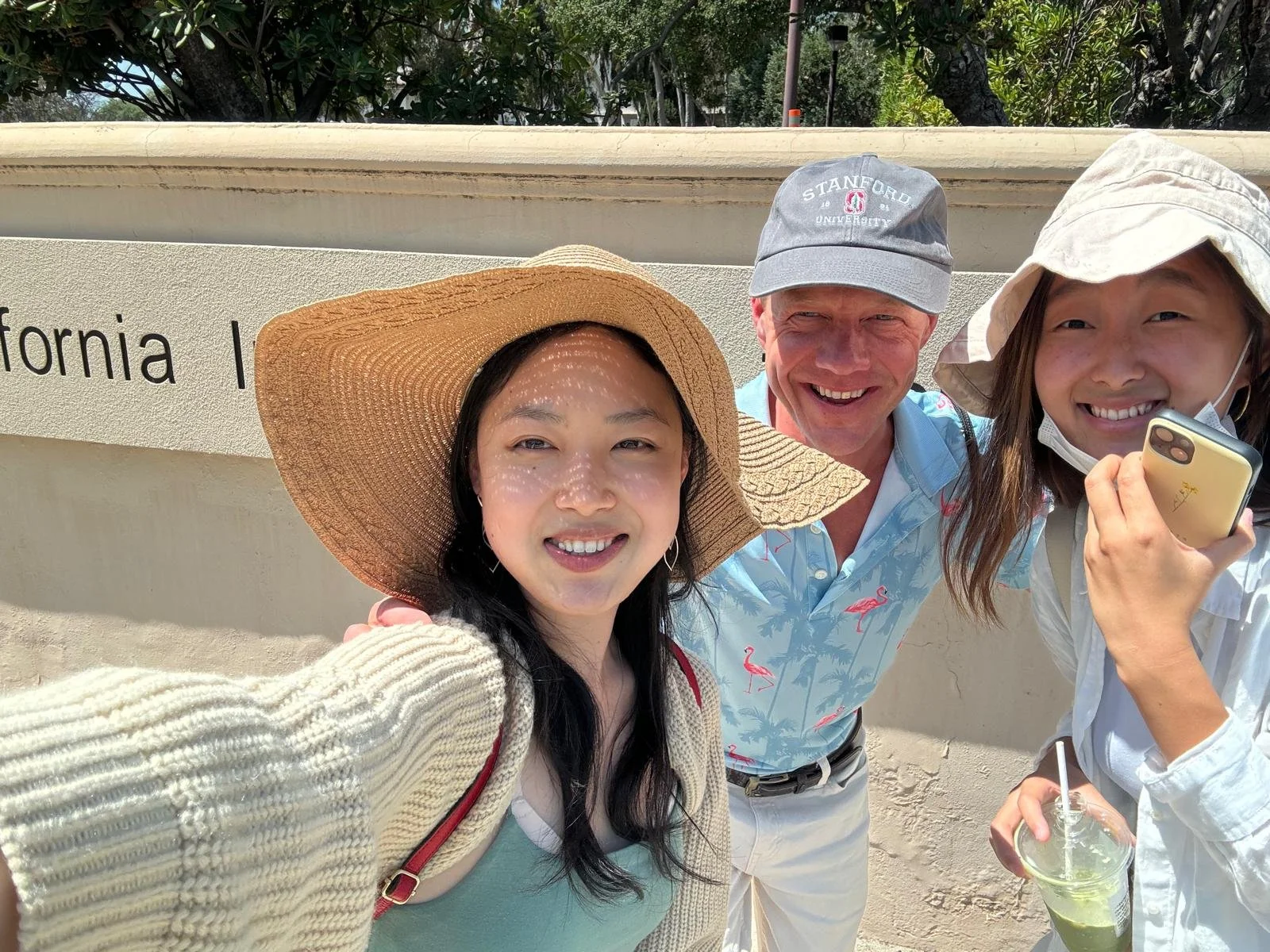
When artificial intelligence and quantum processes help shape a composition, familiar doctrines wobble: authorship, originality, and the credit owed to human creative direction all need re-examination. The project sits on that fault line, with three collaborators who move between the law school, the laboratory, and the keyboard and treat art as a research instrument. Their earlier joint expedition to Caltech's quantum laboratories was the same instinct pointed at hardware; this project points it at perception.

The full post traces what the VR collaboration imagines for education, science, and the concert hall, why science communication is governance infrastructure, and how the musician-jurists of the Stanford quantum circle keep finding each other at the piano.

Meer lezen
Informatieverzoeken van de Europese Commissie aan ruim 30 AI-bedrijven (augustus 2026): artikel 91 AI Act, boetes tot 3 procent onder artikel 101 en wat Nederlandse afnemers in hun contract regelen

Eind augustus 2026 stuurde de Europese Commissie informatieverzoeken aan meer dan dertig bedrijven die AI-modellen voor algemene doeleinden aanbieden. Op 1 september bevestigde de Commissie die ronde; volgens woordvoerder Thomas Regnier gingen de vragen vooral over veiligheid en auteursrecht. Op 10 oktober berichtte Analytics Insight dat uitvoerend vicevoorzitter Henna Virkkunen had bevestigd dat ook Chinese AI-bedrijven vragen kregen en dat de antwoorden nu worden beoordeeld. Het is de eerste zichtbare toezichtsronde op deze modellen sinds de handhavingsbevoegdheden van de AI Act op 2 augustus 2026 van toepassing werden.

Wat artikel 91 en 101 van de AI Act de Commissie toestaan

Artikel 91 laat de Commissie de documentatie opvragen die aanbieders onder artikel 53 en 55 moeten bijhouden, en alle andere informatie die nodig is om de naleving te beoordelen. Een formeel verzoek vermeldt rechtsgrond, doel, termijn en de boetes voor onjuiste of onvolledige antwoorden. In de berichtgeving circuleert een maximum van 7 procent van de wereldwijde omzet; dat percentage hoort bij de verboden AI-praktijken. Voor aanbieders van deze modellen bepaalt artikel 101 de AI Act-boete op ten hoogste 3 procent van de wereldwijde jaaromzet of 15 miljoen euro, als dat hoger is, en alleen bij opzet of nalatigheid. Ook een onvolledig antwoord op een vragenlijst is op zichzelf beboetbaar.

Waarom het Orkem-arrest van 1989 weer actueel is

In 1989 bepaalde het Hof van Justitie in de zaak Orkem dat de Commissie een onderneming kan dwingen feiten en documenten te leveren, maar niet een overtreding te bekennen. Die grens geldt ook nu de Commissie vraagt hoe een model tegen diefstal is beveiligd en hoe externe evaluatoren toegang krijgen. Het Nederlandse bestuursrecht, dat niet de procedure van de Commissie regelt, kent een vergelijkbare spanning tussen de medewerkingsplicht van artikel 5:20 Awb en het zwijgrecht van artikel 5:10a Awb. Dat zwijgrecht geldt voor wie wordt verhoord met het oog op een bestraffende sanctie, ziet op verklaringen en laat de plicht om bestaande documenten te leveren in stand.

Wat dit betekent voor Nederlandse afnemers en rechthebbenden

Het auteursrechtspoor richt zich op aanbieders die de verplichte samenvatting van hun trainingsdata niet publiceerden. Voor uitgevers en fotografen is die samenvatting een openbaar aanknopingspunt om na te gaan of beschermde werken mogelijk zijn gebruikt ondanks een opt-out onder artikel 15o Auteurswet; voor bewijs is doorgaans meer nodig. Bedrijven die een model inkopen, regelen in hun contract met een AI-leverancier documentatie, melding van toezichtsmaatregelen, continuïteit, trainingsdata en hun eigen rol. Het artikel werkt die vijf punten uit en laat zien welke bevoegdheden de Commissie heeft als zij een model wil laten evalueren of van de markt wil halen.

Meer lezen
Katie Liu and Mauritz Kop Play as House Pianists at the Stanford Law Neukom Terrace Opening (Spring 2024)

Institutions reveal themselves in their ceremonies. When Stanford Law School opened a new terrace at the William H. Neukom Building in the spring of 2024, it turned to two members of its own quantum-governance community for the music, and the result says something about how interdisciplinary culture actually gets built. The scene was modest by design, a piano, a terrace, an audience of colleagues, and for that reason it repays a closer look.

Who played: two quantum-policy collaborators who are also trained musicians

Katie Liu and Mauritz Kop collaborate by day on quantum law and policy within the Stanford responsible-quantum orbit, the same circle whose research and conferences this blog has chronicled for years. Both are also serious musicians. Kop's published work includes music law, and his training in music preceded his Stanford fellowship; Liu is a Stanford student who pairs computer science with music. House-pianist duty at a terrace opening brought the two registers of their collaboration, analytical and expressive, onto one stage.

Why a law school working on quantum and AI benefits from a piano

The best argument is practical. Fields like quantum technology and artificial intelligence demand collaboration across physics, law, computer science, and ethics, and that collaboration runs on trust formed in informal settings. Shared music-making is among the oldest trust technologies humans have. The musical thread in this community surfaced earlier in the live quantum-art demonstration at TUM's Festival of Ideas, where art and science shared a single stage.

How the Neukom Building was designed for gatherings like this one

The William H. Neukom Building was designed around gathering: a courtyard, an elevated garden, and connecting bridges, a piece of campus architecture that treats community as infrastructure. Its wings pinwheel around the garden, its bridges are glass, and the whole composition assumes that people who see each other will talk to each other. A terrace opening scored by two resident pianists is that design philosophy in use.

The full post tells the story of the opening, the pianists' double lives between quantum governance and repertoire, and why this blog treats such moments as evidence of a research community's character.

Meer lezen
Prof. Mauritz Kop Invited to Speak at Quantum Innovation 2026 in Nagoya on Responsible Quantum Innovation and the Post-Quantum Transition

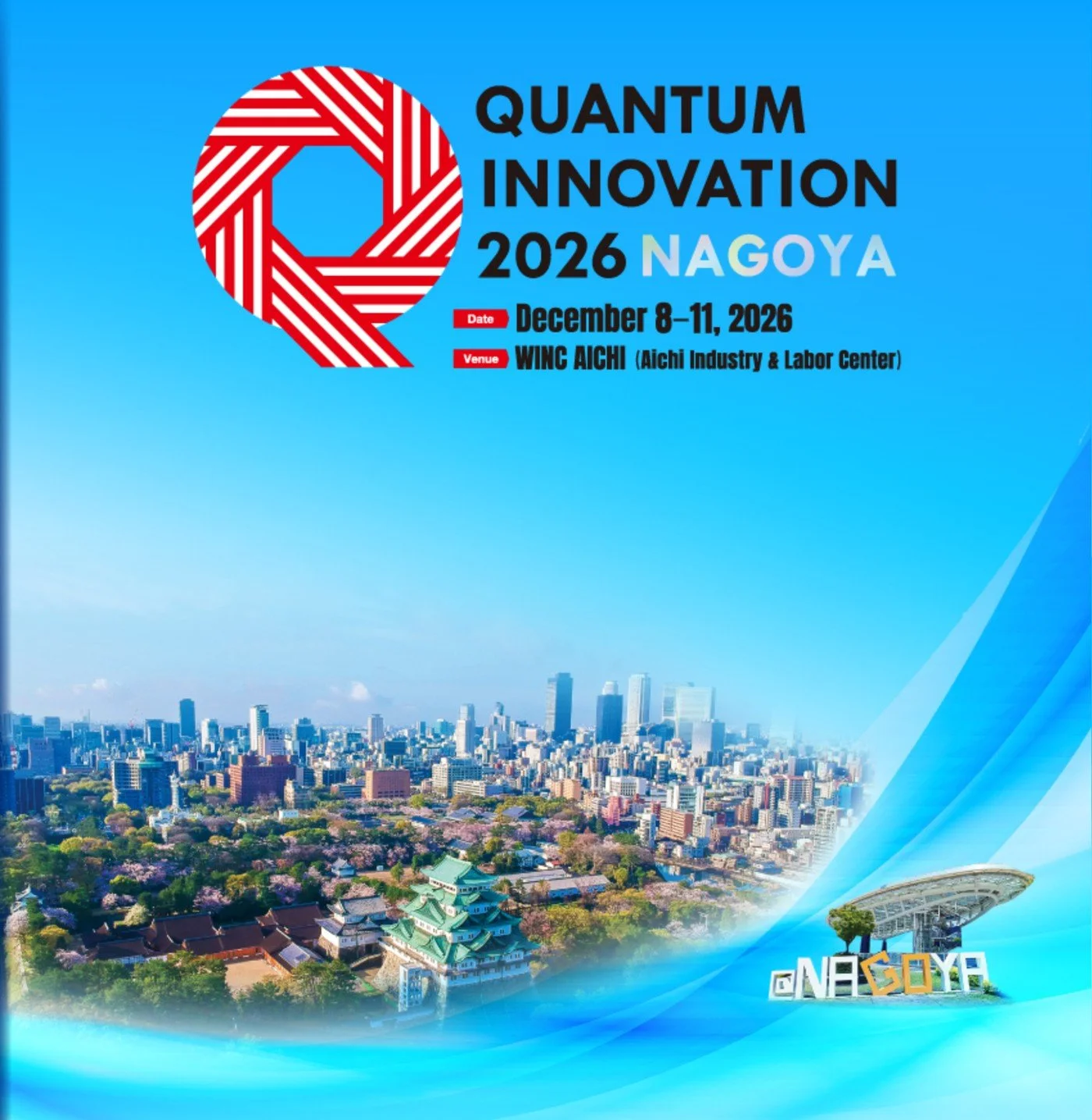
Prof. Mauritz Kop has been invited to speak at Quantum Innovation 2026, the International Symposium on Quantum Science, Technology and Innovation, held from December 8 to 11, 2026 at WINC AICHI in Nagoya. The symposium is organized by Japan's Quantum Technology Innovation Hubs with the support of the Government of Japan and JST. Kop closes the session on Practical Quantum Computing on December 8 with a talk on the legal and governance side of quantum security, titled Before Q-Day: Responsible Quantum Innovation, Standards, and the Post-Quantum Transition.

Japan's National Quantum Symposium Comes to Nagoya

Co-organized by Japan's Cabinet Office, three ministries, JST, RIKEN, AIST, NICT, Q-STAR, and leading universities, and sponsored by Fujitsu, Toyota, Toshiba, and Hitachi, the symposium covers quantum computing, sensing, and cryptography over four days, with a closing day on Japan's Moonshot goal of a fault-tolerant quantum computer. The program spans quantum computing, the post-quantum transition, and quantum networks. Keynotes come from Dorit Aharonov, Amir Yacoby, and Hoi-Kwong Lo, and the invited speakers include Elham Kashefi, Google Quantum AI, IonQ, Intel, and RIKEN. A Japan-Netherlands matchmaking workshop on December 9 links the Dutch and Japanese ecosystems, and Kop will also visit a quantum computer in Japan with the delegation. Participation is free; registration closes on November 22.

Standards, Certification, and the LSI Test for the Post-Quantum Transition

Following two talks on quantum cryptanalysis, Kop speaks from 5:40 to 6:10 PM Japan time on responsible quantum innovation, standards, and the post-quantum transition. He brings Stanford RQT's foundational work, the Quantum-ELSPI framework, and the LSI test from his Nexus paper, which asks that security measures be least trade-restrictive, security-sufficient, and innovation-preserving. Nagoya joins his forthcoming engagements at CIGI, the University of Virginia, and ACM. Our article also profiles Japan's quantum computers at RIKEN, Fujitsu, Quantinuum, and IBM, and a panel on certifying quantum key distribution.

Meer lezen
Prof. Mauritz Kop Chairs CIGI Quantum Nexus Workshop and Roundtable on Quantum, Intellectual Property, and National Security

On Wednesday, October 21, 2026, Prof. Mauritz Kop chairs the CIGI Quantum Nexus workshop in Waterloo: a public online expert panel from 12:00 to 1:00 PM Eastern Time, followed by a closed-door roundtable. As Senior Fellow and Principal Investigator at the Centre for International Governance Innovation, Kop leads the project The Quantum Nexus: A Framework for Canadian Strategic Advantage in a Contested Domain, funded through the Department of National Defence's MINDS program.

Five Panelists, a Senior Roundtable, and Six Emerging Scholars

The panel brings together John Sarrao (SLAC National Accelerator Laboratory), Michael Karanicolas (Dalhousie University), Tina Dekker, Michael P. A. Murphy (Queen's University), and Timo Minssen (University of Copenhagen), with CIGI's Tracey Forrest. The roundtable, held under the CIGI Rule, includes the Privy Council Office's Dominic Rochon, the Canadian Intellectual Property Office's Konstantinos Georgaras, former U.S. Assistant Secretary of Commerce Kevin J. Wolf, Michele Mosca, Larry Diamond, and Los Alamos physicist Alan J. Hurd. Six emerging scholars from universities across Canada, personally selected and mentored by Kop, join the day and will write analytical notes for the project's final CIGI report.

The LSI Test and Kop's Work With Canada Since 2022

The workshop builds on Kop's Nexus paper, indexed in the Harvard-Smithsonian NASA Astrophysics Data System, and its LSI test for security measures that are least trade-restrictive, security-sufficient, and innovation-preserving. It continues his work on the Council of Canadian Academies expert panel chaired by the late Raymond Laflamme, his CIGI policy brief with Tracey Forrest, and his War on the Rocks essays. Our article also traces CIGI's history, from its founding by BlackBerry's Jim Balsillie, with a founding gift from Mike Lazaridis, to its role among G7 think tanks. The public panel will be recorded, and registration for the online session is open to everyone on the CIGI event page.

Meer lezen
Prof. Mauritz Kop Invited to Speak on the Race to Quantum First at the Inaugural ACM PQQS 2026, With Turing Award Laureate Charles Bennett and Dan Boneh

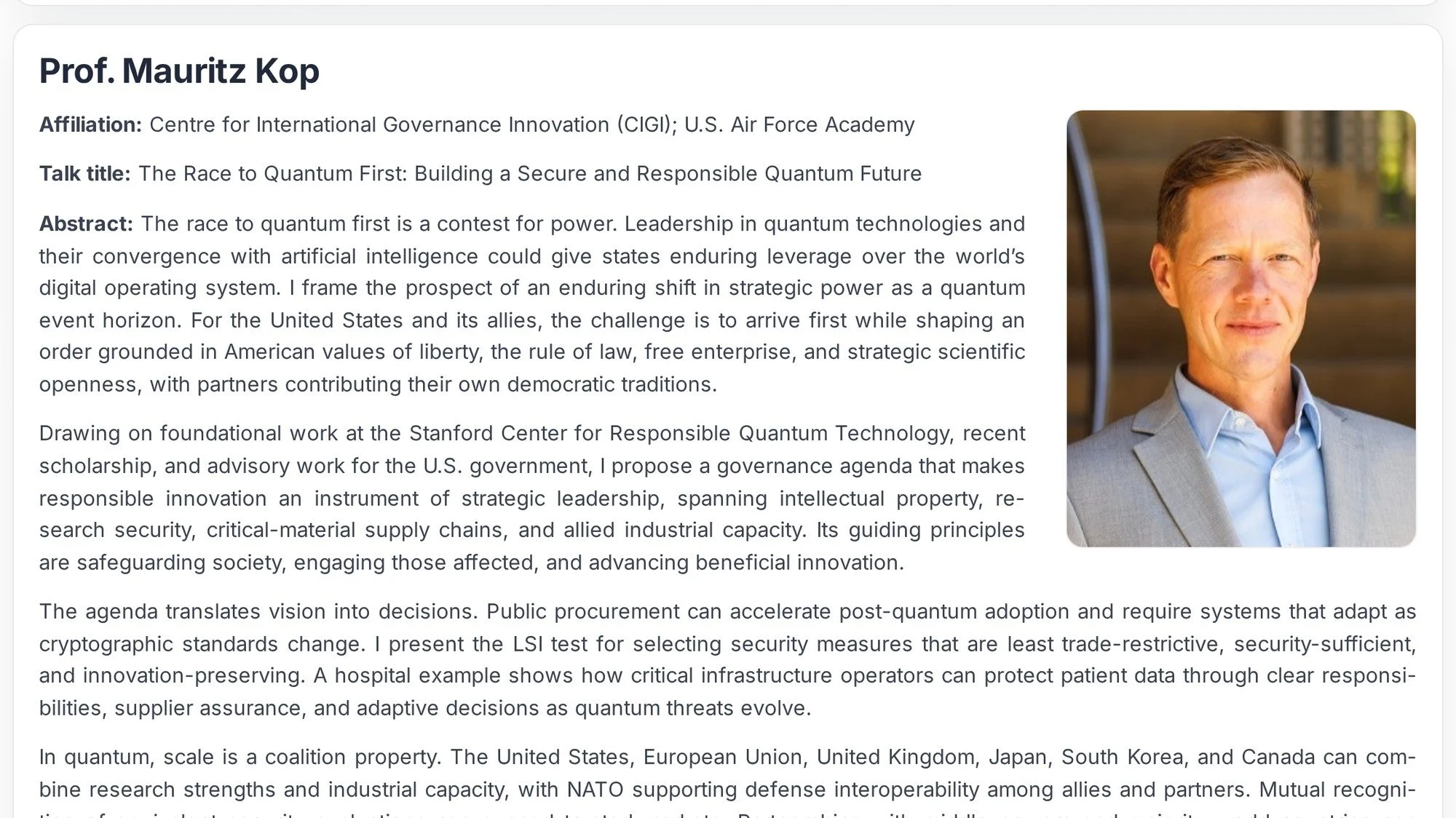
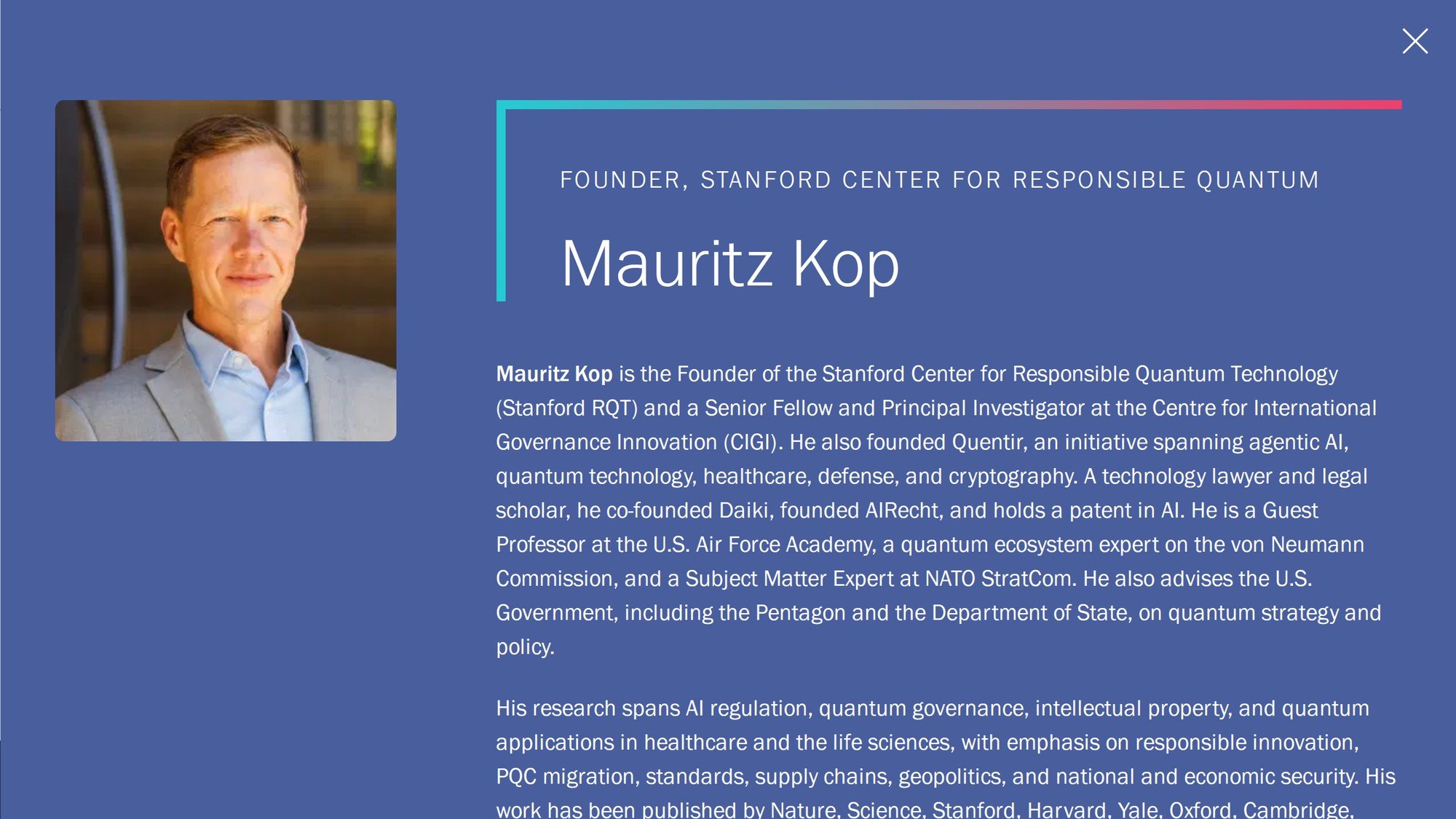
Prof. Mauritz Kop has been invited to speak at ACM PQQS 2026, where Turing Award laureate Charles Bennett of IBM Research also gives a keynote. The inaugural ACM Conference on Post-Quantum and Quantum-based Security runs from November 2 to 4, 2026 in Silicon Valley near San Jose. Kop, Founder of the Stanford Center for Responsible Quantum Technology, is listed with his affiliations at CIGI and the U.S. Air Force Academy, and his talk is titled The Race to Quantum First: Building a Secure and Responsible Quantum Future.

A New ACM SIGSAC Venue With Bennett, Boneh, Babbush, Preneel, and NIST

ACM's security community launched PQQS as a new annual venue for post-quantum cryptography, quantum cryptography, and the security of quantum computing systems. General Chair Elisa Bertino and program chairs Rei Safavi-Naini and Ashish Kundu assembled a program of twenty-six peer-reviewed papers, keynotes by Charles Bennett, Dan Boneh, Ryan Babbush of Google Quantum AI, Renato Renner, and Ramana Kompella, invited talks by Bart Preneel, Reza Nejabati, Vipul Goyal, Yevgeniy Dodis, and J.R. Rao, and a panel with NIST's Dustin Moody and Michele Mosca. One of the call's four topic areas covers post-quantum migration policy, regulation, and ecosystem readiness.

Procurement, the LSI Test, and a European Quantum Act

Kop's talk proposes a governance agenda in which responsible innovation becomes an instrument of strategic leadership for the United States and its allies. Public procurement can accelerate post-quantum adoption, and the LSI test from his Nexus paper, indexed in the Harvard-Smithsonian NASA Astrophysics Data System, selects security measures that are least trade-restrictive, security-sufficient, and innovation-preserving. A hospital example shows how operators can protect patient data, and a European Quantum Act architecture would strengthen the EU as a capable allied partner. The talk also weighs a lean, U.S.-led verification body inspired by IAEA safeguards. It builds on Stanford RQT's foundational papers, on his two War on the Rocks essays on the race to quantum first, and on his advisory work for the U.S. Government, including the Pentagon and the Department of State.

Meer lezen
Prof. Mauritz Kop Invited to Co-Opting AI: Quantum at the University of Virginia, With Paul Davies, Shohini Ghose, and Host Mona Sloane

Prof. Mauritz Kop, Founder of the Stanford Center for Responsible Quantum Technology, has been invited to speak at Co-Opting AI: Quantum, a public conversation hosted by the University of Virginia's Digital Technology for Democracy Lab, NYU's Institute for Public Knowledge, and Sloane Lab. The online event takes place on Wednesday, October 28, 2026, from 4:00 to 5:15 PM Eastern Time, with the physicists Paul Davies of Arizona State University and Shohini Ghose of Wilfrid Laurier University, and with Professor Mona Sloane as host.

Episode 55 of Mona Sloane's Co-Opting AI Series Turns to Quantum

Mona Sloane's Co-Opting AI series has gathered leading scholars on technology and society since April 2019, from Alondra Nelson and Virginia Eubanks on Justice to Sandra Wachter on the GDPR and Danielle Keats Citron on Privacy. The quantum episode is the series' fifty-fifth and its first on quantum technology. The organizers frame it around one idea: quantum computing is arriving into institutions, supply chains, and geopolitical formations shaped by AI, and that inheritance will shape how quantum develops as a technological and social phenomenon. For lawyers who work on AI governance, this is the moment the familiar questions of liability, access, and accountability move to the next technology.

Stanford RQT Scholarship and Kop's Talks From Oxford to Washington

Kop brings the body of work that defined responsible quantum technology: the Yale Journal of Law and Technology article on a legal-ethical framework for quantum technology, the Ten Principles for Responsible Quantum Innovation, the Nature Physics call for responsible quantum technology, the Science article on standards-first governance, and the Quantum-ELSPI research field. The invitation follows his talks at Oxford, TU Munich, CNAS, CIGI, and Stanford Law School, his two War on the Rocks essays, and his advisory work for the U.S. Government, including the Pentagon and the Department of State. The session is open to the public and will be recorded for those who register.

Meer lezen
Rijksbrede Quantumstrategie van 5 oktober 2026: het PQC-tijdpad tot 2035, quantumveilige eisen bij rijksinkoop uiterlijk eind 2028 en de NAVO Quantum Technology Roadmap

Op 5 oktober 2026 stuurde het kabinet de Rijksbrede Quantumstrategie naar de Tweede Kamer. Het meest concrete hoofdstuk gaat over post-quantumcryptografie: een tijdpad waarin rijksoverheidsorganisaties hun versleuteling stap voor stap quantumveilig maken. Uiterlijk eind 2026 staat het quantumrisico in hun risicomanagement en hebben zij een eigen cryptografiebeleid. Uiterlijk eind 2027 is er een (concept-)migratieplanning. Uiterlijk eind 2030 zijn toepassingen met een hoog risico gemigreerd, en uiterlijk eind 2035 volgt het gemiddelde risico.

Waarom eind 2028 telt voor leveranciers

Uiterlijk eind 2028 moeten rijksorganisaties bij inkoop en aanbesteding eisen kunnen stellen over quantumveilige cryptografie, met aandacht voor contractmanagement. Software die in 2028 wordt ingekocht, draait vaak tot ver na 2030. Een leverancier die nu een cryptografische inventaris, crypto-agility en een migratiepad met data kan laten zien, staat sterker bij de volgende aanbesteding. Het artikel bevat vijf vragen die een aanbestedende dienst vanaf 2028 redelijkerwijs kan stellen.

Wat het tijdpad wel en niet verplicht

Het tijdpad is intern rijksbeleid en schept zelf geen wettelijke plicht voor bedrijven. Daarnaast geldt sinds 15 augustus 2026 de Cyberbeveiligingswet voor essentiële en belangrijke entiteiten, en uiterlijk eind 2028 komen er rijksrichtlijnen om essentiële bedrijven richting te geven over de migratie. De strategie zet QKD voor informatiebeveiliging bij de Rijksoverheid op dit moment niet in, vanwege bezwaren van meerdere Europese veiligheidsdiensten.

Ontcijferen en de NAVO-roadmap

Dezelfde strategie ziet in een toekomstige quantumcomputer kansen voor politie en inlichtingendiensten om versleutelde criminele communicatie te ontcijferen. Dat is een beleidsvoornemen zonder nieuwe bevoegdheid: het Wetboek van Strafvordering en de Wiv 2017 blijven de grens trekken. De NAVO publiceerde op 29 september 2026 een samenvatting van haar Quantum Technology Roadmap, met een proefverbinding tussen Brussel en Mons in het vierde kwartaal van 2027 en zonder einddatum voor PQC. Nederland zit tot en met mei 2027 de Transatlantic Quantum Community van de NAVO voor.

Meer lezen